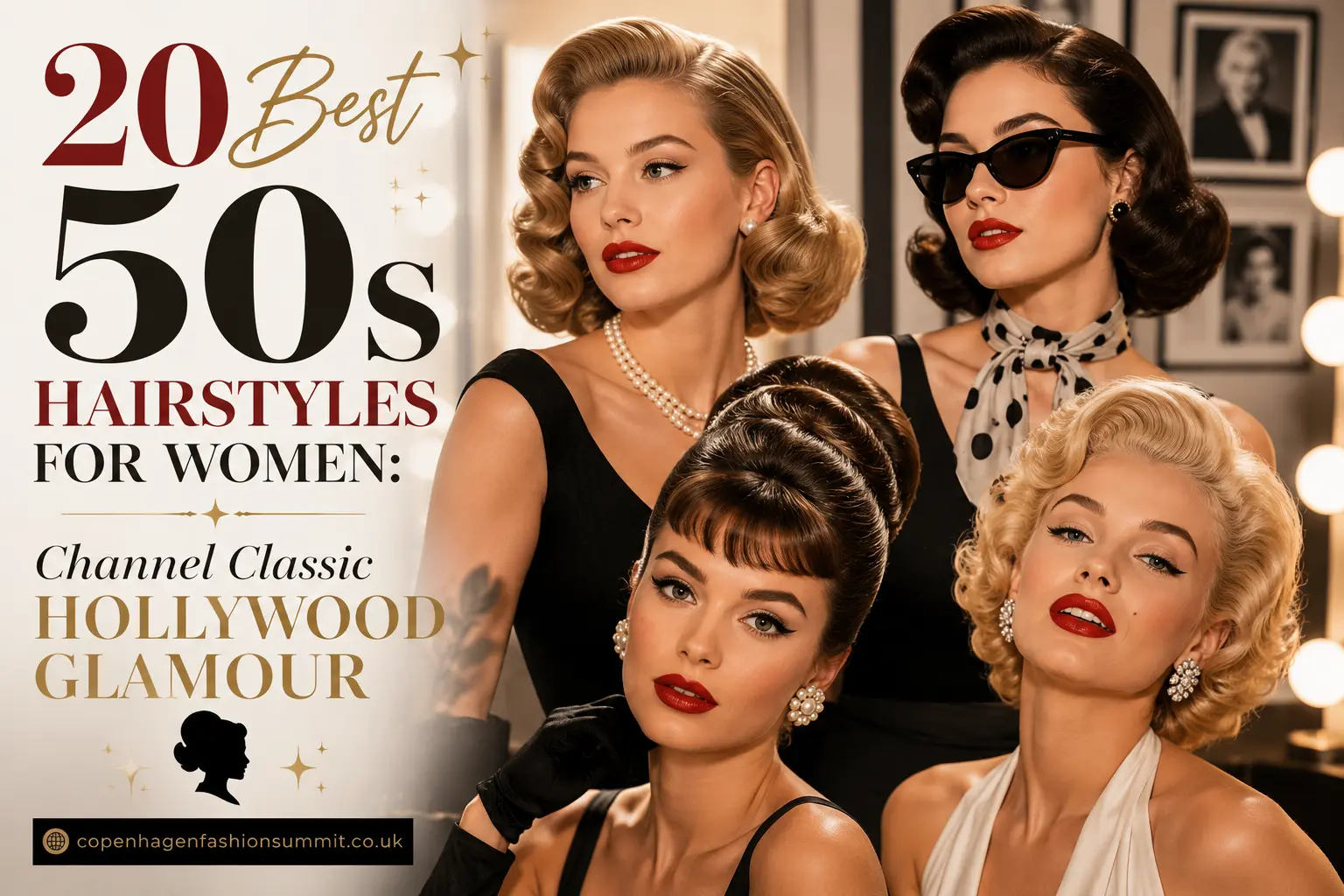
Do you love old Hollywood glamour? 50s hairstyles for women give you that exact look. This era gave us big curls, high rolls, and soft waves that still look amazing today. In this guide, you will find 20 classic styles. You will also learn how to style them now and how to keep them looking good.
Maybe you want a full vintage look. Or maybe you just want a small touch of the past. Either way, you will find a style for you here. Every style comes with real tips, not just nice pictures. Let’s start.
Why 50s Hairstyles Became So Popular
World War II ended, and life started to feel fun again. Women got more chances to visit salons. They also got home perm kits and styling tools. So hair got bigger, curlier, and neater.
Movies changed everything too. Actresses like Audrey Hepburn, Marilyn Monroe, and Elizabeth Taylor set new trends. Regular women copied these looks at home. Rollers, pin curls, and setting lotion became common words in every house.
Men’s styles changed a lot too. Rock and roll music brought looks like the quiff and the ducktail. Young men wanted to stand out, so they picked bold, greased-back styles. This mix of glam and rebellion makes 50s hair so fun to study today.
How to Wear 50s Hairstyles Today
You don’t need old tools to copy these styles. Most 50s looks work well with modern products. Use heat protectant spray, light mousse, and flexible hairspray instead of heavy old setting lotion.
Hairstylists soften these shapes now. A modern pompadour uses less product. It also shows more natural texture. A modern bouffant looks less stiff too. So these styles fit better with work, dates, or normal days.
You can also mix old and new ideas. Try a 50s pin curl set with a modern side part. Or try a Hollywood wave with a fresh hair color. Just borrow the best parts of vintage style. Don’t try to look like you’re wearing a costume.
20 Best 50s Hairstyles for Women
Here are 20 famous 50s hairstyles for women. Each one comes with simple tips to help you copy the look today.
1. The Classic Pompadour
The pompadour lifts your hair high at the front. Then it rolls the hair back smoothly. Both men and women wore this style in the 50s. It showed confidence and bold style.
To create it, backcomb the front section first. Then smooth the top layer over it. Pin it in place, and finish with strong-hold hairspray. This style works best on medium to long hair. It also looks great with a sleek back or a low bun.
Many people don’t backcomb enough. So the height falls flat by midday. Use a fine-tooth comb, and backcomb with a light hand for the best result.
2. Beehive Hairdo
The beehive stands tall and round. It looks dramatic and bold. The name comes from its shape, which looks like a real beehive. This style became huge in the late 50s. It stayed popular into the 60s too.
To style it, backcomb a big section at the crown. Shape it into a round dome. Then smooth the top layer over it to hide the teasing. Use bobby pins and strong hairspray to hold it all in place.
This look suits weddings and parties more than daily wear. It takes time and a lot of product. So try a smaller, softer beehive if you want an easier version.
3. The French Twist
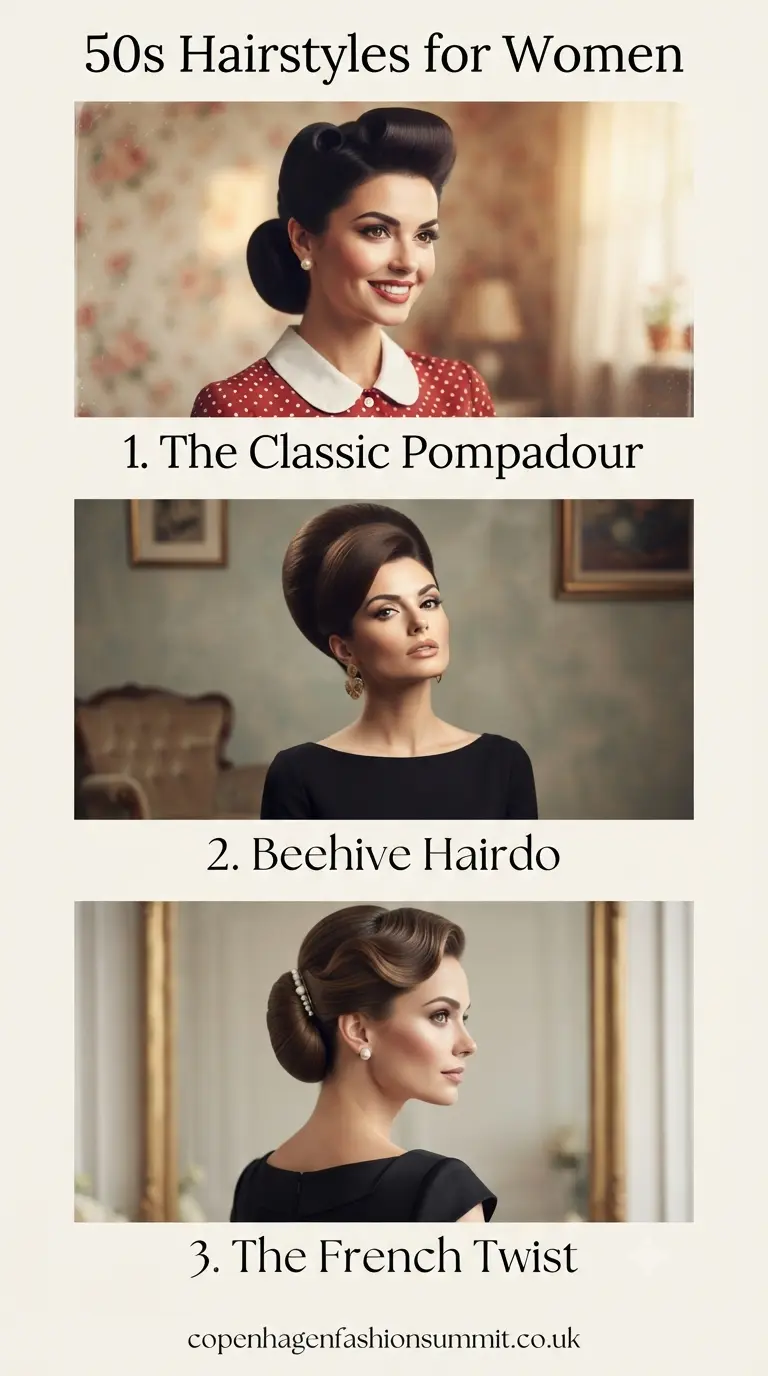
The French twist rolls your hair into a smooth vertical twist. Then it pins the twist flat against the back of your head. This style looks elegant, and you don’t need curls or heavy teasing.
Gather your hair to one side first. Twist it upward, and pin it as you go. Leave a few loose pieces near your face for a soft finish. This style works on straight or wavy hair. It also looks nice with a middle or side part.
This is one of the easiest 50s looks for work or formal events. It stays neat all day long.
4. Ducktail Hairstyle
Men mostly wore the ducktail in the 50s. But some women added a softer version at the back of an updo. The hair at the back combs together in the center. This forms a shape like a duck’s tail feathers.
For women, this often shows up as a finishing touch. You can add it to a pompadour or a bouffant. It gives the whole look a fun, rebel touch.
If you want to try it, comb the back section with a little pomade. Shape it after you finish setting the rest of your hair.
5. Pixie Cut
Audrey Hepburn made the 50s pixie cut famous. This cut sits close to your head, with short layers around your face. It looks full of personality.
This cut suits women who want an easy style with a lot of character. Ask your stylist for soft layers around the crown. Ask for a slightly longer fringe too. This shapes your face nicely.
Style it with a small amount of pomade or wax. Then use your fingers to add texture. This is one of the few 50s styles that needs almost no daily styling time.
Read: 25 Bold and Beautiful Ponytail Hairstyles for Black Women
6. Bouffant Hairstyle
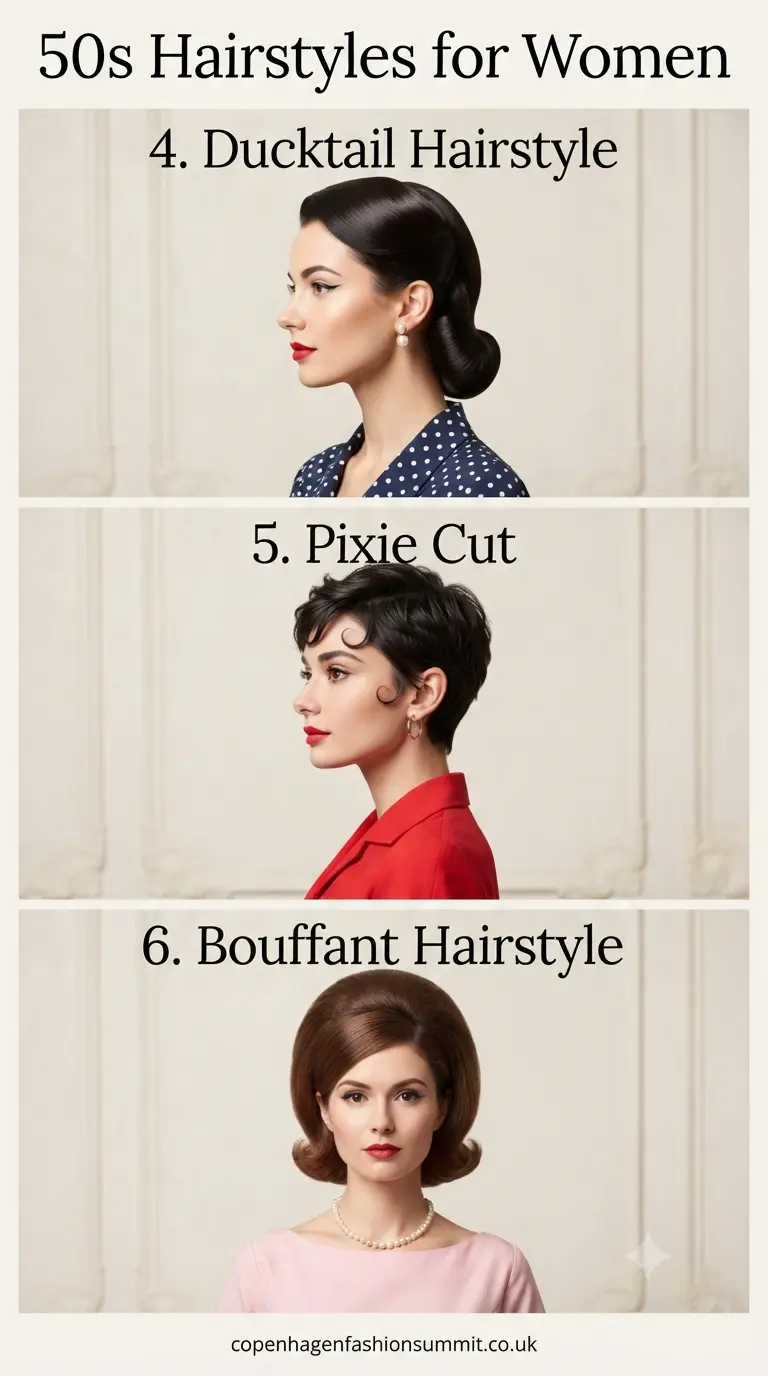
The bouffant looks big and round at the crown. The sides and back stay smoother. This gives great height without looking too sharp, unlike a beehive.
Backcomb the crown section well to create it. Smooth the top layer over it. Pin the sides back if you need to. Both a center part and a side part work well with this style.
Don’t tease the front too close to your hairline. This can look messy. Keep the height at the crown for the best look.
7. Slicked Back Hair
Slicked back hair looks smooth, shiny, and tight. In the 50s, people used pomade or wet-look gel for a glossy finish.
Apply a light gel to damp hair to recreate it. Comb it straight back. Let it dry, or use a blow dryer on low heat while you comb. This look is bold, and it works best on medium to long hair.
Pair it with a low bun or a ponytail. Or just wear it down for a fresh, modern feel.
8. The Mullet
The mullet became more famous in later decades. But a light version existed in the 50s too. Some rebellious young people wore shorter sides with a bit more length at the back. This look was not common in the 50s, but it has early roots there.
Ask your stylist for a soft, blended mullet if you want a vintage-style version today. Keep the length difference small for an easier everyday style.
This cut suits women who want a low-effort, edgy look with a retro touch.
9. The Quiff
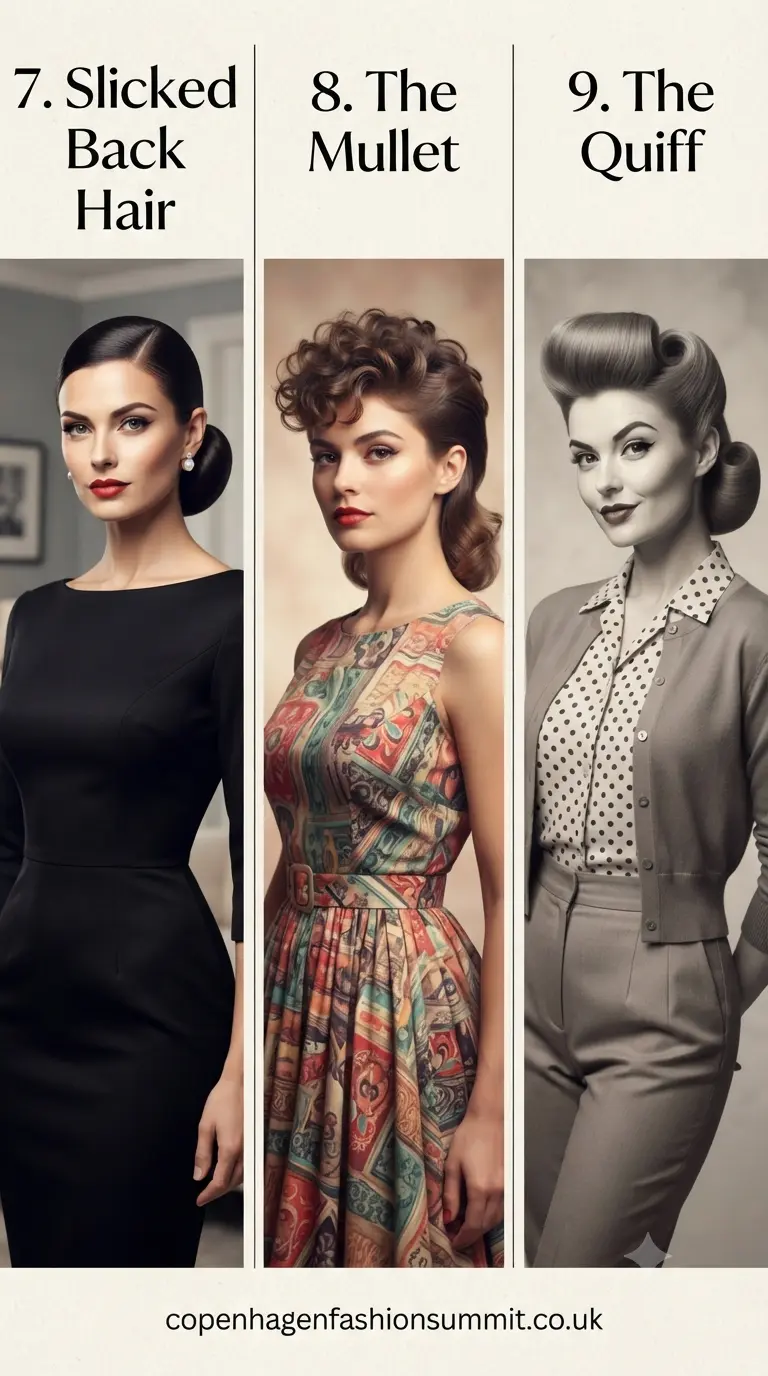
The quiff looks like the pompadour, but it has a softer wave at the front. It gives height without looking too stiff or structured.
Blow-dry the front section upward with a round brush to style it. Then set it with a light-hold spray. This look works on short to medium hair. It suits women who want vintage style with a more relaxed feel.
This is a great everyday option. It takes less time than a full pompadour or bouffant.
10. Pageboy Haircut
The pageboy falls from your chin to your shoulders. The ends curl slightly inward. This gives a neat, rounded shape all around your head.
Blow-dry the ends inward with a round brush to style it. Then set the shape with a light mist of hairspray. This cut suits women with straight to slightly wavy hair the most.
This is a low-effort style that still looks neat. It works great for busy mornings.
11. Crew Cut
Men mostly wore the crew cut in the 50s. It stays short and neat all around, with a bit more length on top. Some women with very short hair tried a feminine version of this bold look.
Ask for very short sides with more length and texture on top if you want to try this. Style the top with a small amount of paste for movement.
This cut suits confident women who want short hair. It gives you something different from the usual vintage curls.
More Amazing Ideas
Maybe none of the styles above feel right for you. Here are a few more classic 50s looks to try.
12. Finger Waves
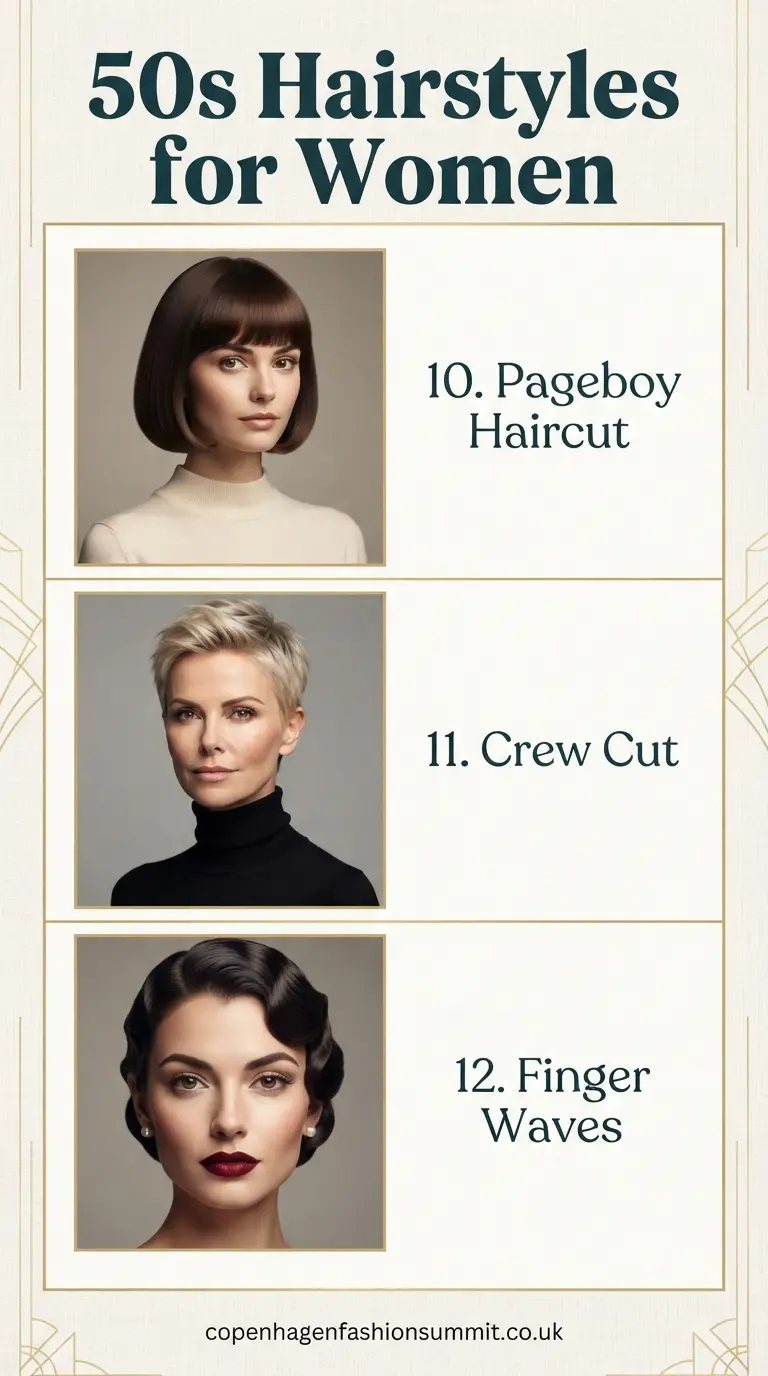
Finger waves create an S-shaped pattern that lies flat on your head. People made these waves using their fingers, a comb, and setting gel on damp hair.
Apply gel to damp hair to style it. Use your fingers and a comb to shape S-curves, section by section. Secure each section with clips while it dries. Remove the clips gently once your hair dries.
This look suits short to medium hair. It works great for vintage-themed events or photos.
13. Victory Rolls
Victory rolls roll sections of hair at the front of your head. They look like rolled-up tubes. This style connects closely to 1940s and 50s pin-up fashion.
Section the front hair to create this look. Roll it back, and pin it into a tube shape. Repeat this step on the other side. Leave the back of your hair curled or in a simple set.
This style takes more practice than others on this list. Try a small section first before you attempt the full look.
Read: Top 40 Haircuts for Long Faces: Expert Styles to Balance Length and Width
14. The Teddy Boy
The Teddy Boy style started as a men’s look. It has a tall quiff at the front, greased sides, and a small ducktail at the back. Some women in certain subculture groups also wore parts of this bold shape.
Try a high, textured quiff at the front for a feminine version. Pair it with sleek sides and a soft ducktail at the back. Use pomade for shine and hold.
This style suits women who want a bold, strong look. It’s not soft or romantic like other 50s styles.
15. The Poodle Cut
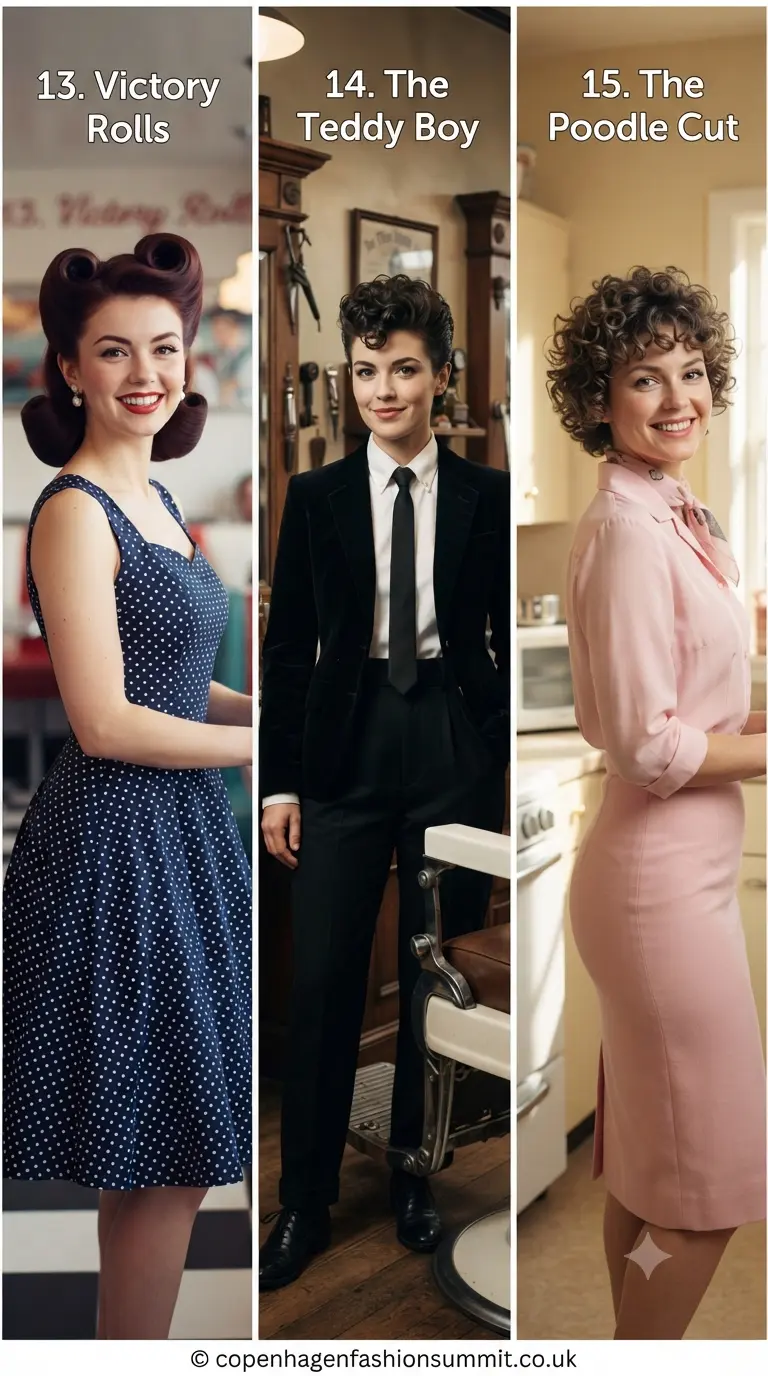
The poodle cut gives you tight, springy curls all over your head. It creates a bouncy, full shape that looks like a poodle’s coat. Younger women loved this fun style in the 50s.
Set your hair on small perm rods to create it. Or use a curling iron for tight curls. Let the curls cool fully before you separate them gently with your fingers. Don’t brush through the curls, or you will lose the curl pattern.
This look works best on shorter to medium hair. It suits women who want a fun, energetic style.
16. The Bubble Cut
The bubble cut falls to your chin. The ends curl inward or outward, which forms a soft bubble shape around your face. This style became a popular choice next to the pageboy.
Blow-dry your hair with a large round brush to style it. Curl the ends under evenly all around. Set the shape with a light spray so it holds all day.
This cut flatters most face shapes. It works well on straight to slightly wavy hair.
17. Side-Parted Straight Hair
Not every 50s look used curls. Many women wore straight, sleek hair with a deep side part. They often added soft waves at just the ends.
Part your hair deeply to one side to style it. Use a flat iron to smooth it if you need to. Curl just the bottom two inches under with a large barrel curling iron. Finish with a light-hold spray.
This is one of the simplest styles on this list. It works for almost any hair length or texture.
18. The Italian Cut
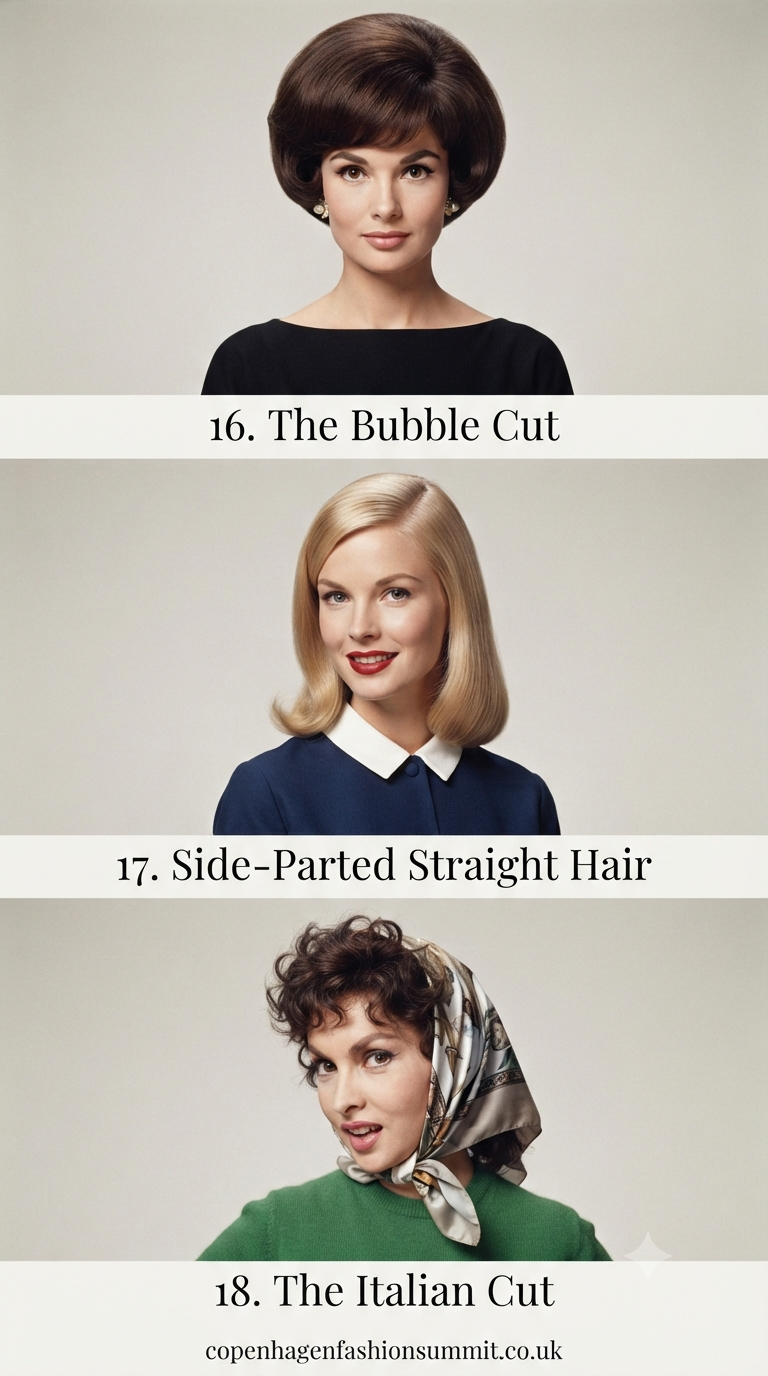
The Italian cut gives you a short, cropped style with soft waves or curls close to your head. It looks similar to the pixie, but fuller and rounder. Italian film stars made this cut popular during this era.
Use a diffuser or curling iron to create loose waves close to your scalp. Then use your fingers to break up the waves softly. A light-hold mousse works well for this texture.
This cut suits women who want short hair with more volume and movement than a regular pixie.
19. Hollywood Waves
Hollywood waves give you deep, shiny waves that lie close to your head. People often connect these waves to old Hollywood glamour photos. They look smoother and more polished than regular curls.
Set your hair with a curling iron in alternating directions, section by section, to create them. Brush through gently, and pin the wave pattern in place while it cools. Remove the pins, and finish with shine spray.
This style looks stunning for weddings, formal events, or any time you want a dramatic finish.
20. The Bouffant Bob
The bouffant bob mixes the volume of a bouffant with the length of a bob. This gives you a shorter style with lift at the crown and smooth or curled ends.
Backcomb the crown section lightly to style it. Smooth the top layer over it. Curl the ends under with a round brush or curling iron. This gives you height without a long bouffant.
This cut suits women who want vintage volume but prefer shorter, easier hair.
Read: 15 Easy & Cute Kawaii Hairstyles to Try in 2026-2027
How to Take Care of 50s Hairstyles
Vintage styles often need extra care to hold their shape all day. Follow these simple tips:
- Use the right products. Setting lotion, pomade, and strong-hold hairspray work better than light modern sprays for structured looks like the beehive or pompadour.
- Sleep the smart way. Wrap curled styles in a silk scarf. Or use a silk pillowcase to protect the shape overnight.
- Refresh instead of rewashing. Use dry shampoo at your roots. This keeps your volume without washing out your set.
- Re-pin when needed. Carry a few extra bobby pins for touch-ups during the day. This helps a lot with updos.
- Don’t touch too much. Running your fingers through your hair all day can loosen curls. It also flattens volume faster.
What Experts Say About 50s Hairstyles
Many hairstylists agree that 50s hairstyles still work great today. These styles focus on shape and structure, not fast trends. A clean pompadour or a neat French twist looks just as sharp now as it did decades ago.
Stylists often suggest starting with second-day hair for these looks. Freshly washed hair feels too slippery. So it doesn’t hold curls or backcombing well. A texturizing spray before you style also helps your hair grip and hold its shape longer.
Treat these styles as a starting point, not a strict rule. Adjust the height, size, and finish to match your hair type and your daily life.
Final Thoughts
50s hairstyles for women bring glamour, fun, and confidence that still feels fresh today. You can pick the bold beehive or the simple side-parted straight look. Either way, you will find a style for every hair type and every occasion.
Start with a style that matches your current hair length. Don’t be afraid to soften the shape for everyday wear. With the right products and a little practice, these vintage looks can become an easy part of your normal routine.
Frequently Asked Questions
What was the most popular hairstyle in the 1950s? The pompadour and the beehive stood out as the most popular 50s hairstyles for women. Both styles used height and volume to create a bold, glamorous look. This made them closely tied to the decade.
How do I get 50s curls without heat damage? You can use foam or perm rods on damp hair. Let your hair air dry overnight instead of using a curling iron. This gives you classic 50s curls with much less heat.
Do 50s hairstyles work for short hair? Yes, they do. Styles like the pixie cut, poodle cut, and Italian cut all started for shorter hair. These options give you a vintage look without growing your hair out.
What products do I need for a vintage 50s look? You need basic products like setting lotion or mousse, strong-hold hairspray, bobby pins, and a fine-tooth comb for backcombing. A curling iron or perm rods also help you recreate classic curl patterns.
Can I wear 50s hairstyles for a normal everyday look? Yes, you can. Styles like the French twist, quiff, and side-parted straight hair work well for daily wear. Soften the height, and use lighter products to fit these looks into a modern routine.
