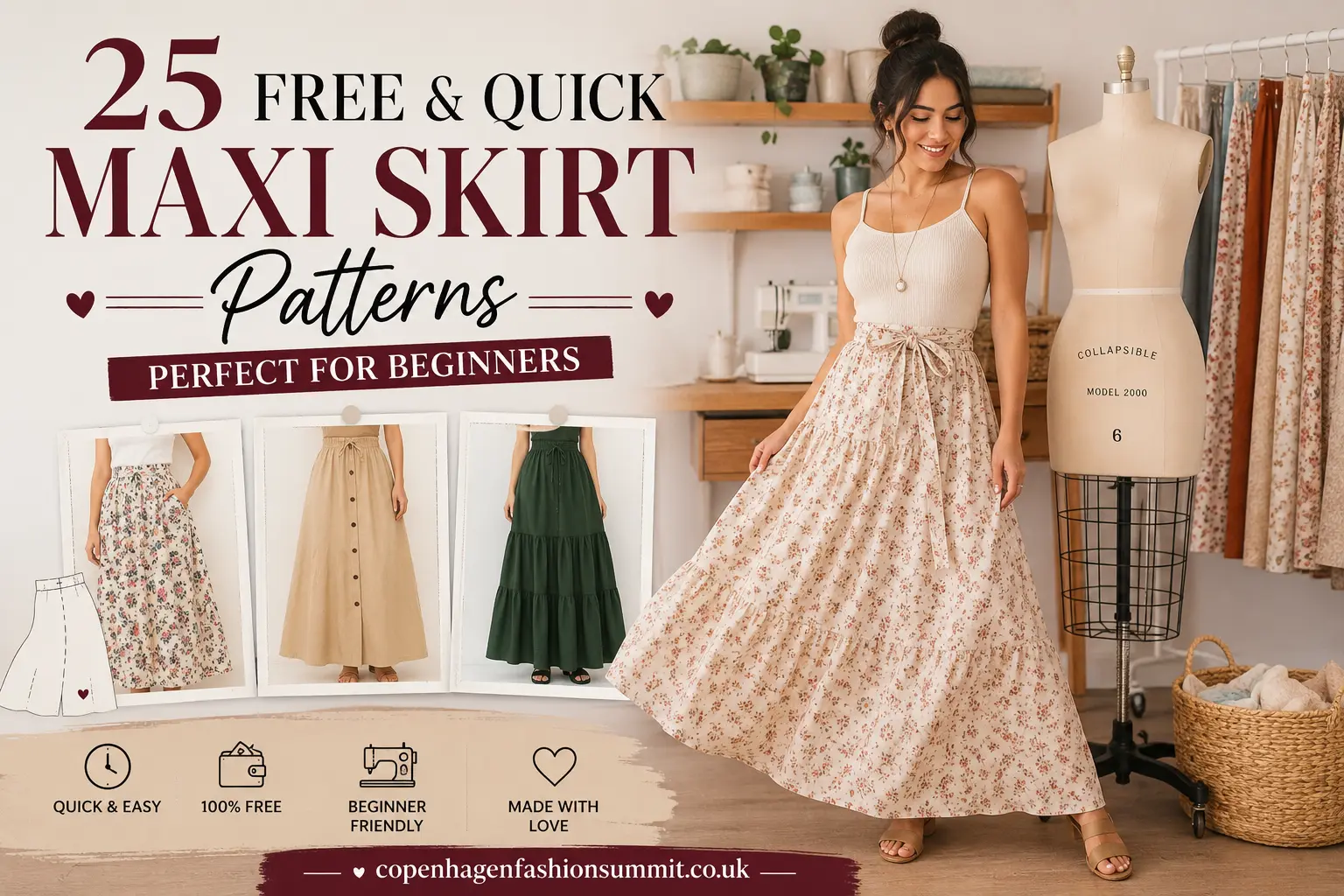
Do you want an easy to sew maxi skirt pattern free guide? You found the right place. A maxi skirt is one of the simplest things you can sew, even if you never used a sewing machine before. Most patterns need only a few fabric pieces, a waistband, and two straight seams.
This guide gives you 25 free maxi skirt patterns and tutorials. Each one uses a different style, fabric, or skill level. Pick the one that matches your taste and your closet.
1. How To Sew A Hi Low Maxi Skirt
A hi low maxi skirt sits shorter at the front and longer at the back. This shape gives you comfort in front and flowing fabric behind you.
Start with a basic maxi skirt pattern. Then curve the front hem upward. Cut the back panel a few inches longer than the front. Blend the two lines at the sides so the hem does not look choppy.
Many sewers cut the curve too sharply. This makes the hemline look uneven once it hangs. Pin the fabric and try it on before you cut. Choose lightweight cotton or rayon, since these fabrics drape well into the hi low shape.
2. How To Sew Flowy Skirt
A flowy skirt moves because of soft fabric and a wide hem. Choose rayon, chiffon, or a soft cotton blend. Stiffer fabrics will not swing the same way.
Use a circle or half-circle pattern. This method needs only one curved piece instead of several panels. You get fewer seams and a smoother flow around your legs.
Add a simple elastic waistband. This lets the skirt sit comfortably without a zipper. Finish the bottom with a narrow rolled hem, since flowy fabrics fray easily. Wear this style on warm days, for casual outings or dressier events.
3. Chiffon Maxi Circle Skirt Sewing Pattern
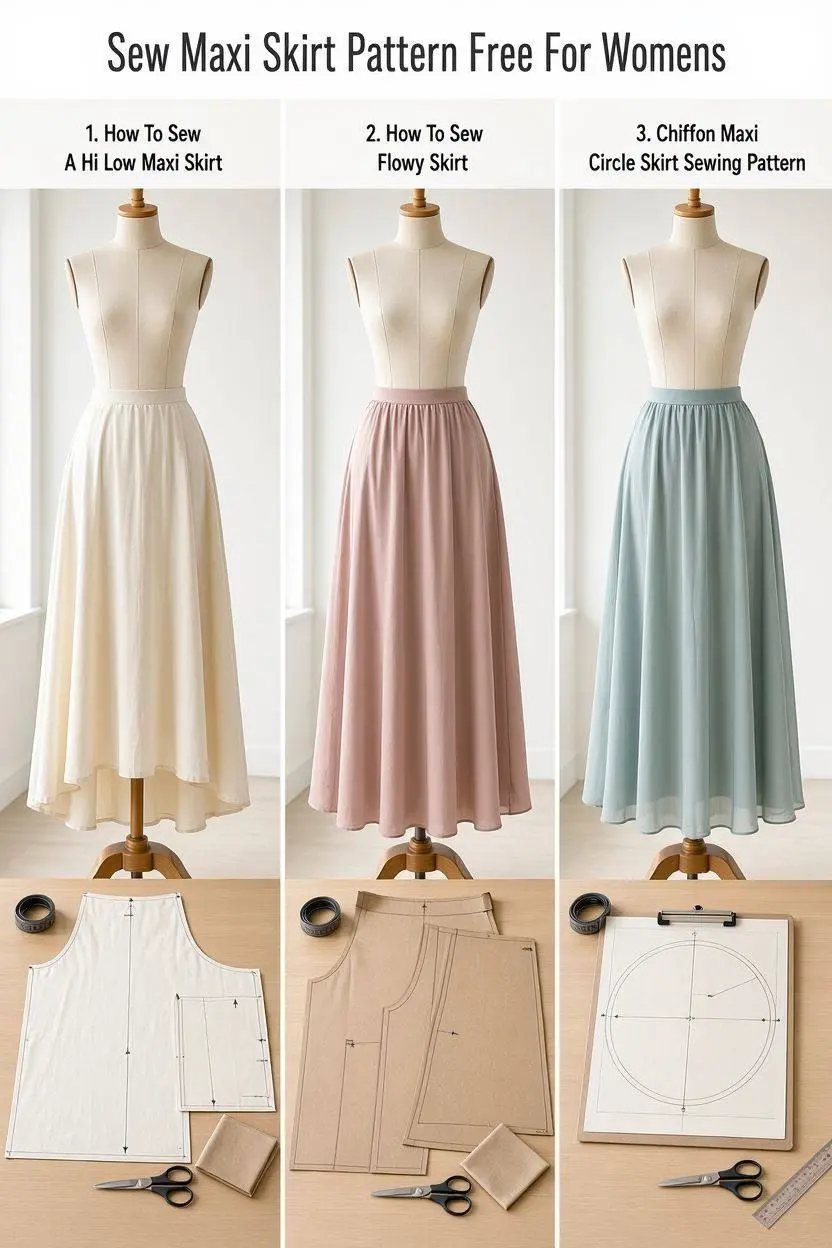
Chiffon looks beautiful, but it slips easily under the needle. Use a new, fine needle. Pin the fabric often, since chiffon shifts under the presser foot.
Cut your circle skirt pattern in a single layer of fabric when you can. This stops the fabric from slipping between layers. Use a rotary cutter for cleaner edges than scissors give you.
Finish each seam with a French seam or a narrow zigzag stitch. This stops the fabric from fraying. Use a rolled hem foot on your machine to hem the bottom quickly. Wear a chiffon maxi skirt for evening events, especially in solid colors or soft floral prints.
4. Tiered Maxi Skirt Sewing Pattern For Girls
Tiered skirts work well for kids’ clothes because each tier is just a rectangle. You gather the top of each tier, then stitch it to the bottom of the tier above.
Start with three tiers. Make each tier wider than the one above it, so the skirt grows fuller toward the hem. Choose a soft cotton or cotton-blend fabric, since kids need comfort and easy washing.
Add a simple elastic waistband, so the skirt still fits as your child grows. Gathering feels tricky at first. Use a basting stitch, then pull the bobbin thread gently to create even ruffles. This pattern builds confidence for anyone new to sewing children’s clothes.
5. How To Sew A Maxi Skirt
Learn this classic method first, and you can build almost any other maxi skirt after it. You need two fabric panels, one waistband piece, and elastic or a zipper for the closure.
Sew the side seams first, with right sides together. Finish the raw edges. Attach the waistband, fold it over, and stitch it down. Leave a small gap if you use elastic.
Thread the elastic through the gap, sew it closed, then hem the bottom. This structure forms the base for most other skirts in this list. Master it, and every other pattern becomes easier.
6. Free Maxi Skirt Pattern
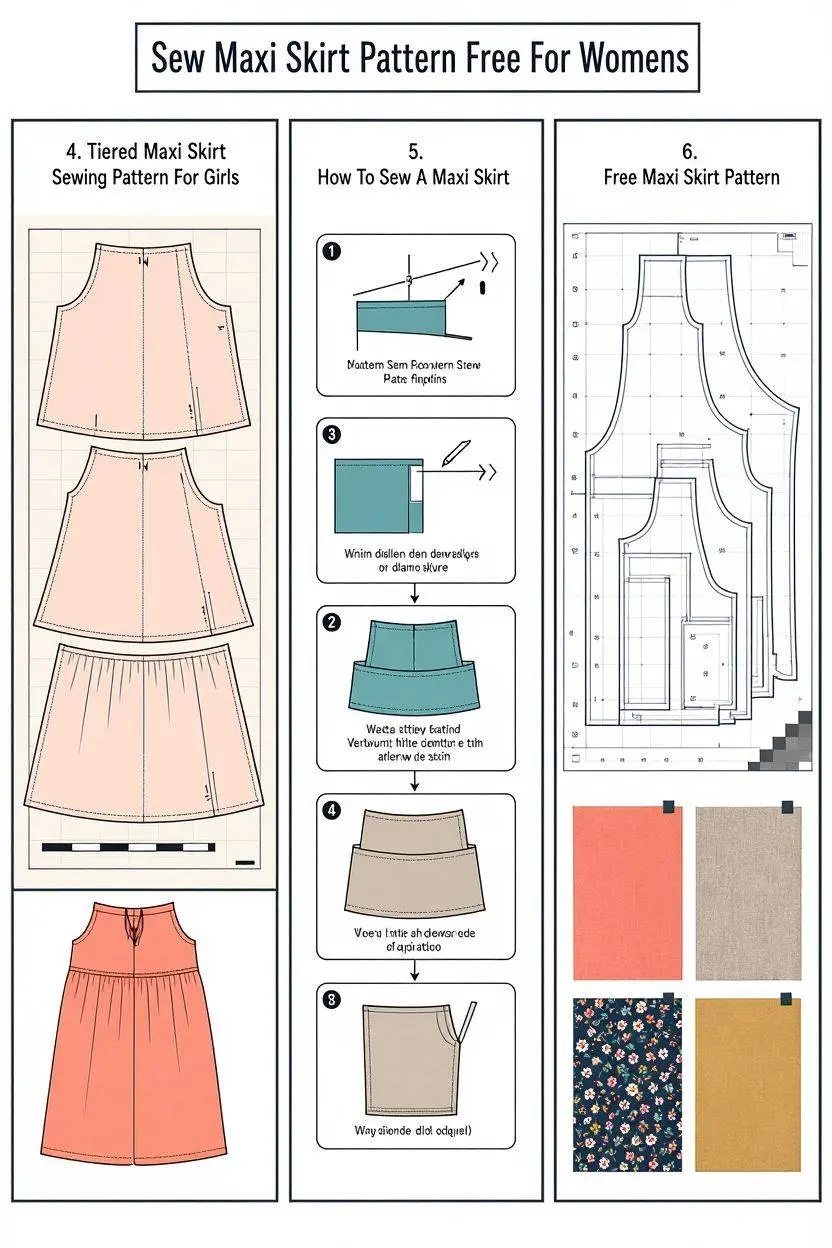
You can find many free maxi skirt patterns from sewing bloggers and independent designers online. Look for a pattern that includes a size chart and a clear seam allowance, since these details change between designers.
Print the pattern at 100% scale. Check the test square before you cut, so your measurements stay accurate. Trace your size onto pattern paper if you plan to reuse it in a different fabric later.
A free pattern lets you try a new style before you buy a paid one. Check reviews or comments from other sewers first, since free patterns sometimes skip the extra testing that paid patterns go through.
7. DIY Empire Waist Maxi Skirt
An empire waist maxi skirt attaches higher on your body, just under the bust if you wear it as a dress, or slightly above your natural waist if you wear it as a skirt. This shape creates a flattering, elongated look.
Measure the higher waistline first. Cut your waistband to match this measurement. Gather the skirt body a bit fuller than the waistband, so it falls smoothly.
Choose a soft, drapey fabric like rayon or jersey knit for this style. This skirt suits anyone who wants less pressure on the natural waist, including during pregnancy or on everyday busy days.
Read: 25 Cute Mardi Gras Outfit Ideas For Women to Steal the Show
8. How To Sew A Long Skirt
A long skirt covers a wider category than a maxi skirt, since you can make it straight, A-line, or gathered. Choose your shape based on the look you want and the fabric you have.
For a straight long skirt, keep the side seams parallel instead of flared. Add a slit at the back or side, so you can walk easily. For an A-line long skirt, angle the side seams slightly outward from the waist to the hem.
Whichever shape you choose, try the skirt on before you hem it. A long skirt shows even small unevenness clearly. Mark the hem while you stand, then take the skirt off to sew.
9. DIY Floral Maxi Skirt
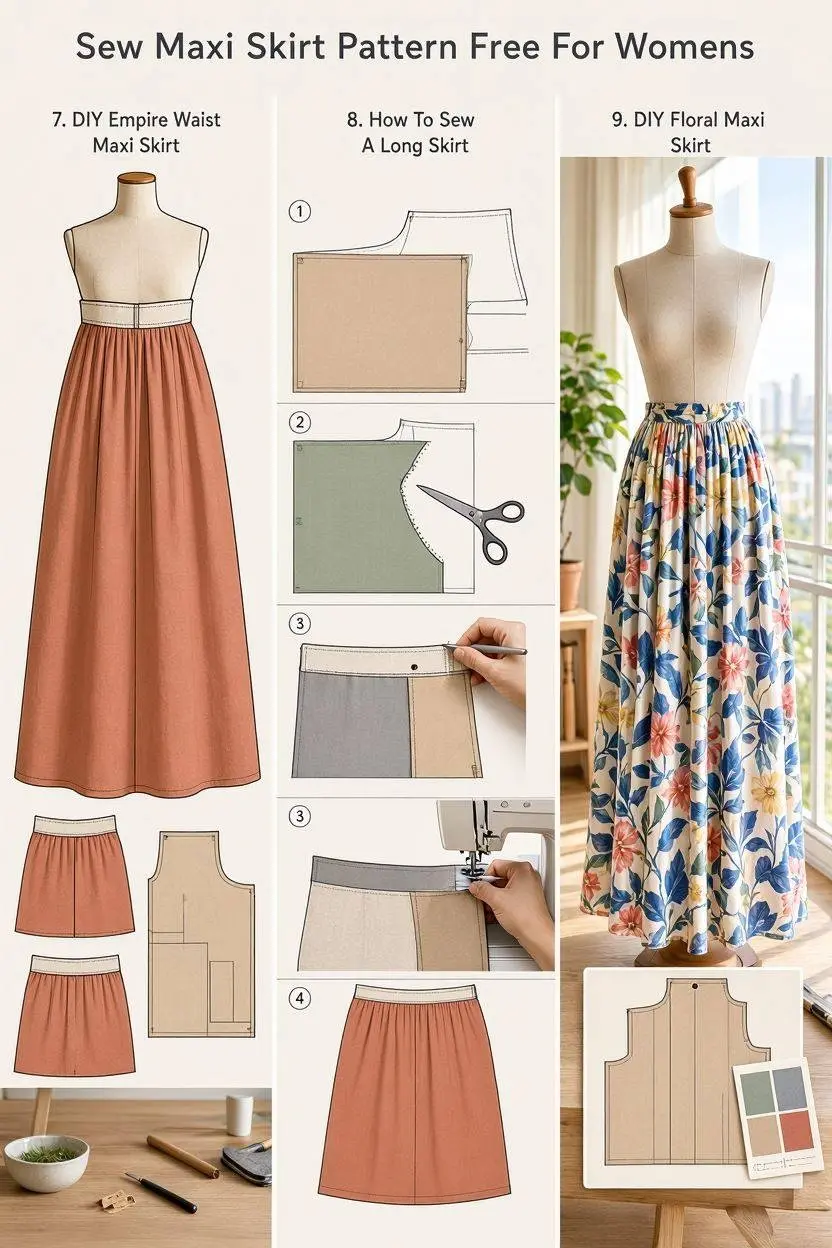
Floral fabric gives a simple maxi skirt instant personality. Pattern placement matters more here than in plain fabric, so lay out your pattern pieces before you cut. Check how the flowers line up first.
Use large floral prints on simple skirt shapes, like a basic gathered or A-line maxi. This keeps the print as the star of the outfit. Small prints work well even on tiered or pleated styles.
Match the print at the side seams when you can, especially with large florals. Mismatched flowers at a seam can look accidental. A floral maxi skirt dresses up a plain top instantly for spring and summer.
10. Pleated Maxi Skirt Pattern
Pleats add structure and a formal touch to a maxi skirt. Choose knife pleats, box pleats, or accordion pleats for this length.
Mark your fold lines evenly across the fabric width with a ruler and fabric marker. Press each pleat with an iron before you stitch along the top edge to hold the shape.
Choose a crisp cotton or a polyester blend, since these hold pleats better than soft or stretchy fabric. Wear this style to the office or to special events, especially in solid colors or subtle stripes that show off the pleat lines clearly.
11. Ruffled Maxi Skirt With Elastic Waist
Ruffles add texture and movement, and you do not need advanced skills to sew them. This style pairs gathered ruffle tiers with a simple elastic waistband for comfort.
Cut each ruffle tier one and a half to two times wider than the tier above it. This makes the gathers look full instead of thin. Sew a basting stitch along the top edge of each ruffle, then pull the threads to gather the fabric before you attach it.
An elastic waist keeps this skirt beginner-friendly, since you skip the zipper completely. Choose lightweight cotton, voile, or rayon, since heavier fabric makes the ruffles feel bulky instead of soft.
12. Sewing A Maxi Skirt With An Elastic Waistband
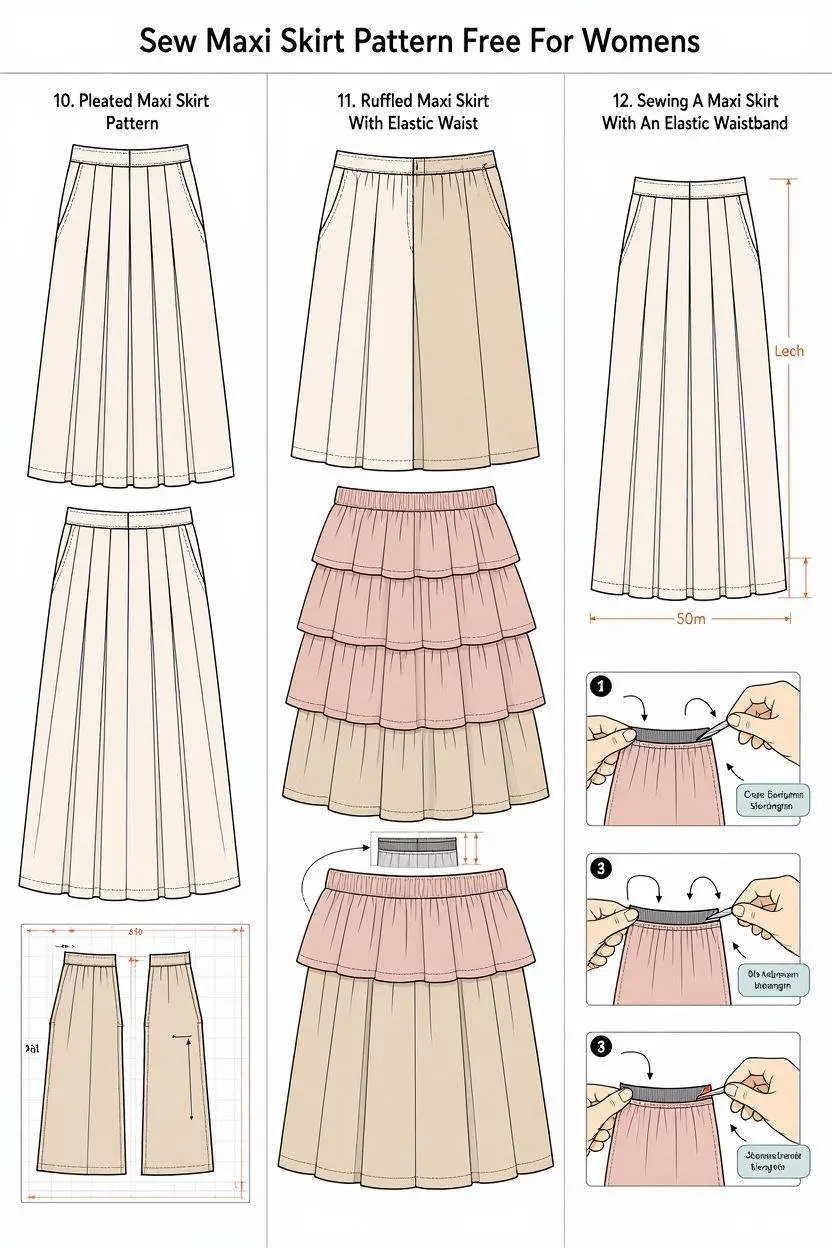
An elastic waistband gives you the fastest, most forgiving way to finish a maxi skirt, especially as a beginner. It also gives you a little flexibility in fit, which helps if your weight changes slightly over time.
Cut a waistband piece about two inches wider than your elastic. Make it long enough to fit your waist plus a small seam allowance. Fold it over, stitch most of the way around, then leave a gap to insert the elastic.
Thread the elastic through the gap with a safety pin. Sew the ends together, then close the gap. This method skips the zipper, buttons, and precise waist measurements, so it works well for your first sewing project.
13. Long Lace Skirt Sewing Pattern
Lace needs a slightly different approach than cotton or rayon, since it can look sheer. Add a solid lining underneath in a matching or contrasting color for most long lace skirts.
Cut the lining and the lace layer separately. Then treat them as one fabric layer once you baste them together at the waist. This step stops the lace from stretching out of shape while you sew.
Use a fine needle. Go slowly over areas with heavy embroidery or beading, since these spots can trip up your machine. A long lace skirt looks elegant at evening events or layered under a slip dress.
14. Sequin Maxi Skirt Sewing Pattern
Sequin fabric catches the eye, but it needs patience to sew well. Most sequin fabric has a backing layer, so you can sew through it directly, though a walking foot helps if you own one.
Trim the sequins away from the seam allowance before you stitch, since sewing over hard sequins can break your machine needle. Clear about half an inch of seam allowance for smoother stitching.
Line the skirt with a soft fabric like cotton or satin, since sequin backing feels scratchy against skin. Save this style for special occasions, since sequins need extra care.
15. White Lace Maxi Skirt Pattern
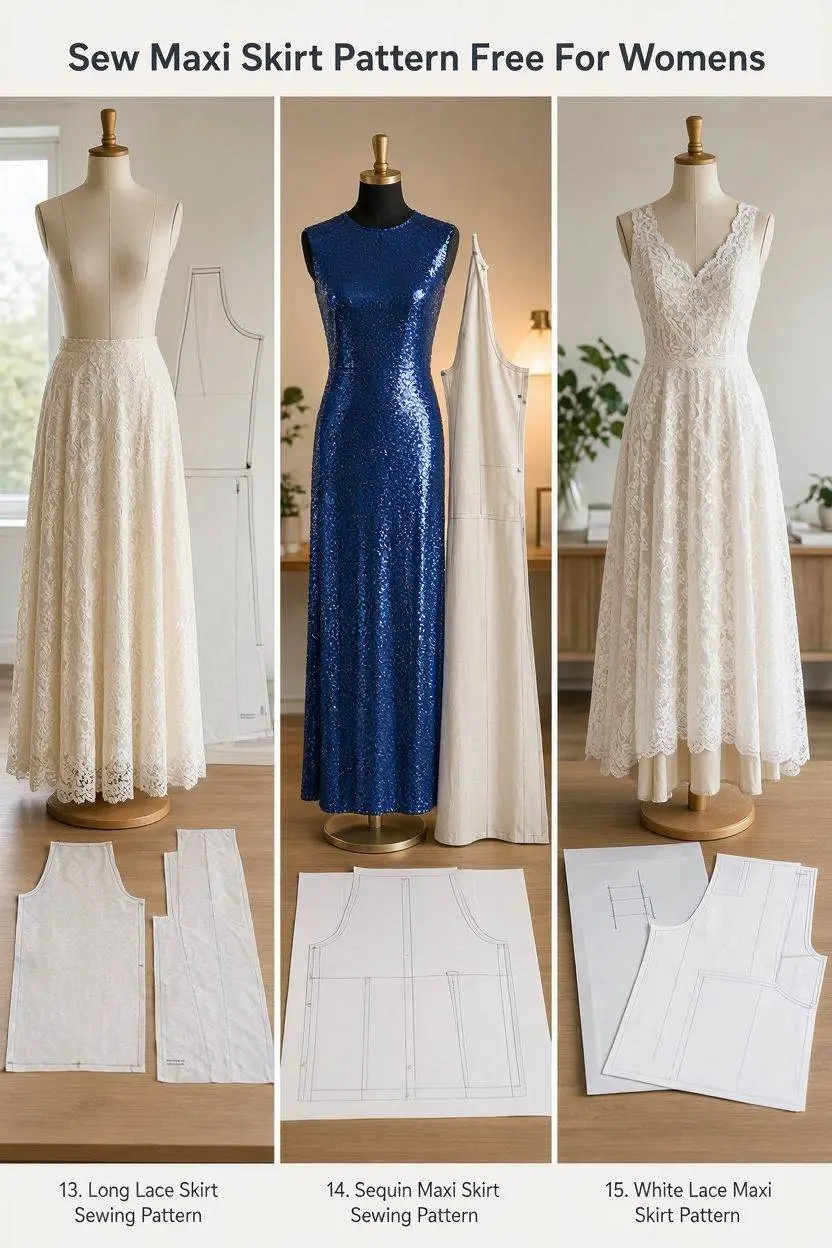
A white lace maxi skirt works well for bridal wear, engagement photos, or summer events. Choose a lace design you like, since white lace patterns range from simple florals to detailed scalloped edges.
Add a solid lining underneath, in white or soft nude, just like with other lace projects. This step stops the skirt from looking see-through. Look for lace with a scalloped edge, and let that edge become your finished hem instead of sewing a new one.
This step skips extra stitching that could interrupt a pretty lace pattern. Pair a white lace maxi skirt with a simple top, and let the fabric detail stand out on its own.
16. How To Sew A Maxi Skirt For Summer
Choose breathable, lightweight fabric over structure for a summer maxi skirt. Cotton voile, linen, and rayon challis work well, since they let air flow through in warm weather.
Keep the design simple. Choose a gathered or A-line shape with an elastic waist, so the skirt stays cool and comfortable. Add side slits to improve airflow and make walking easier in hot weather.
Choose light colors and breathable weaves, since these reflect heat instead of soaking it up. A good summer maxi skirt should feel almost like nothing extra, while it still gives you full coverage from the sun.
Read: 25 Chic Travel Outfits for Women to Wear on Your Next Flight
17. Simple Vintage Long Skirt Pattern
Vintage-style long skirts often use higher waistlines, gentle A-line shapes, and hem lengths that sit at the ankle. Choose cotton or linen in soft, muted colors for this look.
Look at vintage pattern references from past decades for waistline height and fullness. Adapt those proportions to a modern maxi length. Add a button or zipper closure at the back instead of elastic, for a more tailored, period finish.
Add a simple waistband facing instead of a wide elastic band, and keep the silhouette closer to vintage styling. Choose this pattern if you enjoy a slightly more structured project than the average beginner maxi skirt.
18. Maxi Skirt With Pockets Project
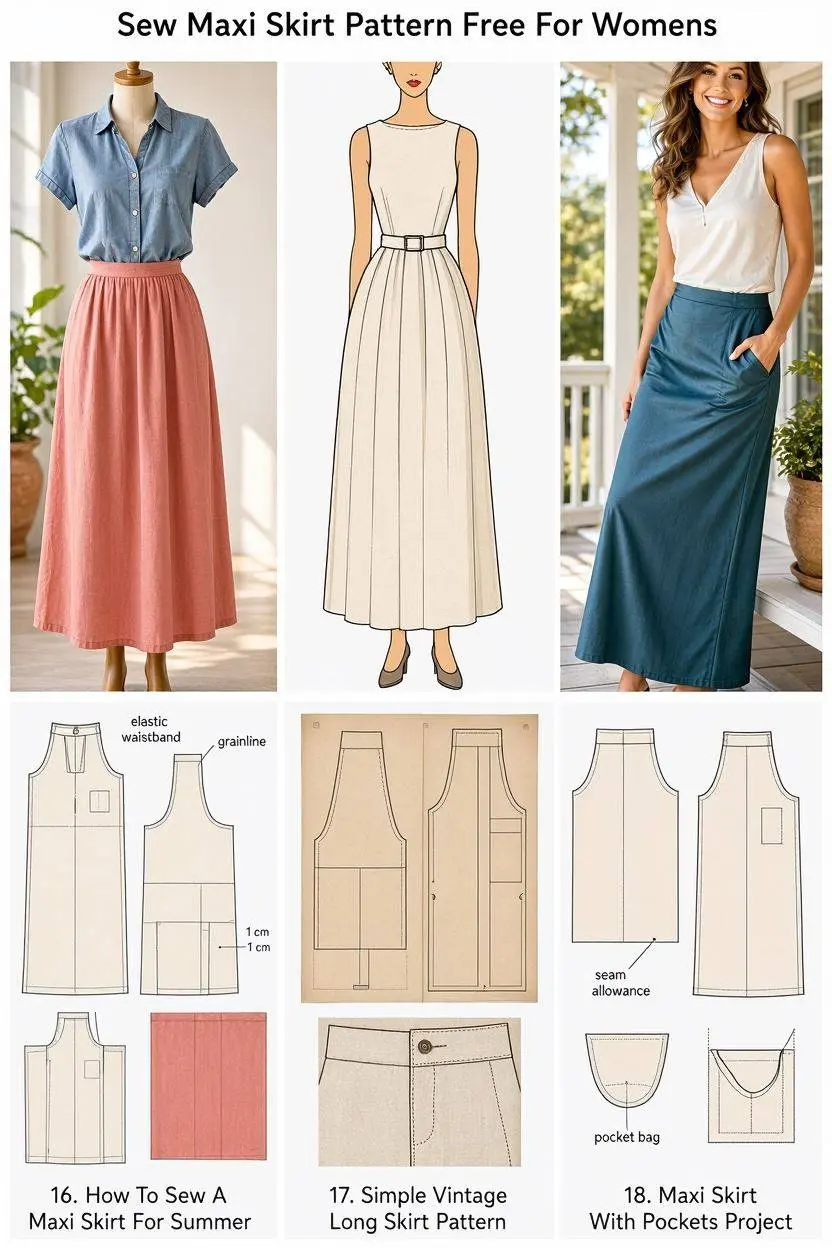
Pockets make any skirt more useful, and you can add them to a maxi skirt more easily than you think. Choose in-seam pockets first, since these hide inside your existing side seams.
Cut two pocket bag pieces for each pocket. Sew them to the front and back skirt panels separately. Stitch the side seam, and sew around the pocket opening instead of straight through it. This step keeps the pocket working while the outside seam still looks clean.
Test the pocket depth with your hand before you finish the seam, so your fingers reach the bottom comfortably. Pockets need only a little extra fabric and effort, but they make the skirt far more useful for everyday wear.
19. How To Make A Maxi Skirt With Elastic Waistband
Choose this method if you want a comfortable, no-fuss project. Measure your waist. Cut fabric to your desired fullness, usually one and a half to two times your waist measurement, for a gathered look.
Sew the side seams. Create a waistband casing by folding over the top edge and stitching close to the raw edge. Leave a gap for the elastic. Insert the elastic, secure the ends, then sew the gap closed.
Hem the bottom edge last, once you try the skirt on and confirm the length. This method skips exact waist measurements, since the elastic adjusts to fit you comfortably.
20. Tulle Maxi Skirt With A Hidden Zipper
Tulle adds volume and a soft, dreamy look, so many sewers choose it for special occasion skirts. Since tulle does not stretch, use a fitted lining with a hidden zipper instead of elastic for this style.
Sew the lining first, as a simple fitted skirt base. Attach layers of gathered tulle on top for volume. Insert an invisible zipper at the back seam of the lining before you attach the tulle layer, so the zipper stays hidden and works well.
Handle tulle gently while you sew, since it snags on rough machine parts or jewelry. Choose this style for photoshoots, parties, or as an extra layer under other skirts.
21. DIY High Low Maxi Circle Skirt Sewing Tutorial
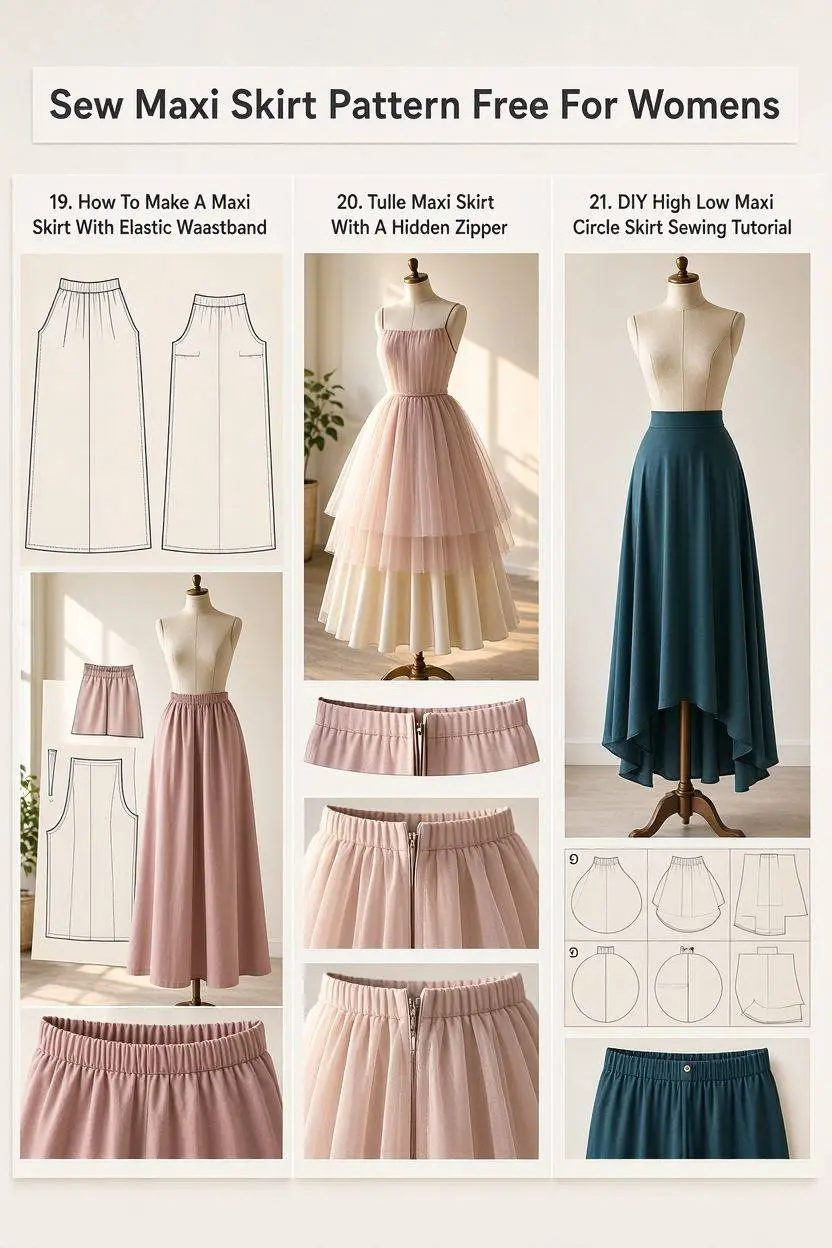
This pattern combines two ideas from earlier in this list: the circle skirt shape and the high low hemline. Start with a full circle or half-circle pattern. Adjust the front curve to sit higher than the back.
Circle skirts already have a curved hem, so blending in the high low shape stays fairly simple. Draw the higher front curve first. Then taper it down gradually to the original hemline at the sides and back.
Choose a soft, flowy fabric like rayon or chiffon, since these show off the movement of this design best. Try this tutorial once you feel comfortable with basic circle skirt construction and want a slightly more advanced hemline.
22. DIY Denim Paperbag Maxi Skirt with Belt
A paperbag waist has extra fabric gathered at the top. You cinch it in with a belt, and this creates a soft folded effect above the waistline. Denim gives this style a sturdy, casual look.
Cut the skirt panel a few inches taller than your desired finished length, to allow for the folded-over paperbag section. Add belt loops at the natural waistline, so the belt sits in the right place once the extra fabric folds down.
Denim runs thicker than most maxi skirt fabrics, so use a denim or heavy-duty needle to avoid skipped stitches. Pair this style with a simple top for casual daytime outfits.
23. DIY Maxi Skirt with High Split Pattern
A high split adds movement and makes walking easier in a long, narrow skirt. Plan the split location before you cut, usually at a side seam or the center front or back seam.
Sew the seam up to the point where you want the split to begin. Leave the rest of the seam allowance open below that point. Finish the raw edges of the split with a narrow hem or bias tape, so they do not fray over time.
Choose a high split for straight or pencil-style maxi skirts, since these shapes would otherwise limit your movement. This detail turns a simple long skirt into a more dramatic, eye-catching piece.
24. Long Maxi Wrap Skirt Pattern
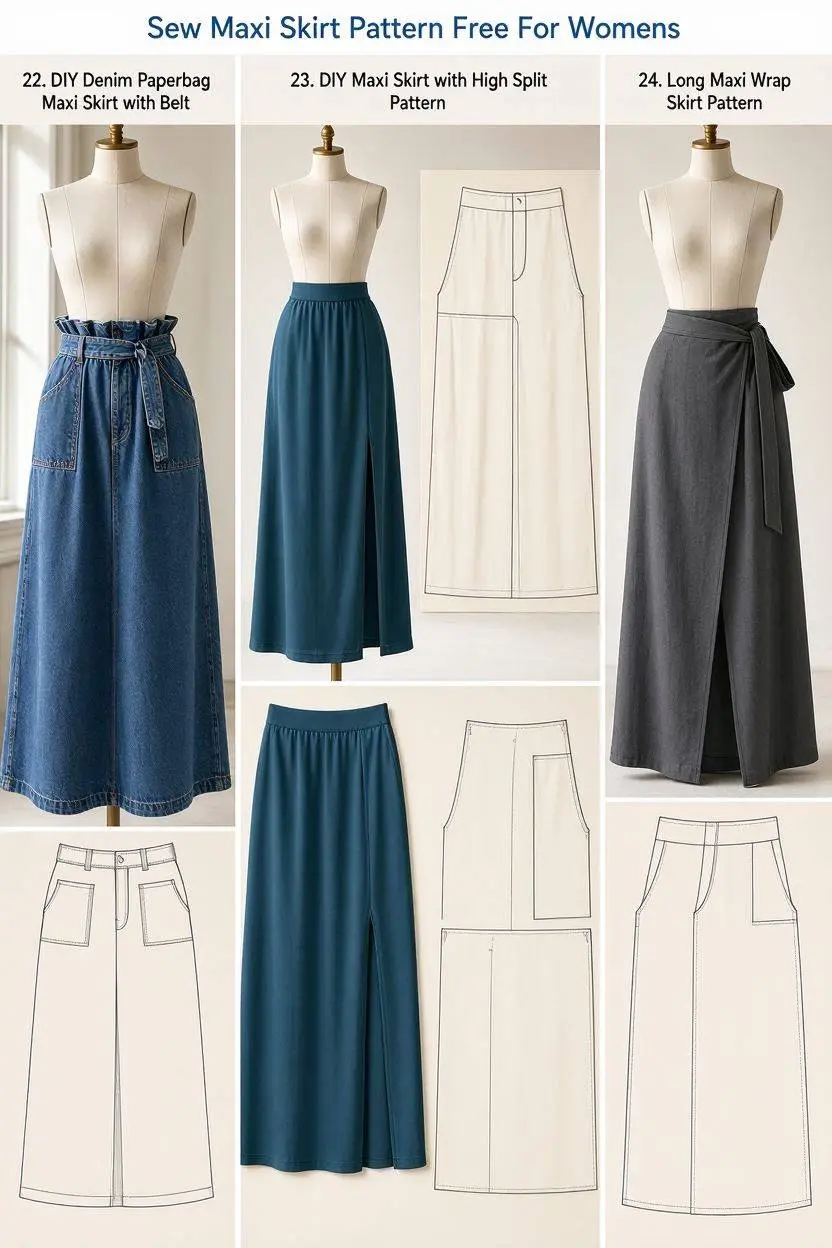
A wrap skirt closes when one side overlaps the other and ties at the waist, instead of using a zipper or elastic. This makes it one of the most adjustable maxi skirt styles, since it fits a range of body sizes.
Cut the skirt as one wide panel, and add extra width for the overlap and the ties. Attach long fabric ties or ribbon at the waistline, so you can wrap and knot the skirt to fit you.
This pattern forgives beginner mistakes easily, since you skip precise waist measurements or a fitted waistband. Wear a wrap maxi skirt as a cover-up for the beach or pool too.
25. Easy How To Sew A Maxi Skirt
Keep your first maxi skirt project as simple as possible. Choose a stable, easy-to-handle fabric like quilting cotton, a basic elastic waistband, and a straight or slightly A-line shape.
Cut two rectangle or trapezoid panels. Sew the side seams. Add the elastic waistband, then hem the bottom. Skip gathers, ruffles, or slits for your first attempt, since these steps can feel overwhelming early on.
Finish this basic version, and you gain the core skills you need to try any of the more detailed styles from this list. Your confidence grows fast once you finish one project.
Read: 25 Unique Matching Family Photo Outfit Ideas You’ll Love
Conclusion
A maxi skirt gives beginners one of the friendliest garments to sew, and this list shows how many directions you can take it. Choose a flowy chiffon circle skirt, a sturdy denim paperbag style, or a simple elastic waist project. This list gives you a pattern for your skill level and your style.
Start with a fabric and shape that feels manageable to you. Build up to more detailed techniques like pleats, splits, or hidden zippers later. Each skirt you finish teaches you something useful for the next one. Pick a pattern from this list today, and start your own easy to sew maxi skirt pattern free project.
Frequently Asked Questions
What is the easiest way to sew a maxi skirt for a beginner? Use two straight fabric panels, simple side seams, and an elastic waistband instead of a zipper. This method skips fitted waist measurements and complicated closures, so it works well as a first project.
How much fabric do I need for a maxi skirt? Most maxi skirts need about two to three yards of fabric, depending on your height and how full you want the skirt. Circle skirts and gathered styles need more fabric than straight or A-line shapes.
Can I sew a maxi skirt without a sewing pattern? Yes, you can make many maxi skirts using simple rectangles or trapezoid shapes based on your waist and hip measurements. A pattern helps with more fitted or detailed styles, but basic shapes work fine for gathered or elastic-waist skirts.
What fabric works best for a flowy maxi skirt? Choose rayon, chiffon, or cotton voile, since these fabrics drape softly and move well while you walk. Stiffer fabrics like quilting cotton or denim work better for structured styles like pleated or paperbag skirts.
How do I hem a maxi skirt evenly? Try on the skirt and mark the hem while you stand, using a hem marker or a helper, since gravity affects how the fabric hangs. Take the skirt off to sew the hem, then try it on again to check the length before you trim any extra fabric.
