Summer means shorts season. And a free shorts sewing pattern lets you skip the store and make a pair that fits your body, in a fabric you actually like, for just the cost of some thread. Below, you’ll find 25 free shorts patterns for women, men, and kids, plus real tips I’ve picked up from making dozens of pairs myself.
I’ve sewn shorts in linen, cotton, denim, and jersey, and I’ve made almost every mistake you can make along the way. So take these tips as things I learned the hard way, not just theory. Let’s get into the list.
1. Paper Bag Waist Shorts Pattern
Paper bag waist shorts have extra fabric at the top that folds over, just like the top of a paper lunch bag. You tie a thin belt around it or thread a drawstring through it. I love this style because the elastic underneath does all the real work, so the fit forgives a lot.
Pick a fabric with some drape, like linen or lightweight cotton. Stiff fabric won’t fold nicely at the waist; it just sticks out. I made my first pair in a heavy cotton and regretted it instantly, since the fold looked stiff and boxy instead of soft. Switch to a soft mid-weight linen, and press that fold well before you sew the belt loops on.
2. Drawstring Linen Shorts – Free Pattern
Drawstring linen shorts sit near the top of my list for anyone just starting to sew. You skip the zipper and the fly completely. Instead, you sew a simple casing at the waist and pull a drawstring through it.
Linen breathes well in the heat, and it gets softer every time you wash it. Line your pattern up with the straight grain running down the leg, or the shorts will hang crooked. I finished my first pair in one afternoon, start to finish, and that quick win kept me sewing. Add deep side pockets while you’re at it. You’ll want somewhere to put your keys and phone on a hot walk.
3. Simple Shorts Sewing Pattern for Kids
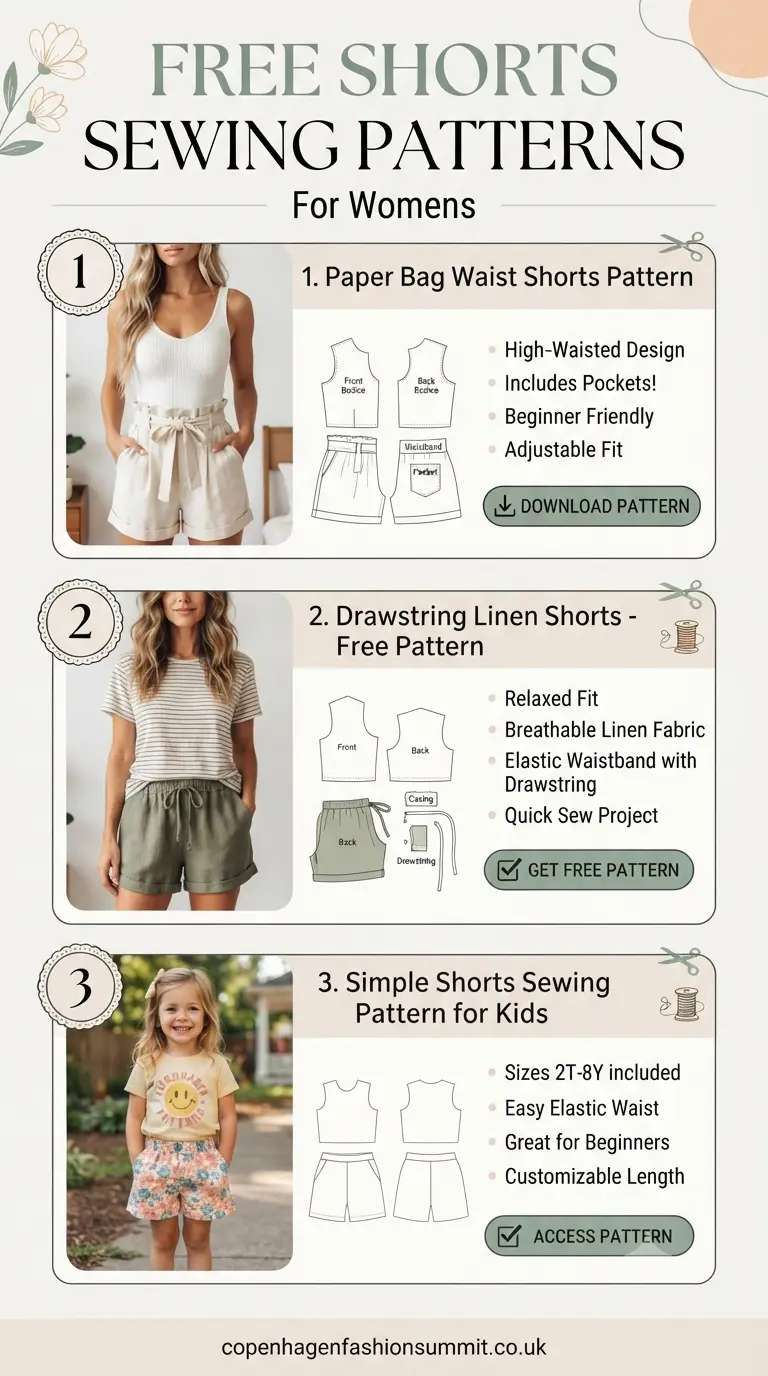
Kids’ shorts patterns are usually the simplest patterns you’ll find anywhere, and that makes them a great first project. Most only need two pieces, a front and a back, plus an elastic waistband.
Choose a stretchy elastic, about three-quarters of an inch wide, so kids stay comfortable through a full day of running around. Cotton or seersucker holds up well to grass stains and washes easily. Here’s a mistake I made once: I cut the waist elastic too tight and my niece complained all day. Measure loosely around the child’s waist and add an inch before you cut.
4. Easy Pajama Shorts for Beginners
Pajama shorts might be the most forgiving thing you’ll ever sew. No zipper, no buttons, just one seam down each side, an inseam, and an elastic casing at the waist.
Soft cotton flannel or jersey both work well. If you use jersey, switch to a stretch stitch or use a walking foot, or your seams will pop the first time you sit down (ask me how I know). Cut the legs a bit longer than you think you need, since flannel shrinks a little the first time you wash it. This pattern helped me practice even seams and a clean waistband before I moved on to harder projects.
5. How to Sew Shorts
Every shorts pattern, no matter the style, follows roughly the same order. Once you learn these steps, you can make almost any shorts pattern you find.
Steps to sew shorts:
- Cut your front and back pieces, plus pockets if you’re adding them.
- Sew the front pieces together at the crotch seam.
- Sew the back pieces together at the crotch seam.
- Pin front to back at the side seams and inseam, then sew.
- Finish the waist with elastic, a drawstring, or a waistband.
- Hem the legs to the length you want.
Press every seam as you go. I skipped this step for years and my shorts always looked homemade in the wrong way. Pressing makes the biggest difference of anything on this list.
6. Sew Your Own Shorts
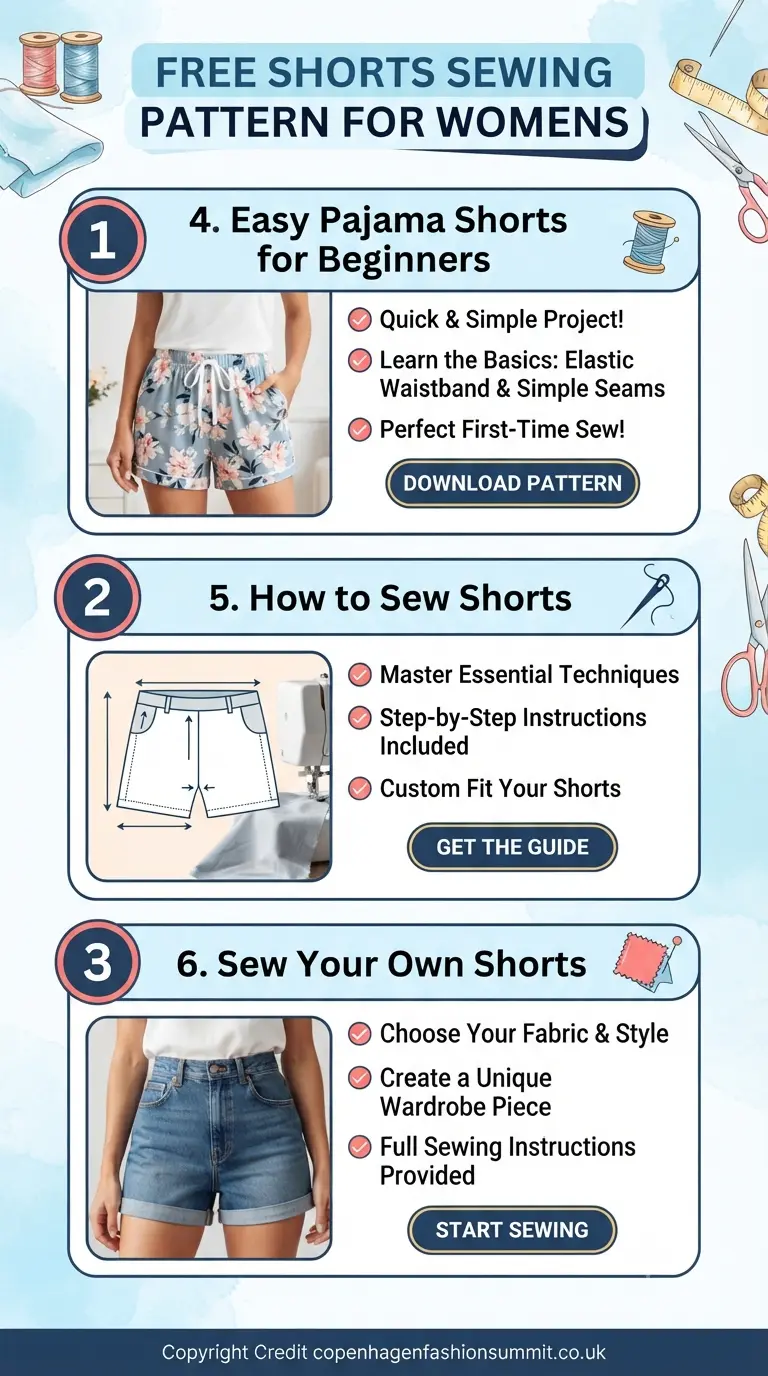
You can sew shorts from scratch, without buying any pattern at all. Start by taking your own measurements: waist, hip, and rise (the distance from your waist down to the crotch seam), plus the inseam length you want.
Grab a pair of shorts that already fits you well, lay it flat on paper, and trace around it. Add about half an inch around the edges for your seam allowance. This trick skips pattern shopping entirely, and you already know the fit works. Write your measurements down in a notebook so your first pair becomes a pattern you can reuse for every pair after that.
7. Jules Pleated Shorts – Free Downloadable Pattern
The Jules pattern is a free download from Fabrics-store.com, and it’s become one of my go-to patterns for a dressed-up but relaxed look. It has soft pleats at the front, an elastic back waist, two deep side pockets, and two patch pockets on the back.
Because the front stays flat and pleated while the back stretches, these shorts look tailored up front but feel comfortable all day. Medium-weight linen holds those pleats best. Plenty of sewists say this pattern also works beautifully when you lengthen it into trousers, so hang onto the pattern pieces even after your first pair.
Read: 18 Stylish & Free Bikini Sewing Patterns for Every Body Type
8. Free Kids Shorts Pattern for Summer
A good summer shorts pattern for kids needs to sew up fast and move easily with an active kid. Look for an elastic waist, no fly, and simple straight side seams. Kids climb, run, and get washed constantly, so simple wins every time.
Quilting cotton in a fun print keeps costs down, since you can cut several pairs from one length of fabric. Give a bit of extra room through the seat and thigh, since kids grow fast and you want the shorts to last more than one summer. Wash and dry your fabric before you cut it, because cotton shrinks a little on the first wash.
9. Men’s Boxer Shorts Sewing Pattern
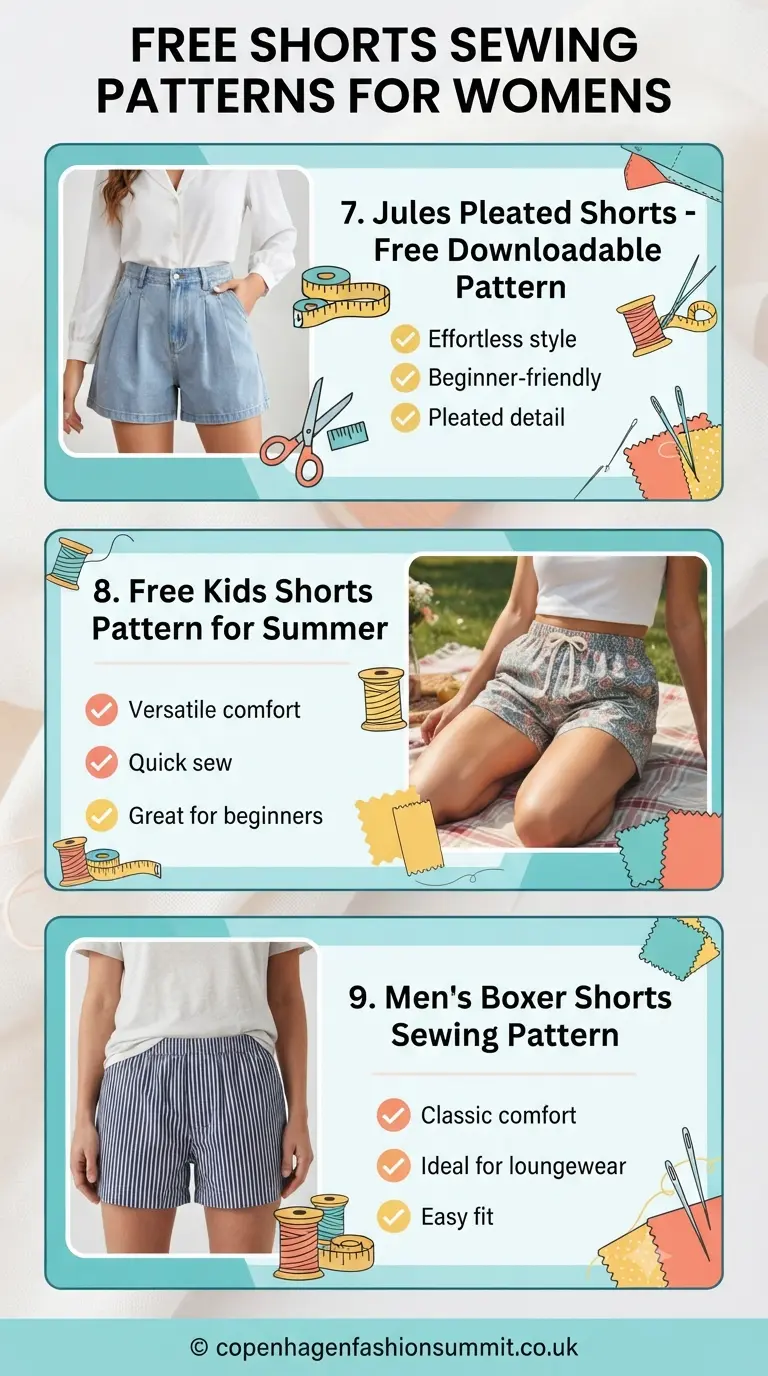
Boxer shorts might be the easiest garment you’ll ever sew. A free men’s boxer pattern usually needs just one main piece, cut twice. The waist uses a wide elastic casing, and you finish the legs with a simple folded hem.
Cotton lawn, flannel, or quilting cotton all work fine here, since boxers don’t need any stretch. Leave a slightly bigger seam allowance at the crotch seam, since that’s the seam under the most strain. Don’t cut the rise too short. I made that mistake once, and the shorts were uncomfortable from the first wear. Check the pattern’s finished measurements against a pair you already own and love.
10. Crossover Boho Inspired Shorts with Pom Poms Trim
Boho-style shorts often use a crossover or wrap-style waistband, so the front has a twisted, layered look instead of a plain seam. Add pom pom trim along the hem, and you’ve turned a basic pair of shorts into a festival outfit.
Lightweight cotton or rayon works best for that wrap detail, since stiff fabric won’t twist smoothly. Sew the pom pom trim on near the end, and tuck the raw edge of the trim tape just inside the hemline before you stitch it down, so no loose threads show. Swap the trim color or width to match different outfits, and you’ve got one pattern that never gets boring.
11. Printable Gym Shorts Sewing Pattern
Gym shorts need room to move, so most patterns give you a wider leg opening and a fully elastic waistband with no restrictive seams. Many patterns look like a simplified pajama short, but use stretch knit or moisture-wicking fabric instead of cotton.
Use a double layer of elastic, or elastic paired with a drawstring, to keep the shorts secure while you exercise without digging into your skin. Pick a fabric with at least some stretch, since stiff woven fabric restricts you at the hip every time you run or squat. Finish the leg openings with a simple folded hem, or a coverstitch if your machine has one, for that clean, athletic look.
12. DIY Shorts with Pockets
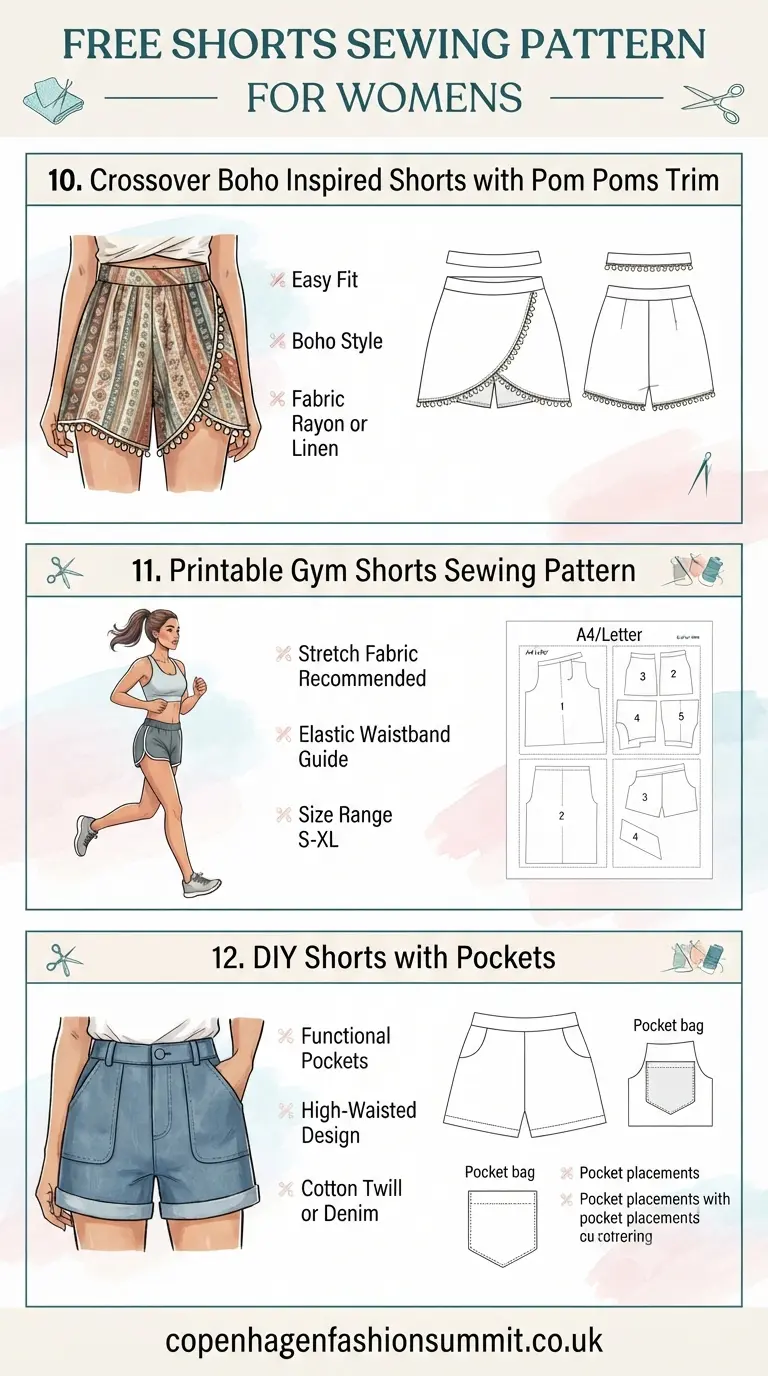
Pockets make almost any pair of shorts more useful, and adding them is easier than you’d think. Side seam pockets are the simplest option: you just insert a pocket bag into the side seam before you sew it closed.
Patch pockets, sewn flat onto the front or back, work great for beginners too, and they add a nice design detail. Whichever style you pick, interface the pocket opening with a strip of lightweight interfacing, or it will stretch out of shape with use. I learned this after my first patch pocket sagged within a month. This one small step keeps pockets looking neat for years.
13. Girls Dance Shorts Pattern
Dance shorts need to stretch and move with the body, so these patterns almost always call for a four-way stretch knit, like a spandex blend or athletic jersey. The waistband usually uses fold-over elastic instead of a separate casing, so it lies flat under a leotard.
Because the fabric stretches, you often cut the pattern smaller than the dancer’s real measurements and let the fabric do the rest. Check the pattern’s fabric requirements before you cut, since a woven fabric mix-up leaves the shorts too tight to move in. Use a twin needle or a stretch stitch on the hems, or you’ll get popped seams during practice.
14. How to Sew Kids Shorts Without a Pattern
You don’t need a printed pattern to make kids’ shorts. Grab a pair that fits well, fold it in half lengthwise, and trace the shape onto paper. Add about half an inch around the edges for your seam allowance.
This trick works great when a kid grows fast, since you can redraw the pattern a size up using their current favorite pair as your guide. Cotton or seersucker forgives small mistakes in this kind of freehand pattern-making. Keep the traced pattern in a labeled envelope with the child’s name and size, so it’s ready again next summer without you starting from scratch.
15. Sewing Shorts from Pants
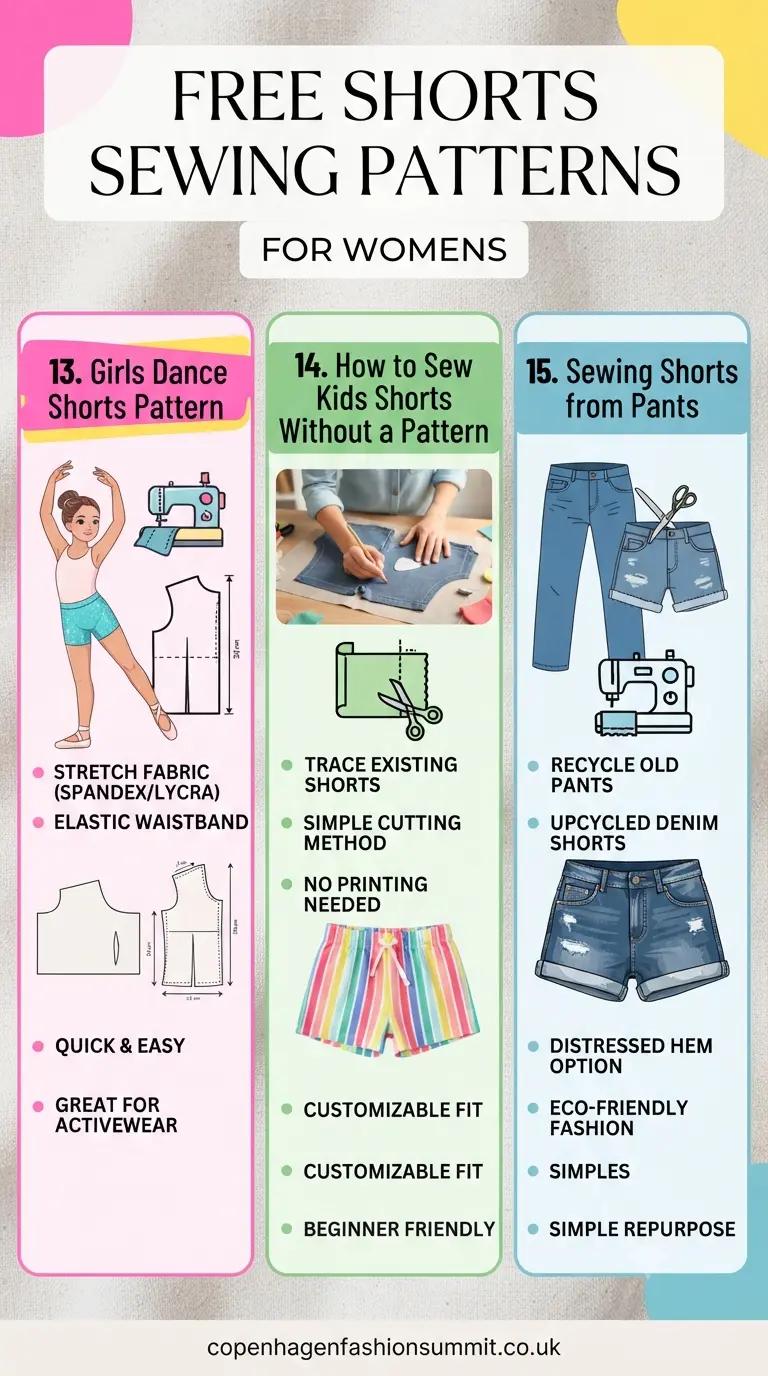
Turning old pants into shorts might be the fastest sewing project you’ll ever finish, and it saves jeans or trousers that are worn through at the knee. Measure and cut the legs to the length you want, and leave an extra inch for the hem.
Fold the raw edge under twice and topstitch it for a clean finish, or leave the edge raw and let it fray for a casual look. Denim works best for this project, but the same trick works on chinos, linen pants, or even old sweatpants. Always try the pants on before you cut, so you get the exact length you want the first time.
Read: 25 Free and Quick Maxi Skirt Patterns Perfect for Beginners
16. How to Make Piper Shorts
The Piper Shorts, a free pattern from Mood Fabrics, have a faux-belted paper bag waist with elastic hidden underneath, so they look tailored but wear like something far more relaxed. The pattern comes with back pockets and a wide size range.
Linen drapes nicely into that gathered waist without adding bulk, so it’s the fabric I’d reach for first. Sew the front panels together at the rise, then the back panels, then join the sides. Interface the belt piece before you sew it. Skip this step and the belt loses its shape fast, trust me.
17. DIY Gathered Shorts with the Eve
The Eve is a free gathered shorts tutorial from The Essentials Club, built around an elastic waist and French seams for a clean finish inside and out. French seams enclose every raw edge, which matters a lot with linen, since it frays so easily.
To sew a French seam, stitch the pieces wrong sides together first with a small seam allowance, trim close to the stitching, then flip the fabric and sew again with right sides together to enclose that raw edge. It takes a bit more time than a regular seam, but you get a tidy result even without a serger. I like using this pattern whenever I want to practice better seam finishing.
18. DIY City Gym Shorts for All Ages
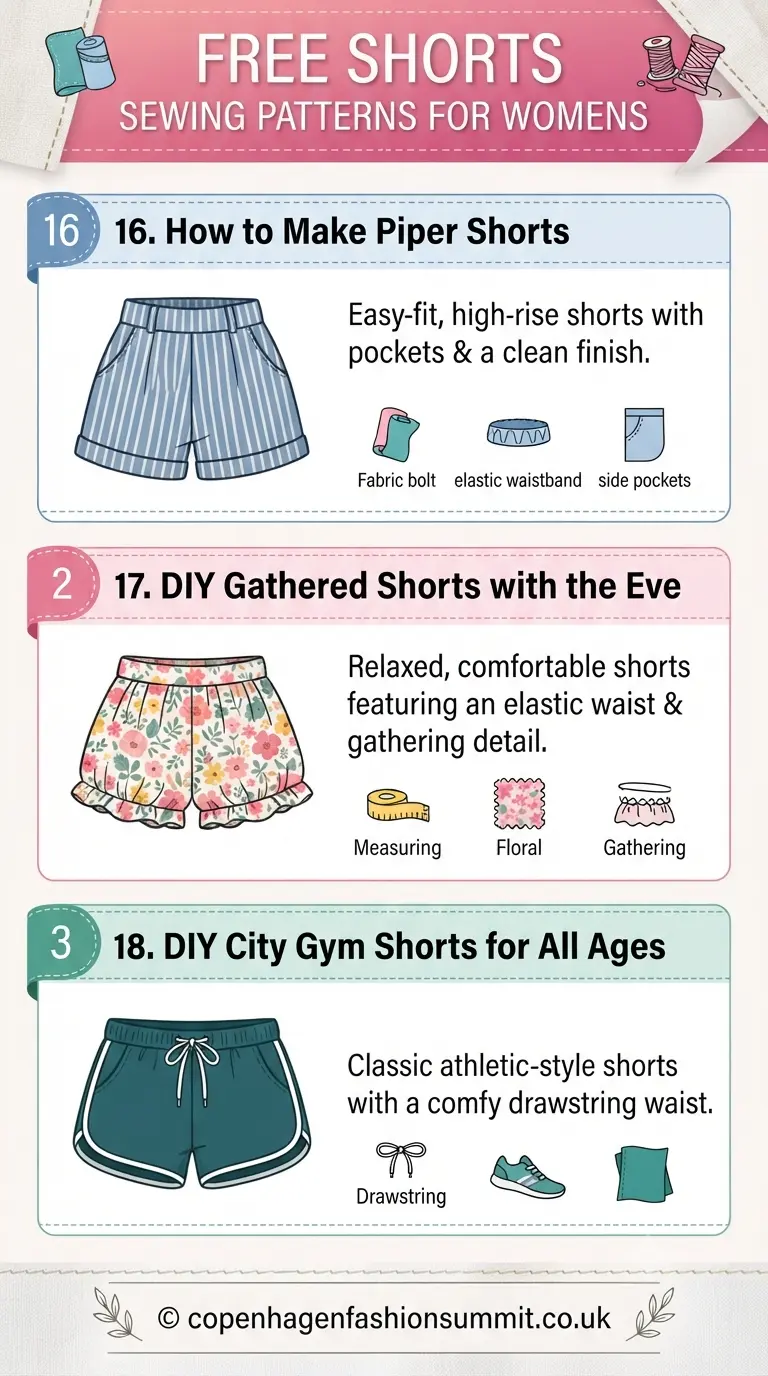
City Gym Shorts, a long-running free pattern from Purl Soho, stays popular because one set of pattern pieces covers a huge size range, from toddlers around age two all the way to adult hips up to 46 inches. The design uses just three pieces: front, back, and waistband, and bias tape finishes the leg openings.
Because the range is so wide, I love making matching shorts for parents and kids from this one pattern. Quilting cotton or chambray both work well here. Trim back some of the extra fabric layers inside the waistband fold if your fabric runs thick, since it reduces bulk and makes the shorts more comfortable.
19. Elasticated Waist Shorts PDF Pattern
An elastic waist is the fastest, most forgiving finish for any pair of shorts, which is why so many free PDF patterns use it as the default. Instead of a zipper and a buttonhole, you just fold over a casing at the waist and thread elastic through it.
For a comfortable fit, use two rows of narrower elastic instead of one wide piece. Two rows move with your body more naturally at the hips. Measure the elastic snugly around your own waist instead of trusting the pattern’s default length, since everyone’s waist measurement is a little different. This style works great for beginners, loungewear, and kids’ clothes alike.
20. Mood Fabrics Piper Shorts Pattern
I want to come back to the Piper Shorts pattern from Mood Fabrics, because its size range deserves a mention: it runs from a US size 0 up to a 30, so it’s one of the more size-inclusive free patterns you’ll find. The finished shorts fit slightly close through the thigh, so take a thigh measurement before you cut if you want a looser leg.
Want a flared silhouette instead of that fitted thigh? A small alteration to the leg width at the hem is all it takes. This pattern pairs beautifully with mid-weight linen or seersucker, since both hold the pleated front and gathered waist nicely through a full day of wear.
21. How to Sew a Pair of Waist Faced Shorts
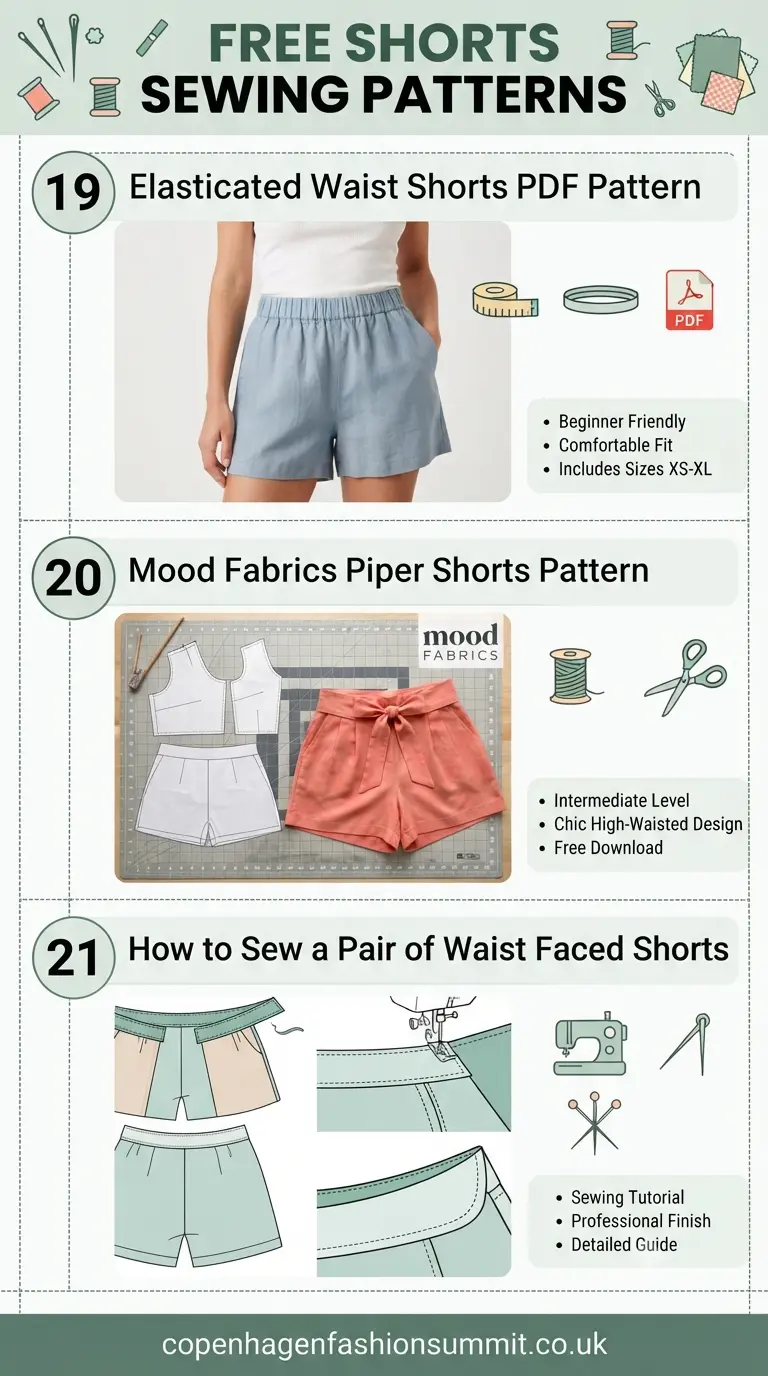
Waist-faced shorts skip the separate waistband entirely. Instead, you sew a facing piece, cut to match the shape of the top edge, to the inside of the shorts, then flip it under for a clean finish without extra bulk at the waist.
This technique shines on shorts with a fly front or a fitted waist, since a facing sits flatter than a folded waistband. Understitch the facing close to the seam before you flip it under, or it rolls to the outside when you wear it. This technique takes a bit more skill than an elastic casing, so try it once you feel comfortable with basic shorts construction.
22. Women’s Pajama Shorts Pattern
Women’s pajama shorts patterns usually go for a relaxed, wide-leg fit with a full elastic waist for maximum comfort. Soft cotton, flannel, or bamboo jersey all feel gentle against your skin overnight, so any of the three works well.
Add a contrast trim or piping along the hem if you want a little extra detail, though it’s completely optional. Prefer a fitted look while you sleep? Choose a jersey knit instead of woven cotton, since the stretch hugs your body without you needing extra ease built into the pattern. Either way, you’ll finish this in a weekend, and it makes a lovely handmade gift too.
23. Women’s Sleep Shorts Sewing Pattern
Sleep shorts look a lot like pajama shorts, but you usually cut them a bit shorter and slimmer through the leg. A simple elastic waistband, sometimes paired with a drawstring for adjustability, finishes the look.
Lightweight cotton lawn or a soft jersey knit both work well, depending on whether you want a woven or stretch fit. Since these shorts are for sleeping, comfort matters more than a tailored look, so go a little looser at the waist and leg opening. Sew a flat-felled or French seam on the inseam so nothing rubs against your skin overnight.
24. Unisex Boxer Shorts Sewing Pattern
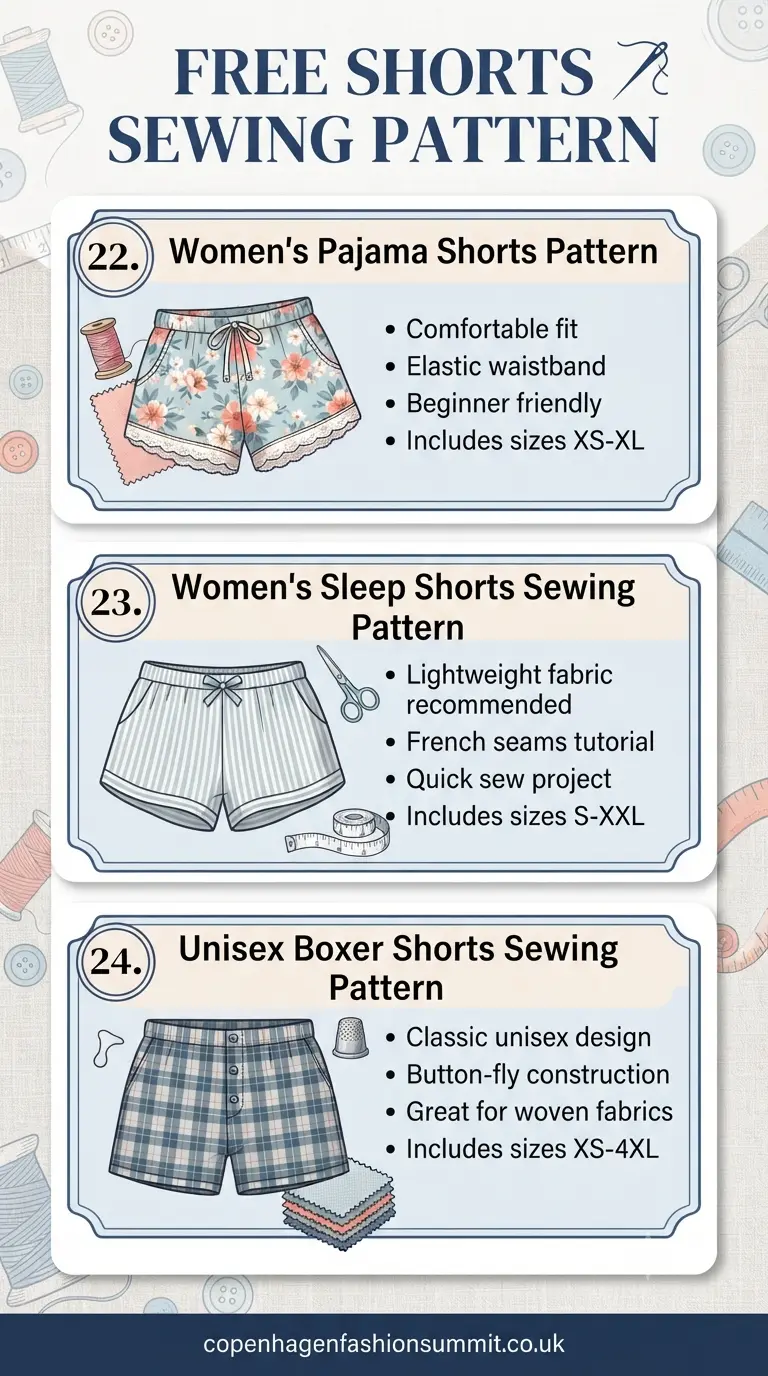
A unisex boxer shorts pattern fits a range of body shapes with a simple, straight cut and a roomy elastic waist. I keep this pattern on hand because I can resize the same pieces for different people in my house.
Soft cotton or flannel are the classic fabric choices, and a wide, comfortable elastic, around one to one-and-a-half inches, keeps the waistband wearable all day. Since the fit stays loose by design, sizing forgives more mistakes than fitted garments do, though it still helps to check the pattern’s finished hip measurement against your own before you cut.
Read: 25 Fresh & Fun Natural Hairstyles for Little Black Girls
25. Super Easy And Detailed Shorts Drafting Tutorial
Want to draft your own shorts pattern instead of using a printed one? A drafting tutorial walks you through the math behind the shape, using your own measurements: waist, hip, rise, and inseam.
Measurements you’ll need:
- Waist circumference
- Hip circumference
- Rise (waist to crotch seam)
- Inseam length
Drafting takes longer than using a ready-made pattern, but every future pair fits your exact body. Once you draft and test one pair, save the pattern and reuse it forever, tweaking the leg length or waist finish whenever trends change.
Conclusion
A free shorts sewing pattern gives you one of the best ways to build a wardrobe that actually fits, without spending much beyond fabric and thread. From elastic-waist basics to pleated linen styles like the Jules and Piper patterns, you’ll find something here for every skill level and every person in your family.
Start with a simple pattern if you’re new to sewing, then work your way up to techniques like facings and French seams as you grow more confident. Pick a fabric that suits the season, press every seam as you go, and you’ll end up with a pair of shorts you’ll want to wear all summer long.
Frequently Asked Questions
What is the easiest shorts pattern for beginners? Pick an elastic-waist pattern with no zipper or fly, like basic pajama shorts. You’ll only sew a few straight seams and fold a casing for the elastic, so there’s very little room to go wrong.
What fabric works best for summer shorts? Choose lightweight, breathable fabrics like linen, cotton lawn, or seersucker for summer shorts. They let air move through and feel cool against your skin in hot weather.
How much fabric do I need to sew a pair of shorts? Most adult shorts patterns need about one to one and a half yards of fabric, depending on your size and the fabric width. Always check your specific pattern’s yardage chart, since wider leg styles eat up more fabric.
Can I make shorts without a sewing pattern? Yes. Trace a pair of shorts you already own and love onto paper, then add a small seam allowance around the edges. You get a custom pattern without buying or printing anything.
What’s the difference between a paper bag waist and an elastic waist? An elastic waist is a plain casing with elastic threaded through it. A paper bag waist adds extra fabric above the waistline that folds over like the top of a paper bag, usually held down with a thin tie or belt.
