
Why Short Hair Is Having Its Biggest Moment in Years
Over the last 18 years behind the chair, I’ve watched short hair go through every possible reputation — “brave,” “low-maintenance,” “high-maintenance in disguise,” “a midlife thing,” and now, finally, simply fashionable. Right now, in 2026, I’m cutting more short hair than I have at any point in my career, and it isn’t a fluke. It’s the bixie, the cowboy bob, the curly baby bob, modern mullets, and sculpted crops all hitting the chair at once, and clients are asking for them by name because they’ve seen them on Pinterest and TikTok before they’ve even sat down.
Here’s what most online hairstyle galleries get wrong: they show you a hundred pretty photos and call it a day. They rarely tell you which of those cuts will actually survive your hair texture, your face shape, or your real-life styling routine on a Tuesday morning. That’s the gap I want to close in this guide. I’ve organized this resource the way I’d actually walk a client through a consultation — by texture, by density, by face shape, by age, by color, and by lifestyle — because that’s how short hair decisions are actually made in a salon, not by scrolling a single long list of unrelated photos.
A quick honesty check before we start: there is no such thing as a short hairstyle that’s “perfect for everyone.” That phrase shows up constantly in beauty content, and in my experience it’s almost always a sign the writer has never actually had to talk someone out of a cut that wouldn’t work for their hair. Every recommendation below comes with the trade-offs, because that’s what an actual consultation sounds like.
How to Choose the Right Short Hairstyle: A Quick Framework
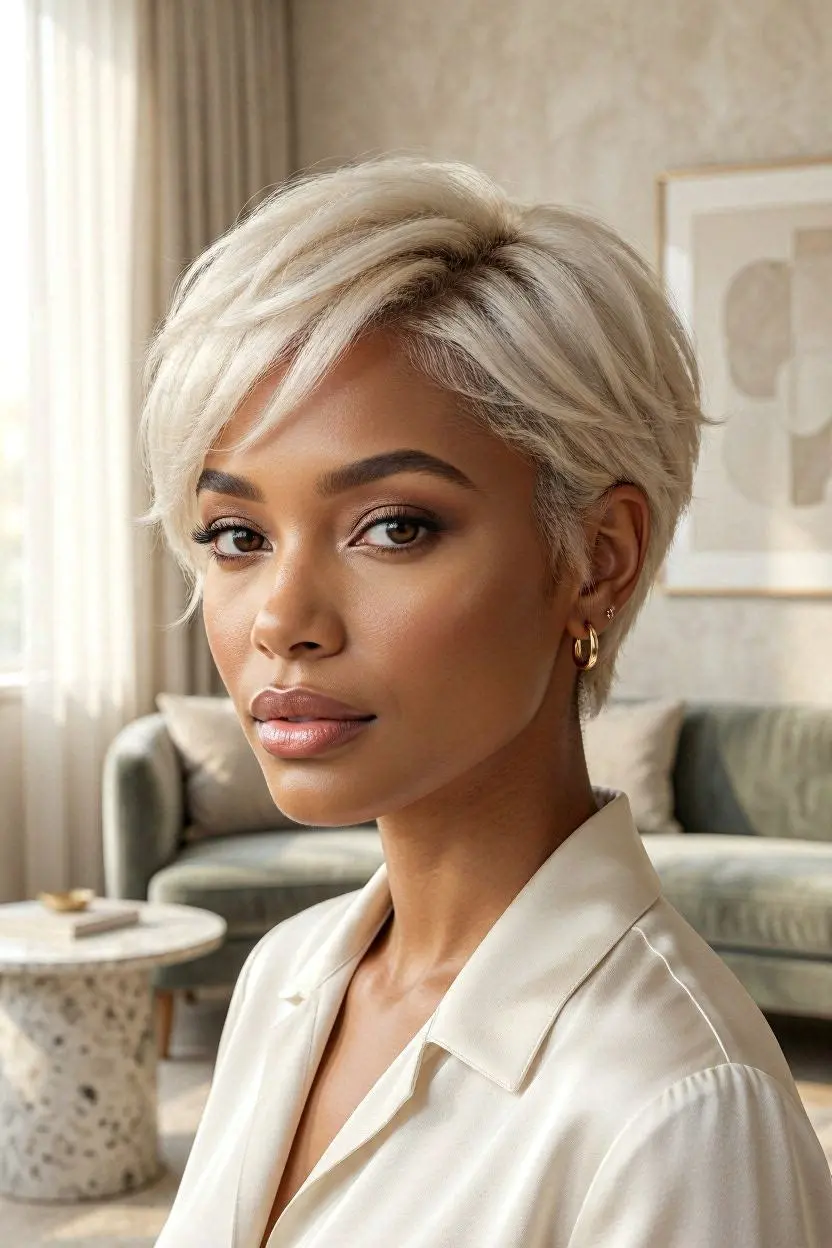
Before diving into specific cuts, here’s the mental checklist I run through with every client:
- Hair texture — curl pattern and wave behavior determine how a cut will fall, not just how it photographs.
- Hair density and thickness — fine hair and thick hair are cut completely differently, even for the “same” style.
- Face shape — this affects where weight and height should sit, not whether you can have short hair at all.
- Lifestyle and styling time — be honest about how many mornings a week you’ll actually use a curling iron.
- Hair color and growth pattern — cowlicks, gray percentage, and color maintenance all shape the final recommendation.
If a client sat in my chair and could only answer one of those five questions honestly, I’d pick texture and density first — they decide almost everything else about how a haircut behaves once you leave the salon.
Short Hairstyles by Hair Texture
Short Curly Hairstyles For Women
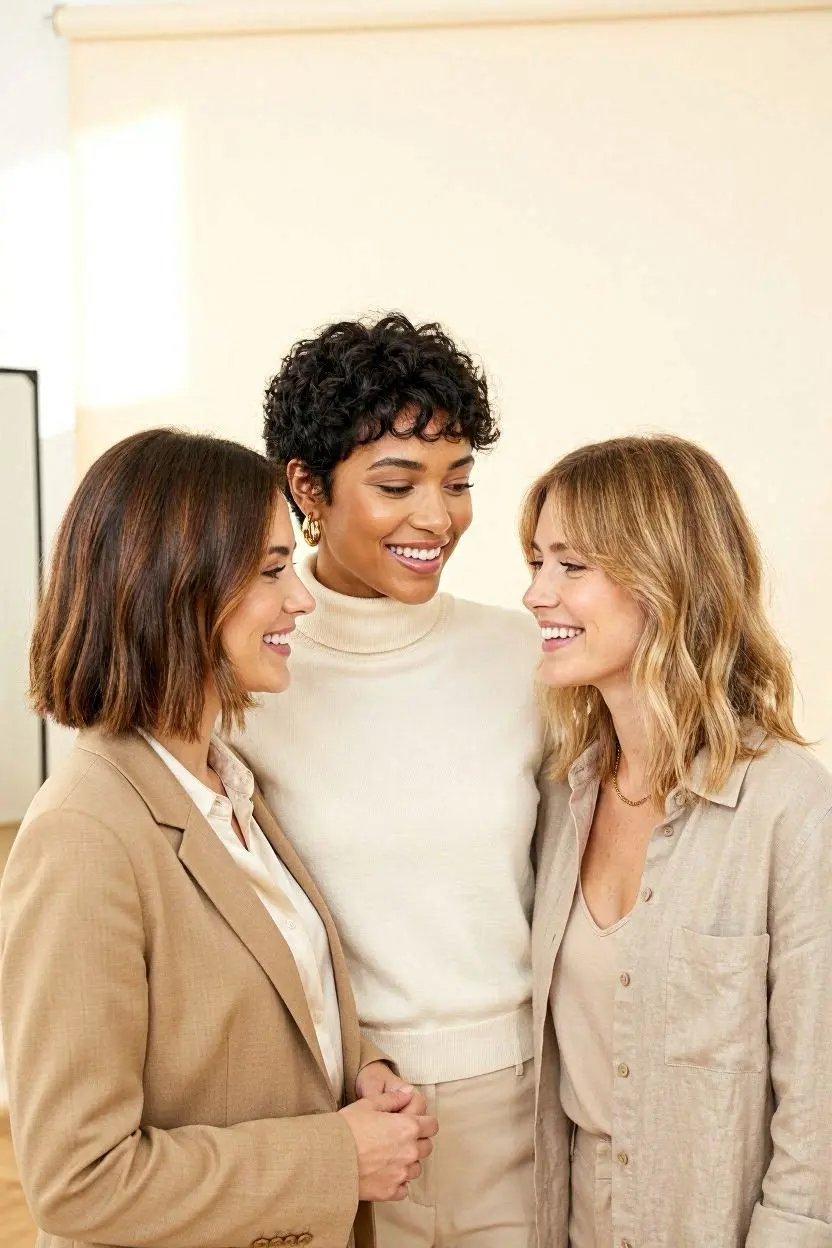
Curly hair is the texture I see most often cut wrong by stylists who aren’t trained in curl-specific cutting. The single biggest mistake is cutting curls the same way you’d cut straight hair and expecting the same shape — curls shrink as they dry, sometimes by 30-50%, so a length that looks right wet can end up dramatically shorter and rounder once it’s air-dried.
Curly Baby Bob
Description: A dense, jaw-grazing bob with minimal internal layering so curls cluster into a full, rounded shape.
Best Face Shape: Oval, heart.
Best Hair Type: Curly (types 2C–3B).
Best Hair Length: Chin-length.
Best For: Curl-confident clients wanting volume without frizz-prone layers. Maintenance Level: Low.
Styling Time: 10–15 minutes air-dry with product.
Trend Status: Viral.
Why It Works: Minimal layering keeps curl clusters intact instead of separating them into frizz.
Styling Tip: Apply curl cream to soaking wet hair, not towel-dried hair, for maximum definition.
Color Pairing Suggestion: Rich chocolate brunette or warm copper.
Seasonal Suitability: Best in humid summer months when curls are embraced rather than fought.
Curly Pixie Crop
Description: A short curly crop that follows the natural curl pattern instead of cutting against it.
Best Face Shape: Oval, square.
Best Hair Type: Tight curls and coils (3B–4A).
Best Hair Length: 1–2 inches.
Best For: Clients who want to fully embrace texture with zero blow-drying. Maintenance Level: Low.
Styling Time: 5 minutes.
Trend Status: Growing.
Why It Works: Curl-by-curl cutting prevents the “triangle” pyramid shape that flat-cut curly pixies often develop.
Styling Tip: Scrunch in a curl gel and let it air-dry undisturbed — touching curls while drying causes frizz.
Color Pairing Suggestion: Deep espresso or jet black for maximum shine contrast.
Seasonal Suitability: Year-round, especially practical in summer heat.
Layered Curly Shag
Description: Heavily layered curly shag that distributes volume evenly through the crown and ends.
Best Face Shape: Long, oval.
Best Hair Type: Wavy-curly (2C–3A).
Best Hair Length: Chin to shoulder.
Best For: Clients with naturally voluminous hair who want movement, not bulk. Maintenance Level: Medium.
Styling Time: 15–20 minutes.
Trend Status: Viral.
Why It Works: Internal layers break up density so the shape moves instead of sitting like a helmet.
Styling Tip: Diffuse on low heat with fingers in the roots for lift without frizz.
Color Pairing Suggestion: Balayage with warm caramel pieces to highlight movement.
Seasonal Suitability: Fantastic in fall when warmer tones are trending.
Curly Bixie
Description: A bob-pixie hybrid with curl-friendly length retained at the crown for bounce.
Best Face Shape: Round, oval.
Best Hair Type: Curly (2B–3B).
Best Hair Length: 2–4 inches.
Best For: Clients transitioning from longer curls who aren’t ready for a full pixie.
Maintenance Level: Low.
Styling Time: 10 minutes.
Trend Status: Viral — one of the most requested cuts I’ve seen this year.
Why It Works: It keeps enough length to maintain curl pattern integrity while still feeling dramatically shorter.
Styling Tip: Use a diffuser attachment instead of a regular dryer nozzle to avoid disturbing curl formation.
Color Pairing Suggestion: Natural-looking lowlights rather than heavy bleach, which can compromise curl elasticity.
Seasonal Suitability: Best transition cut for spring.
Short Wavy Hairstyles
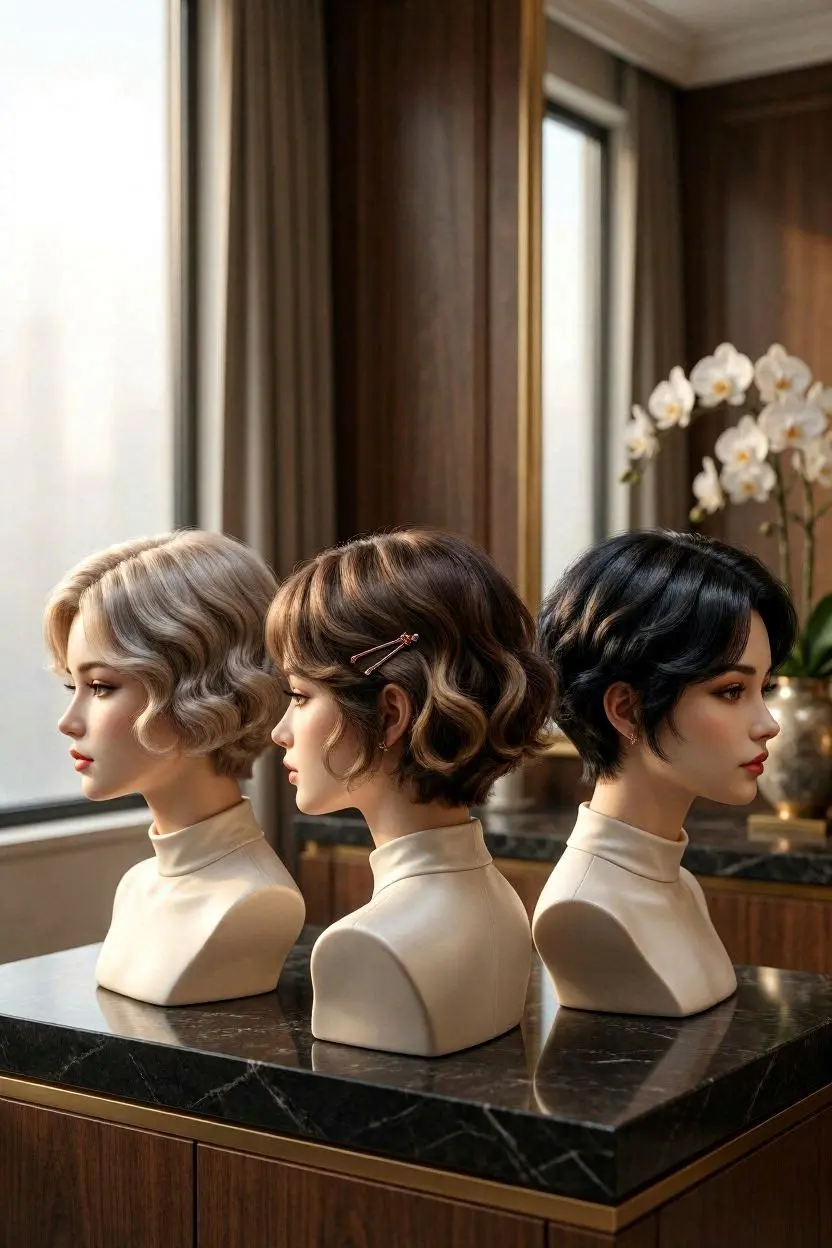
Wavy hair sits in a frustrating in-between zone — too defined to behave like straight hair, not curly enough to hold a defined curl pattern reliably. The cuts that work best for wavy hair almost always involve strategic layering rather than one uniform length.
Wolf-Inspired Short Shag
Description: A modernized, shorter take on the wolf cut with choppy layers and minimal blunt edges.
Best Face Shape: Oval, heart, square.
Best Hair Type: Wavy.
Best Hair Length: Chin to collarbone.
Best For: Clients who want an edgy, fashion-forward shape that still air-dries well.
Maintenance Level: Low–Medium.
Styling Time: 10–15 minutes.
Trend Status: Viral.
Why It Works: Choppy layering enhances wave pattern instead of weighing it down.
Styling Tip: Scrunch a texturizing salt spray into damp hair and let waves form naturally before any heat styling.
Color Pairing Suggestion: Dimensional brunette with face-framing highlights.
Seasonal Suitability: Excellent in transitional spring and fall weather.
Cowboy Bob
Description: A shorter, textured update to the Parisian bob with soft layers and optional Bardot-style bangs.
Best Face Shape: Oval, round.
Best Hair Type: Wavy.
Best Hair Length: Jaw to chin.
Best For: Clients wanting a relaxed, lived-in look rather than a sharp, structured bob.
Maintenance Level: Low.
Styling Time: 10 minutes.
Trend Status: Viral, one of the defining cuts of 2026.
Why It Works: Soft layering gives it a relaxed silhouette that doesn’t require precision blow-drying to look intentional.
Styling Tip: Air-dry with a texturizing cream and only touch up the ends with a flat iron.
Color Pairing Suggestion: Honey blonde or sun-kissed balayage.
Seasonal Suitability: A natural fit for summer.
Textured Lob with Waves
Description: A long bob with point-cut ends that encourage soft, beachy wave formation.
Best Face Shape: All shapes, especially square.
Best Hair Type: Wavy.
Best Hair Length: Collarbone.
Best For: Clients not ready to go drastically short.
Maintenance Level: Low.
Styling Time: 10 minutes.
Trend Status: Timeless.
Why It Works: The point-cutting technique removes blunt weight so natural waves can show through.
Styling Tip: Apply a light sea-salt spray to damp hair before air-drying for natural-looking texture.
Color Pairing Suggestion: Soft balayage with a subtle root shadow.
Seasonal Suitability: Year-round.
Wavy Curtain Crop
Description: A short crop with longer, wave-enhanced curtain pieces framing the face.
Best Face Shape: Round, square.
Best Hair Type: Wavy.
Best Hair Length: 2–5 inches.
Best For: Clients who want softness around the face without much overall length.
Maintenance Level: Medium.
Styling Time: 15 minutes.
Trend Status: Growing.
Why It Works: Curtain pieces soften angular bone structure while the cropped back keeps the cut feeling fresh and modern.
Styling Tip: Use a small round brush only on the face-framing pieces; let the rest air-dry.
Color Pairing Suggestion: Warm brunette with money-piece highlights at the curtain pieces.
Seasonal Suitability: Best in fall and winter when face-framing pieces add warmth.
Short Straight Hairstyles
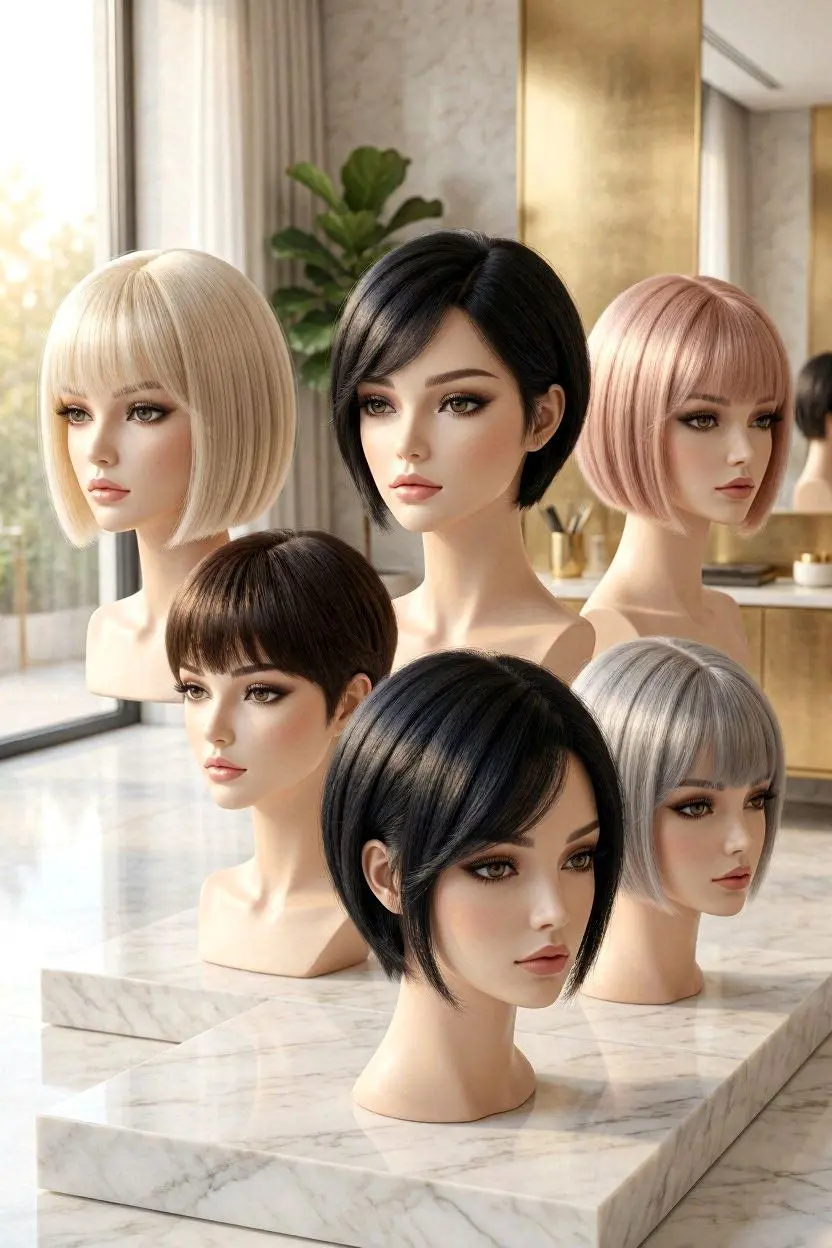
Straight hair shows every imperfection in a haircut because there’s no texture to disguise unevenness — this is the texture where precision cutting matters most.
Blunt Micro Bob
Description: A sharp, geometric bob cut just above or at the jawline with no layering.
Best Face Shape: Oval, heart.
Best Hair Type: Straight.
Best Hair Length: Jaw-length.
Best For: Clients who want a polished, editorial look.
Maintenance Level: Medium (frequent trims needed to maintain the blunt line).
Styling Time: 15–20 minutes for a sleek finish.
Trend Status: Timeless.
Why It Works: Straight hair’s natural smoothness emphasizes the clean geometric line rather than fighting it.
Styling Tip: Blow-dry with a paddle brush pointing the nozzle downward to maintain the blunt edge and prevent flipping.
Color Pairing Suggestion: Glossy jet black or deep brunette for maximum shine payoff.
Seasonal Suitability: Strongest in fall and winter when glossy finishes photograph best.
Sleek Pixie with Side Sweep
Description: A close, sculpted pixie with a longer side-swept fringe.
Best Face Shape: Oval, square.
Best Hair Type: Straight, fine to medium.
Best Hair Length: 1–3 inches.
Best For: Clients wanting a dramatic, low-fuss transformation.
Maintenance Level: Low.
Styling Time: 5 minutes.
Trend Status: Timeless.
Why It Works: Straight hair holds the precision lines of a pixie crisply without needing daily restyling.
Styling Tip: A small amount of pomade worked through dry hair keeps the shape defined all day.
Color Pairing Suggestion: Platinum blonde or icy ash tones for a modern edge.
Seasonal Suitability: Year-round, low-maintenance in any climate.
Razored Crop
Description: A very short, texturized crop created with razor cutting to remove bulk and add movement.
Best Face Shape: Oval, round.
Best Hair Type: Straight, thick.
Best Hair Length: Under 2 inches.
Best For: Thick straight hair that tends to look heavy in blunt cuts.
Maintenance Level: Low.
Styling Time: 5 minutes.
Trend Status: Growing.
Why It Works: Razoring thins out density that blunt scissor cuts can’t manage on straight, thick strands.
Styling Tip: Use a matte clay rather than a glossy pomade to avoid an overly slick, heavy look.
Color Pairing Suggestion: Natural dimensional brunette.
Seasonal Suitability: Especially practical in hot, humid summers.
Sleek One-Length Crop with Fringe
Description: A uniform, chin-skimming cut with a full, blunt fringe.
Best Face Shape: Oval, long.
Best Hair Type: Straight.
Best Hair Length: Chin.
Best For: Clients wanting a graphic, fashion-editorial look.
Maintenance Level: Medium.
Styling Time: 15 minutes.
Trend Status: Timeless with cyclical spikes in popularity.
Why It Works: One-length straight hair creates a strong graphic line that a blunt fringe complements rather than competes with.
Styling Tip: Trim the fringe every 3–4 weeks; straight fringes grow out noticeably faster in appearance than curly ones.
Color Pairing Suggestion: Solid, rich single-process color rather than highlights, to keep the graphic effect clean.
Seasonal Suitability: Best in cooler months when hair is less prone to oiliness at the fringe.
Short Hairstyles by Hair Density: Thin, Fine, and Thick Hair

I want to separate “thin” and “fine” here because clients use them interchangeably, but they’re different problems. Fine refers to the diameter of each individual strand; thin refers to how many strands you have per square inch. You can have fine hair that’s also dense, and thick-stranded hair that’s sparse. Both situations call for different cutting strategies.
Textured Pixie for Fine Hair
Description: A short pixie with disconnected layers that create the illusion of volume at the crown.
Best Face Shape: Oval, heart.
Best Hair Type: Fine, thin.
Best Hair Length: 1–2 inches.
Best For: Clients whose fine hair goes flat by midday.
Maintenance Level: Low.
Styling Time: 5–10 minutes.
Trend Status: Timeless.
Why It Works: Shorter layers at the crown have less weight pulling them down, so they stand up rather than collapsing.
Styling Tip: Apply a volumizing mousse to roots only, on towel-dried hair, then blow-dry upside down for 60 seconds. ,
Color Pairing Suggestion: Subtle babylights, which create the appearance of more density.
Seasonal Suitability: Year-round, particularly helpful in humid weather when fine hair can go limp.
Graduated Bob for Thin Hair
Description: A bob that’s shorter and tighter at the nape with gradually increasing length toward the front, building visual density at the back.
Best Face Shape: Oval, round.
Best Hair Type: Thin.
Best Hair Length: Chin to jaw.
Best For: Clients whose thin hair looks especially sparse at the back.
Maintenance Level: Low–Medium.
Styling Time: 15 minutes.
Trend Status: Timeless.
Why It Works: Graduation stacks the cut so each layer supports the one above it, creating an illusion of fullness without actual extra hair.
Styling Tip: Avoid heavy conditioner on the roots — it weighs fine hair down and undoes the lift from the cut.
Color Pairing Suggestion: A slightly darker root with lighter ends to add depth and the illusion of dimension.
Seasonal Suitability: Best in cooler months when static and flatness are less of an issue.
Soft Layered Crop for Thick Hair
Description: A heavily internally layered crop designed specifically to remove bulk from thick, dense hair.
Best Face Shape: Oval, square.
Best Hair Type: Thick.
Best Hair Length: 2–4 inches.
Best For: Clients whose thick hair feels heavy or “helmet-like” in shorter cuts.
Maintenance Level: Medium.
Styling Time: 10–15 minutes.
Trend Status: Growing.
Why It Works: Internal layering thins density without sacrificing overall length, preventing the pyramid shape thick hair often falls into.
Styling Tip: Ask your stylist specifically for “internal layering,” not just “thinning shears,” which can leave choppy, uneven results in very thick hair.
Color Pairing Suggestion: Rich, all-over color rather than heavy highlights, which can look busy on already-dense hair.
Seasonal Suitability: Particularly helpful in summer when thick hair traps heat.
Undercut Bob for Thick Hair
Description: A bob with a hidden undercut at the nape to remove weight without changing the visible silhouette.
Best Face Shape: Round, oval.
Best Hair Type: Thick.
Best Hair Length: Chin to shoulder visible length.
Best For: Clients with thick hair who want a clean bob silhouette without the bulk underneath.
Maintenance Level: Medium.
Styling Time: 15 minutes.
Trend Status: Timeless.
Why It Works: The undercut removes weight where it’s least visible, keeping the outer silhouette sleek.
Styling Tip: Request the undercut be left slightly longer than a typical undercut so it blends as hair grows.
Color Pairing Suggestion: Solid deep brunette or black for a sleek, uniform finish.
Seasonal Suitability: Year-round; especially appreciated in hot weather for the reduced bulk at the neck.
Low Maintenance Short Hairstyles
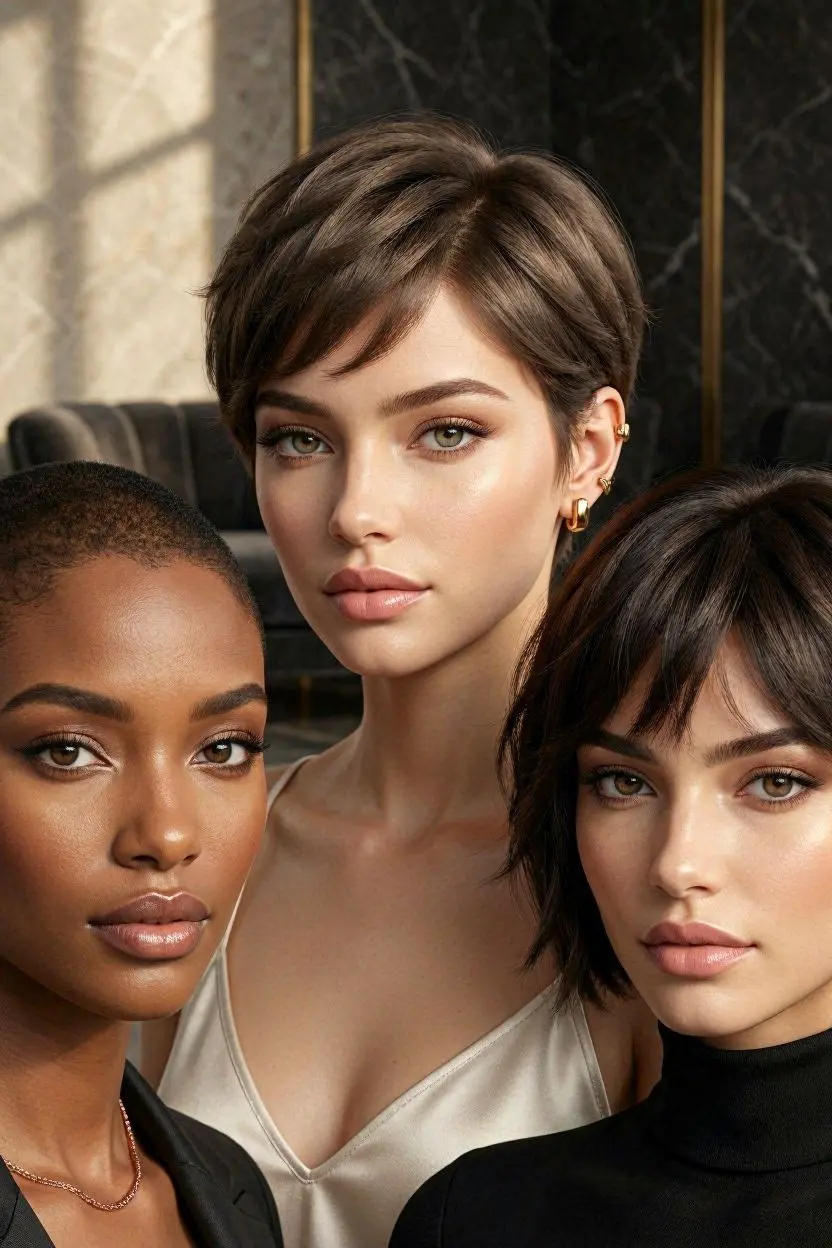
If a client sat in my chair asking for something genuinely low-maintenance, these are the first cuts I’d bring up — not because they’re trendy, but because they hold their shape between salon visits with minimal daily effort.
Classic Pixie Crop
Description: A timeless, close-cropped pixie with minimal layering needed for upkeep.
Best Face Shape: Oval, heart, square.
Best Hair Type: Any.
Best Hair Length: 1–2 inches.
Best For: Clients who genuinely don’t want to style hair daily.
Maintenance Level: Low.
Styling Time: Under 5 minutes.
Trend Status: Timeless.
Why It Works: The short length means there’s little hair to fight gravity, frizz, or humidity.
Styling Tip: A texturizing wax rubbed between palms and pressed (not raked) through dry hair gives definition without a styling routine.
Color Pairing Suggestion: Natural base color extends time between root touch-ups.
Seasonal Suitability: Best for active, warm-weather lifestyles.
Wash-and-Go Curly Crop
Description: A curl-pattern-specific cut designed to look intentional straight out of the shower with no diffusing required.
Best Face Shape: Oval, round.
Best Hair Type: Curly, coily.
Best Hair Length: 1–3 inches.
Best For: Clients with busy mornings who want to embrace natural texture fully.
Maintenance Level: Low.
Styling Time: Under 5 minutes.
Trend Status: Growing.
Why It Works: Cutting with the curl pattern (not against it) means air-drying alone produces a finished look.
Styling Tip: Apply product on soaking wet hair in the shower for the most defined wash-and-go result.
Color Pairing Suggestion: Natural color to avoid the extra upkeep of color-treated curls.
Seasonal Suitability: Ideal for humid summer climates.
One-Length Bob, No Layers
Description: A simple, uniform bob with zero layering required.
Best Face Shape: Oval, square.
Best Hair Type: Straight to slightly wavy.
Best Hair Length: Chin to jaw.
Best For: Clients who want a polished look with one quick blow-dry.
Maintenance Level: Low.
Styling Time: 10 minutes.
Trend Status: Timeless.
Why It Works: With no layers to coax into place, there’s only one length to manage when styling.
Styling Tip: A round brush on the ends only, rather than the whole head, keeps styling time short.
Color Pairing Suggestion: Single-process color cuts down on salon visits compared to highlights.
Seasonal Suitability: Year-round.
Haircut Styles: Bobs, Layers, Pixies, Shags, and More
Short Bob Hairstyles
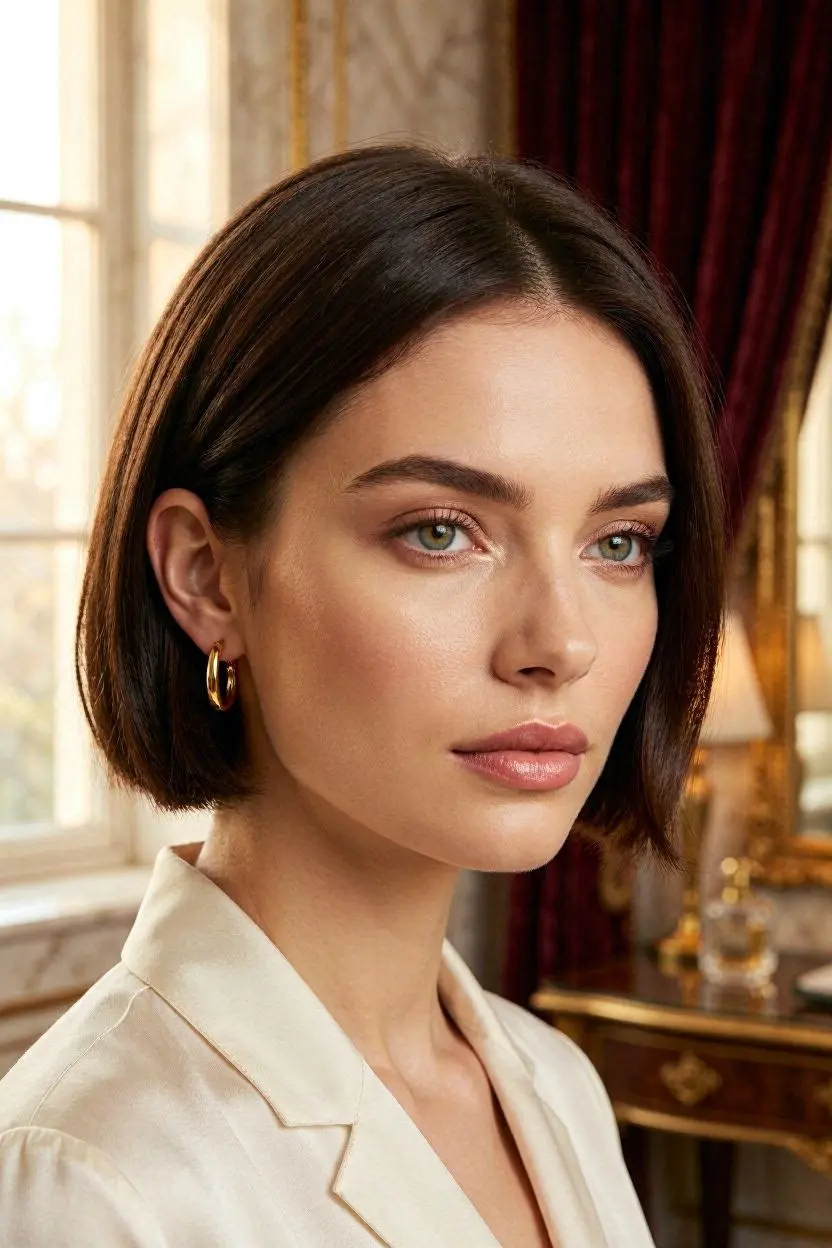
Classic Chin-Length Bob
Description: The foundational bob, cut precisely at the chin with minimal layering.
Best Face Shape: Oval, heart.
Best Hair Type: Straight to wavy.
Best Hair Length: Chin.
Best For: First-time short-hair clients.
Maintenance Level: Medium.
Styling Time: 10–15 minutes.
Trend Status: Timeless.
Why It Works: It’s universally adjustable in angle and texture to flatter most face shapes without losing its core identity.
Styling Tip: Round-brush the ends inward for the classic look, or outward for a more retro flip.
Color Pairing Suggestion: Glossy, all-over color for shine emphasis.
Seasonal Suitability: Year-round staple.
Asymmetrical Bob
Description: A bob with one side cut noticeably longer than the other for an edgy, modern silhouette.
Best Face Shape: Round, square.
Best Hair Type: Straight, wavy.
Best Hair Length: Jaw to collarbone (varies by side).
Best For: Clients wanting a fashion-forward statement cut.
Maintenance Level: Medium.
Styling Time: 15 minutes.
Trend Status: Growing.
Why It Works: The asymmetry draws the eye diagonally, which can visually slim a round or wide face.
Styling Tip: Keep the shorter side trimmed every 4–5 weeks to maintain the contrast.
Color Pairing Suggestion: A bold color block or money-piece highlight on the longer side.
Seasonal Suitability: Best in transitional seasons when bold styling choices feel fresh.
Stacked A-Line Bob
Description: A bob with significant graduation at the back, creating a stacked, voluminous shape that angles longer toward the front.
Best Face Shape: Round, oval.
Best Hair Type: Straight to wavy.
Best Hair Length: Nape-short to jaw-long.
Best For: Clients wanting drama and structure.
Maintenance Level: Medium–High.
Styling Time: 15–20 minutes.
Trend Status: Timeless.
Why It Works: The graduated stacking builds volume exactly where fine or thin hair often needs it most.
Styling Tip: Use a flat brush and diffuser-style drying motion to enhance the back stacking.
Color Pairing Suggestion: Two-tone color with a darker nape for added depth.
Seasonal Suitability: Especially flattering in winter with collared coats.
Layered Short Hairstyles
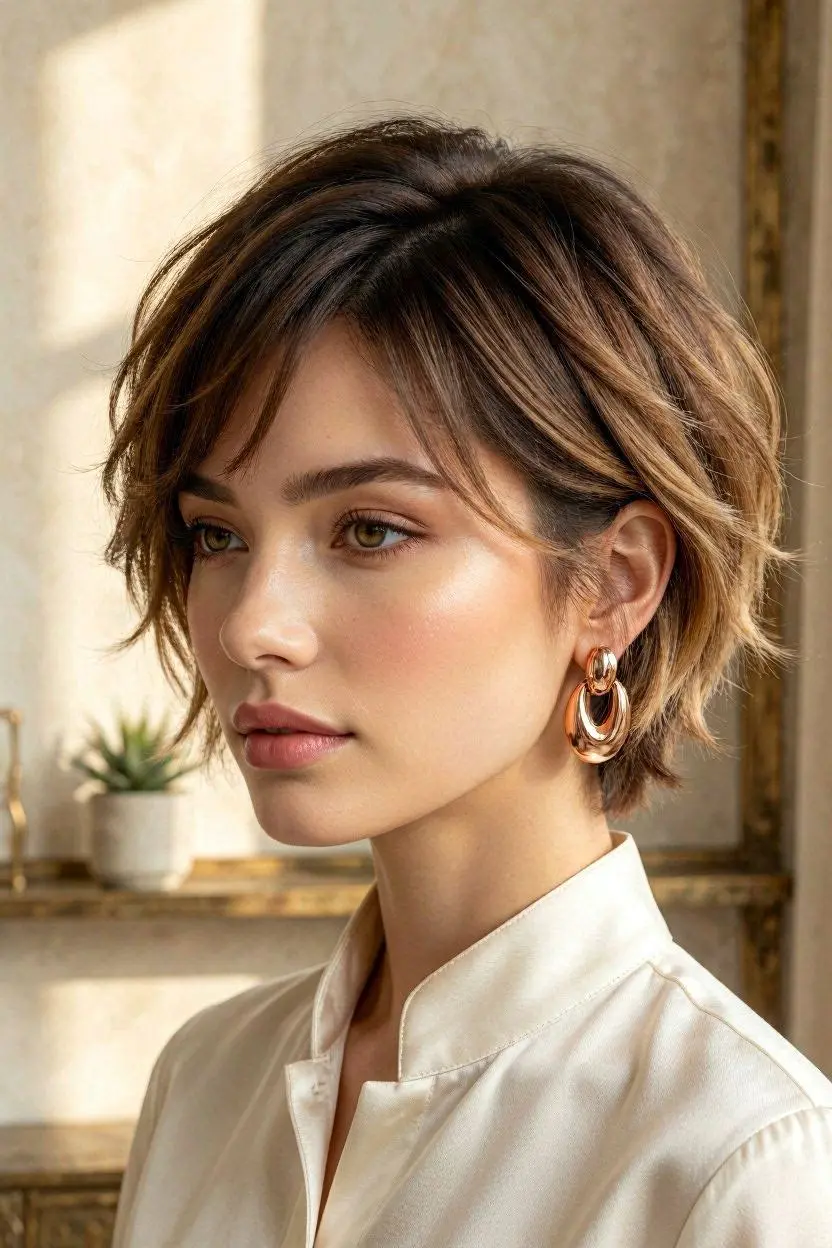
Face-Framing Layered Crop
Description: A short cut with longer layers concentrated around the face for softness.
Best Face Shape: Square, round.
Best Hair Type: Any.
Best Hair Length: 2–5 inches.
Best For: Clients wanting to soften strong jawlines.
Maintenance Level: Medium.
Styling Time: 15 minutes.
Trend Status: Timeless.
Why It Works: Strategic length at the cheekbones draws attention inward, away from jaw width.
Styling Tip: Curl only the face-framing pieces with a 1-inch barrel for a quick, targeted style.
Color Pairing Suggestion: Face-framing highlights to amplify the softening effect.
Seasonal Suitability: Year-round.
Feathered Layered Pixie
Description: A pixie with feathered, piece-y layers throughout for soft movement.
Best Face Shape: Oval, heart.
Best Hair Type: Fine to medium.
Best Hair Length: 1–3 inches.
Best For: Clients wanting softness without sacrificing the short length.
Maintenance Level: Low.
Styling Time: 5–10 minutes.
Trend Status: Timeless.
Why It Works: Feathered layers prevent the stiff, helmet-like look that can happen with one uniform pixie length.
Styling Tip: Finger-style with a lightweight cream rather than brushing, to preserve the piece-y texture.
Color Pairing Suggestion: Soft, multidimensional blonde.
Seasonal Suitability: Best in spring and summer.
Pixie Hairstyles
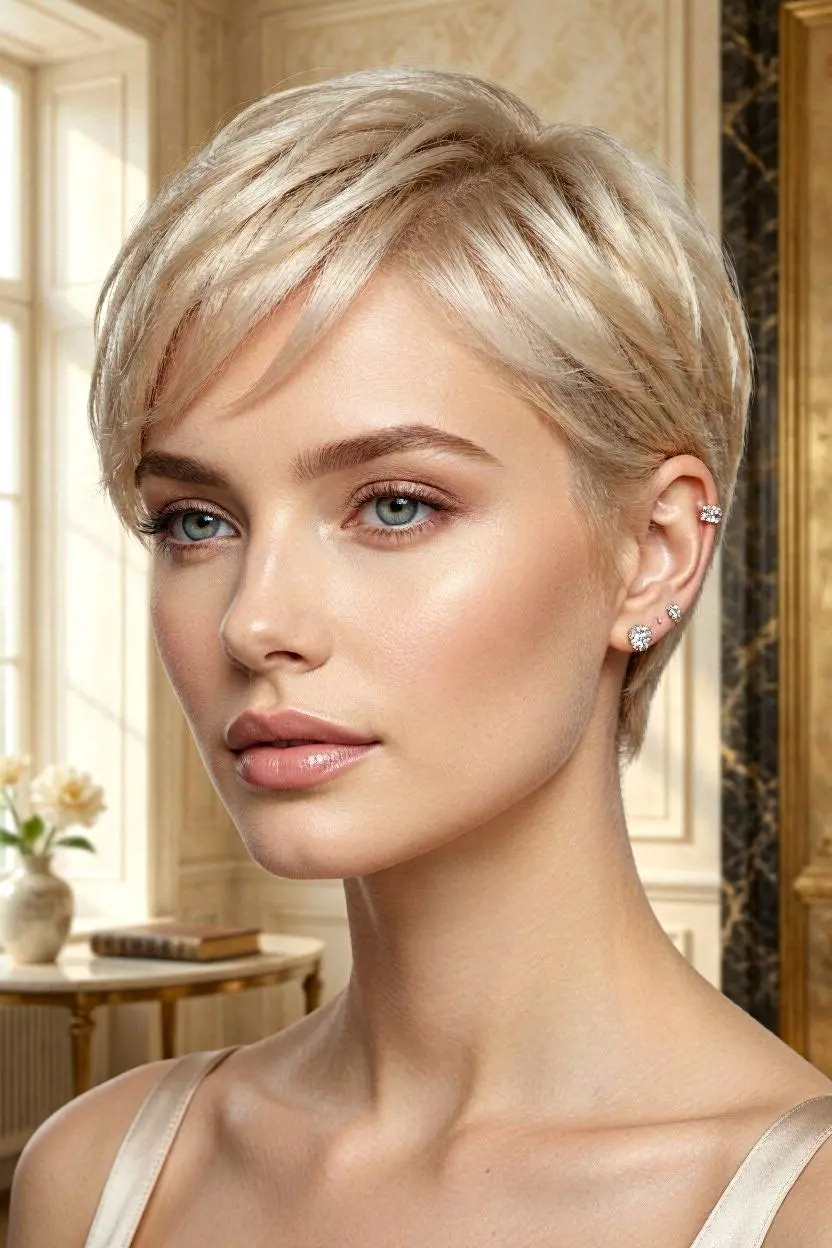
Edgy Undercut Pixie
Description: A pixie with a shaved or closely clipped undercut and longer textured top.
Best Face Shape: Oval, square.
Best Hair Type: Straight to wavy.
Best Hair Length: Buzzed sides, 2–4 inches on top.
Best For: Clients wanting a bold, statement-making transformation.
Maintenance Level: Medium (regrowth on undercut needs upkeep).
Styling Time: 10 minutes.
Trend Status: Timeless with periodic viral spikes.
Why It Works: The contrast between the clipped sides and longer top creates dramatic visual interest with minimal daily styling on the sides.
Styling Tip: Book undercut touch-ups every 3 weeks even if you’re not trimming the top.
Color Pairing Suggestion: Solid bold color on top, like platinum or vivid red, against natural-colored sides.
Seasonal Suitability: Great for summer; less hair means less heat retention.
Soft Grown-Out Pixie (“Bixie”)
Description: A pixie grown slightly longer into bob territory, blending the best of both cuts.
Best Face Shape: Most shapes, especially oval and heart.
Best Hair Type: Straight to curly.
Best Hair Length: 3–5 inches.
Best For: Clients transitioning out of a pixie without committing to a full bob.
Maintenance Level: Low–Medium.
Styling Time: 10–15 minutes.
Trend Status: Viral — currently one of the most requested grow-out cuts in my chair.
Why It Works: It bridges an awkward growing-out phase by intentionally shaping it instead of just waiting it out.
Styling Tip: Use a light texturizing spray rather than heavy product, which can make the shorter regrowth look stringy.
Color Pairing Suggestion: Subtle balayage to disguise the in-between growth pattern.
Seasonal Suitability: Year-round.
Sculpted Pixie with Height
Description: A structured pixie with significant lift and volume engineered at the crown.
Best Face Shape: Round (elongates), oval.
Best Hair Type: Straight to wavy, medium-thick.
Best Hair Length: 2–3 inches at crown.
Best For: Clients wanting a polished, almost architectural look.
Maintenance Level: Medium.
Styling Time: 15 minutes with a round brush and dryer.
Trend Status: Growing.
Why It Works: Height at the crown visually elongates rounder face shapes more effectively than length alone.
Styling Tip: Blow-dry against the direction of growth at the roots, then smooth the rest.
Color Pairing Suggestion: Glossy single-process color for a sleek, sculptural finish.
Seasonal Suitability: Best in dry, low-humidity seasons to hold the shape.
Shaggy Short Hairstyles
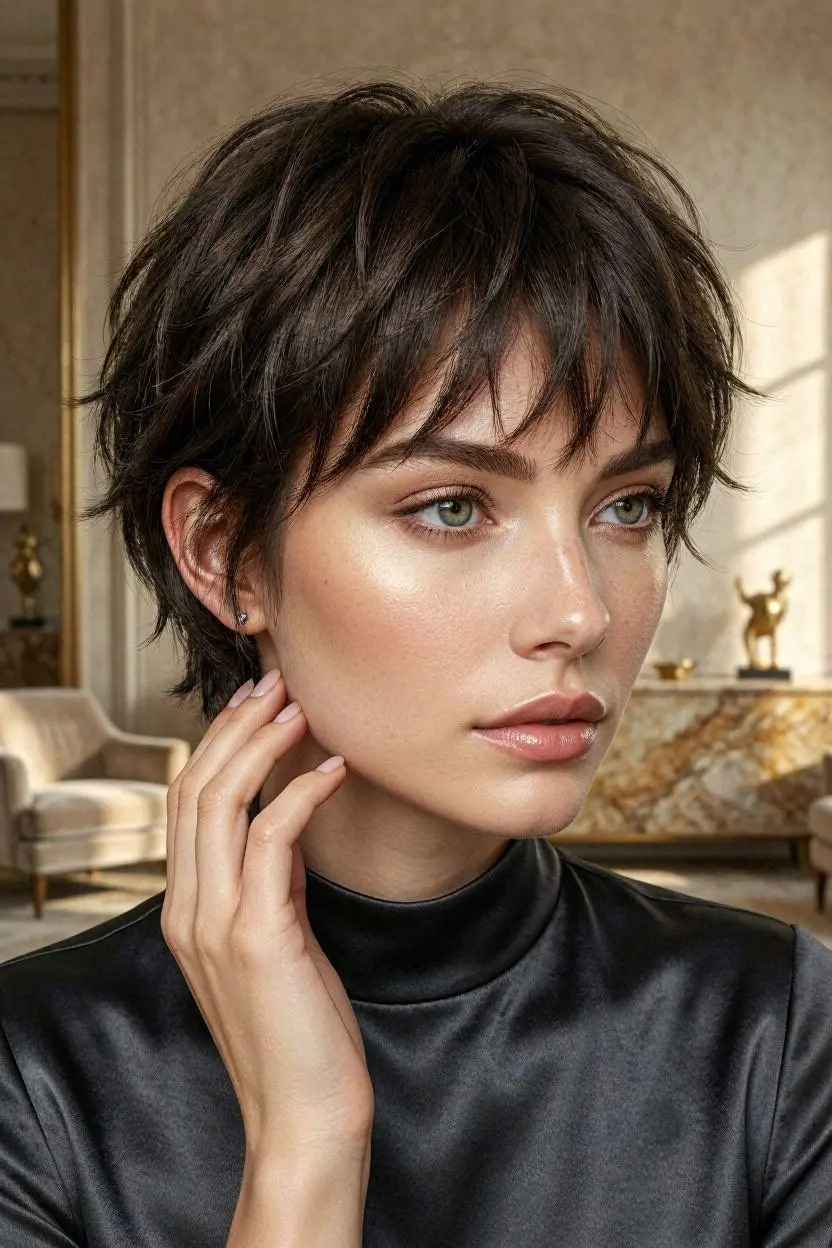
Modern Short Shag
Description: A heavily layered, choppy shag with face-framing pieces and minimal blunt edges.
Best Face Shape: Oval, square, heart.
Best Hair Type: Wavy, fine to medium.
Best Hair Length: Chin to shoulder.
Best For: Clients wanting effortless, rock-and-roll texture.
Maintenance Level: Low.
Styling Time: 10 minutes.
Trend Status: Viral, especially in its softened 2026 form.
Why It Works: Choppy layering creates built-in texture, so even straight hair appears to have natural movement.
Styling Tip: A texturizing spray on damp hair before air-drying does most of the styling work.
Color Pairing Suggestion: Warm, multi-tonal brunette or auburn.
Seasonal Suitability: Excellent in fall.
Mini Shag with Curtain Bangs
Description: A short shag paired with soft, parted curtain bangs.
Best Face Shape: Round, square.
Best Hair Type: Wavy to straight.
Best Hair Length: Jaw to chin, with longer bangs.
Best For: Clients wanting a retro-inspired, face-softening look.
Maintenance Level: Medium (bangs require regular trims).
Styling Time: 15 minutes.
Trend Status: Viral.
Why It Works: Curtain bangs frame and soften the face while the layered shag underneath keeps the whole look from appearing too structured.
Styling Tip: Trim bangs yourself between salon visits using the “point-cutting” technique to avoid a blunt line.
Color Pairing Suggestion: Honey or caramel balayage to highlight the bang pieces.
Seasonal Suitability: Great year-round, especially flattering in cooler months with hats.
Cropped Short Hairstyles
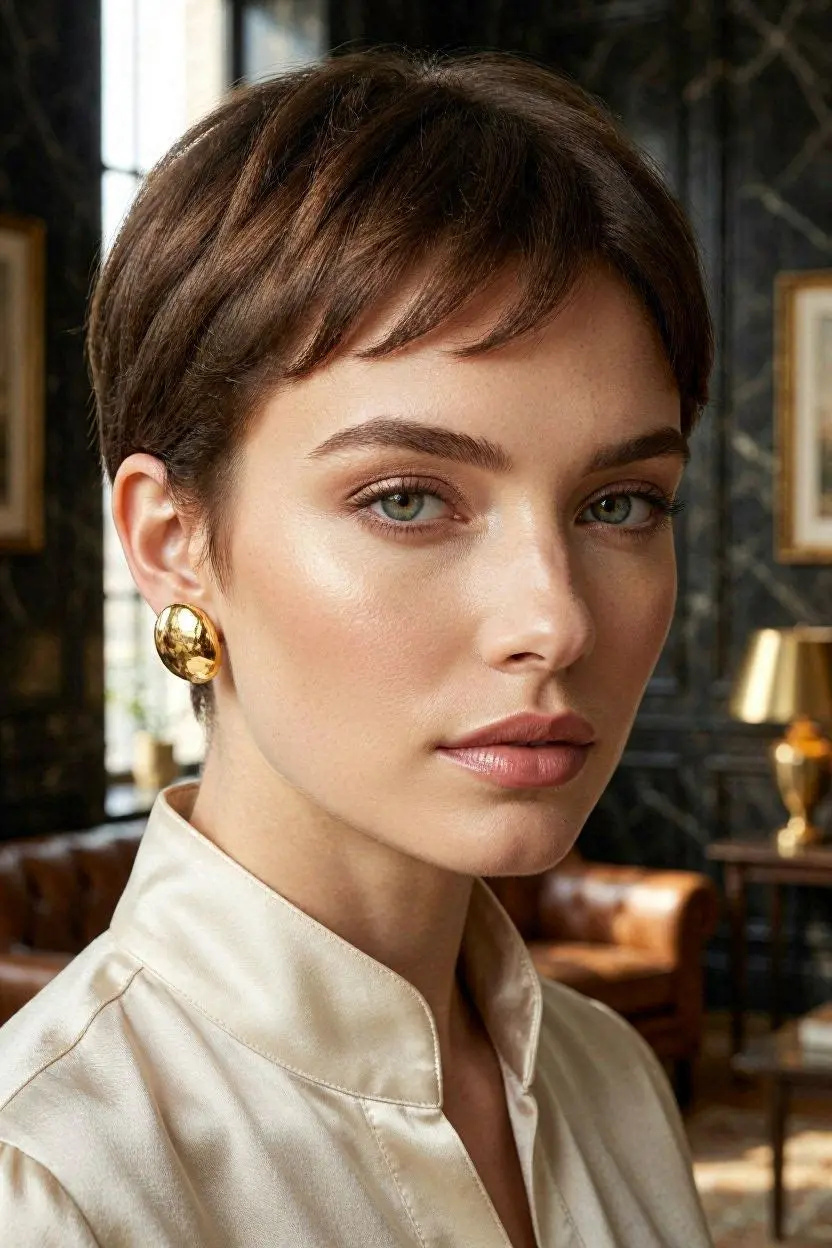
Ultra-Short Clipper Crop
Description: A minimalist, clipper-cut style with very short, uniform length throughout.
Best Face Shape: Oval, heart.
Best Hair Type: Any.
Best Hair Length: Under 1 inch.
Best For: Clients wanting maximum simplicity and a bold style statement.
Maintenance Level: Low (but frequent trims every 2–3 weeks to maintain shape).
Styling Time: Under 5 minutes.
Trend Status: Growing.
Why It Works: The uniform short length removes nearly all daily styling decisions.
Styling Tip: A small amount of shine serum can be patted on for a polished finish without product buildup.
Color Pairing Suggestion: Solid, bold color or even colored tips for a fashion-forward edge.
Seasonal Suitability: Best for hot summers and active lifestyles.
Textured Crop with Fringe
Description: A short crop with razored texture and a piece-y, swept fringe.
Best Face Shape: Oval, square.
Best Hair Type: Straight to wavy.
Best Hair Length: 1–3 inches.
Best For: Clients wanting an edgy but still soft silhouette.
Maintenance Level: Low.
Styling Time: 5–10 minutes.
Trend Status: Timeless.
Why It Works: The fringe adds a focal point that balances out the simplicity of the cropped length.
Styling Tip: Style the fringe while damp with a small round brush for lift, then let the rest air-dry.
Color Pairing Suggestion: Natural base with subtle highlighted pieces around the fringe.
Seasonal Suitability: Year-round.
Short Hairstyles With Bangs
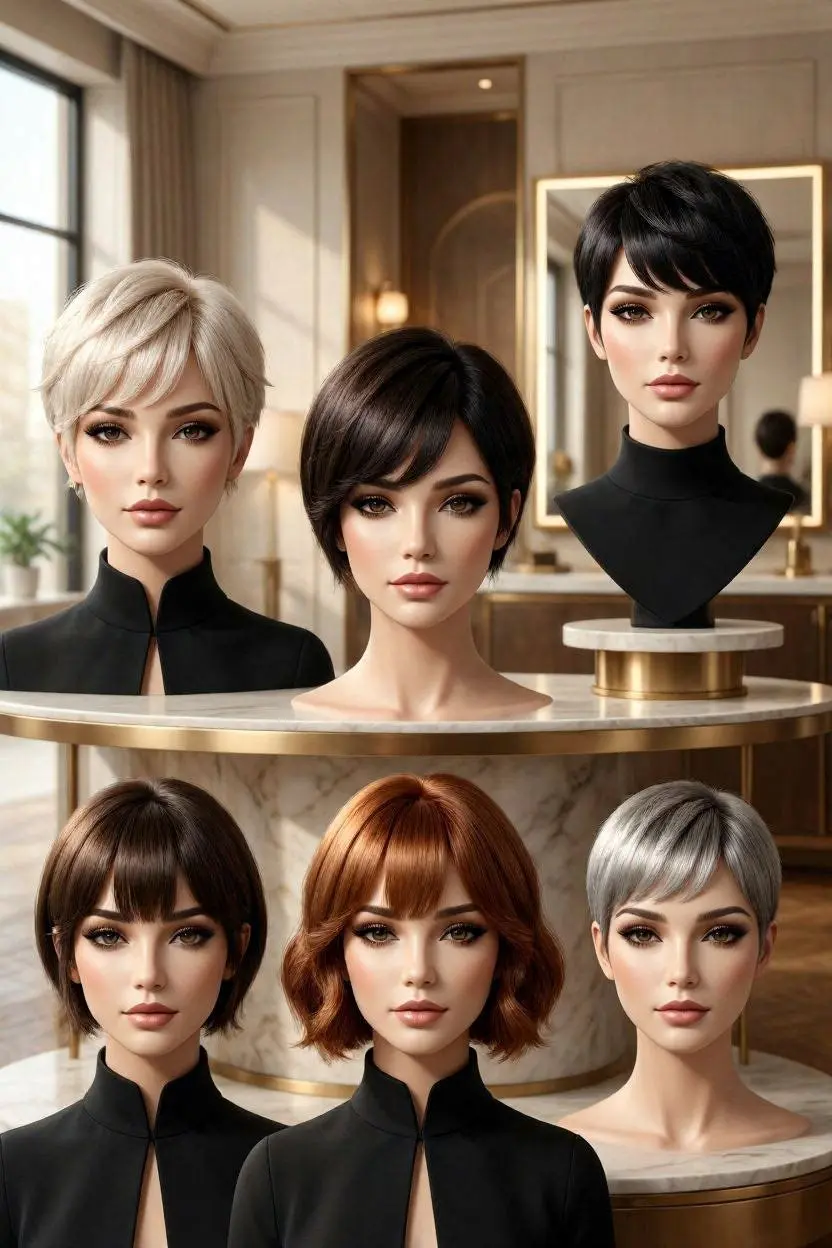
Bob with Full Blunt Bangs
Description: A classic bob paired with a thick, eyebrow-skimming blunt fringe.
Best Face Shape: Oval, long.
Best Hair Type: Straight to wavy.
Best Hair Length: Chin, bangs to brow.
Best For: Clients wanting a bold, graphic statement.
Maintenance Level: Medium-High (bangs need trims every 3–4 weeks).
Styling Time: 15 minutes.
Trend Status: Timeless.
Why It Works: A full fringe visually shortens a long face and draws focus to the eyes.
Styling Tip: Dry the fringe first, before the rest of the head, while it still has the most moisture for shaping.
Color Pairing Suggestion: Deep, solid color to make the graphic shape pop.
Seasonal Suitability: Best in cooler, lower-humidity months.
Pixie with Micro Fringe
Description: A pixie cut paired with a very short, bold micro fringe sitting an inch or two below the hairline.
Best Face Shape: Oval, heart.
Best Hair Type: Straight, fine to medium.
Best Hair Length: 1–3 inches.
Best For: Clients wanting a contemporary, statement-making detail.
Maintenance Level: Medium.
Styling Time: 10 minutes.
Trend Status: Viral, one of 2026’s standout trend details.
Why It Works: The shortness of the fringe creates a striking, modern contrast against the rest of the cut.
Styling Tip: Trim the micro fringe yourself with brow-trimming scissors between visits — it grows out of shape quickly.
Color Pairing Suggestion: High-contrast color, like platinum fringe against darker roots.
Seasonal Suitability: Year-round.
Short Braided Hairstyles
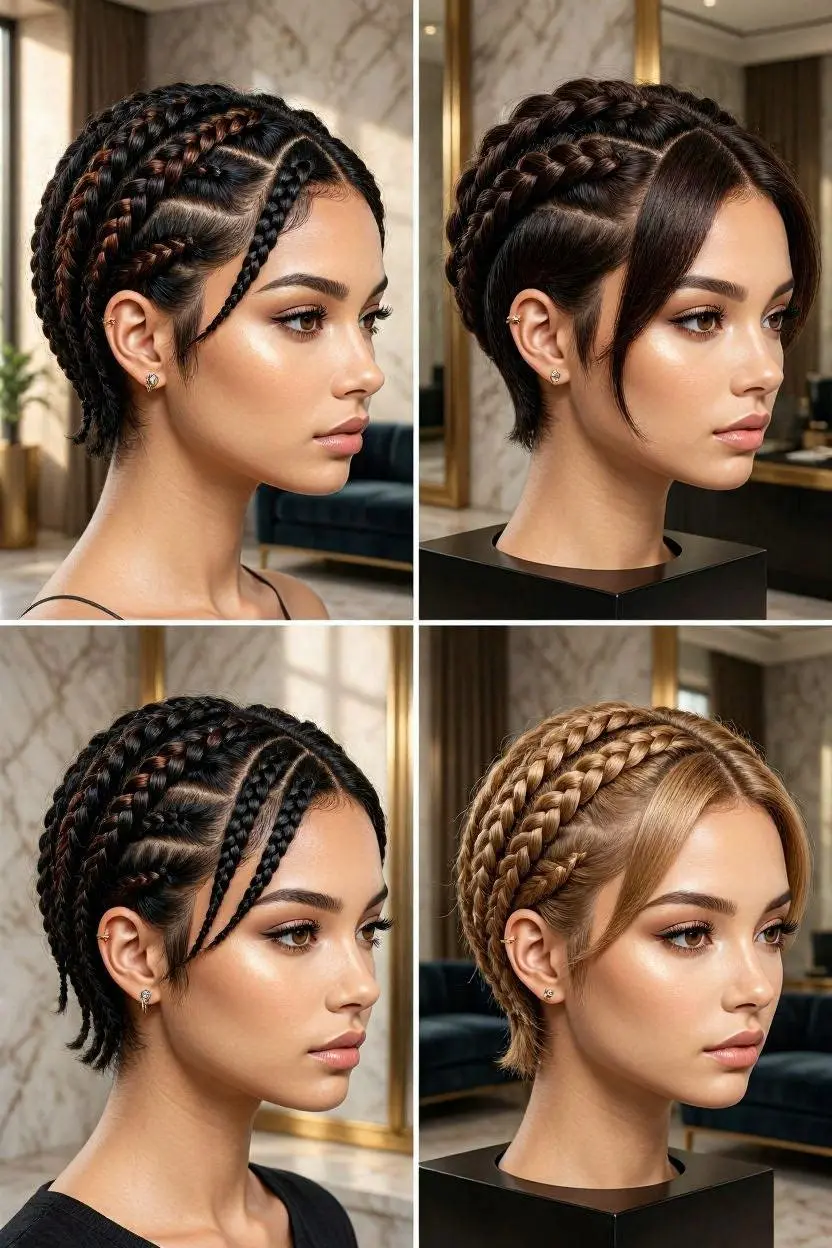
Mini French Braids into a Crop
Description: Two small French braids along the hairline leading into a short cropped length.
Best Face Shape: Most shapes.
Best Hair Type: Straight to curly.
Best Hair Length: 2–4 inches.
Best For: Special occasions or adding interest to a low-maintenance cut.
Maintenance Level: Low (style is temporary).
Styling Time: 15–20 minutes.
Trend Status: Timeless.
Why It Works: Mini braids add texture and detail to short hair, which otherwise has limited styling versatility.
Styling Tip: Use a small amount of edge control along the hairline before braiding to prevent flyaways.
Color Pairing Suggestion: Any — braids work with all color choices.
Seasonal Suitability: Especially popular in summer for keeping hair off the face.
Cornrowed Pixie
Description: Cornrows styled close to the scalp on a short pixie length.
Best Face Shape: Most shapes.
Best Hair Type: Coily, curly.
Best Hair Length: 1–3 inches.
Best For: Clients wanting a protective, low-manipulation style.
Maintenance Level: Low between installs.
Styling Time: 30–45 minutes for installation, then minimal daily upkeep.
Trend Status: Timeless.
Why It Works: Cornrows protect short, fragile ends from daily manipulation and breakage.
Styling Tip: Moisturize the scalp every 2–3 days with a lightweight oil to prevent dryness.
Color Pairing Suggestion: Natural color is most common, though colored braiding hair can be added for length and color play.
Seasonal Suitability: Great year-round protective option.
Short Hairstyles for Round and Oval Faces
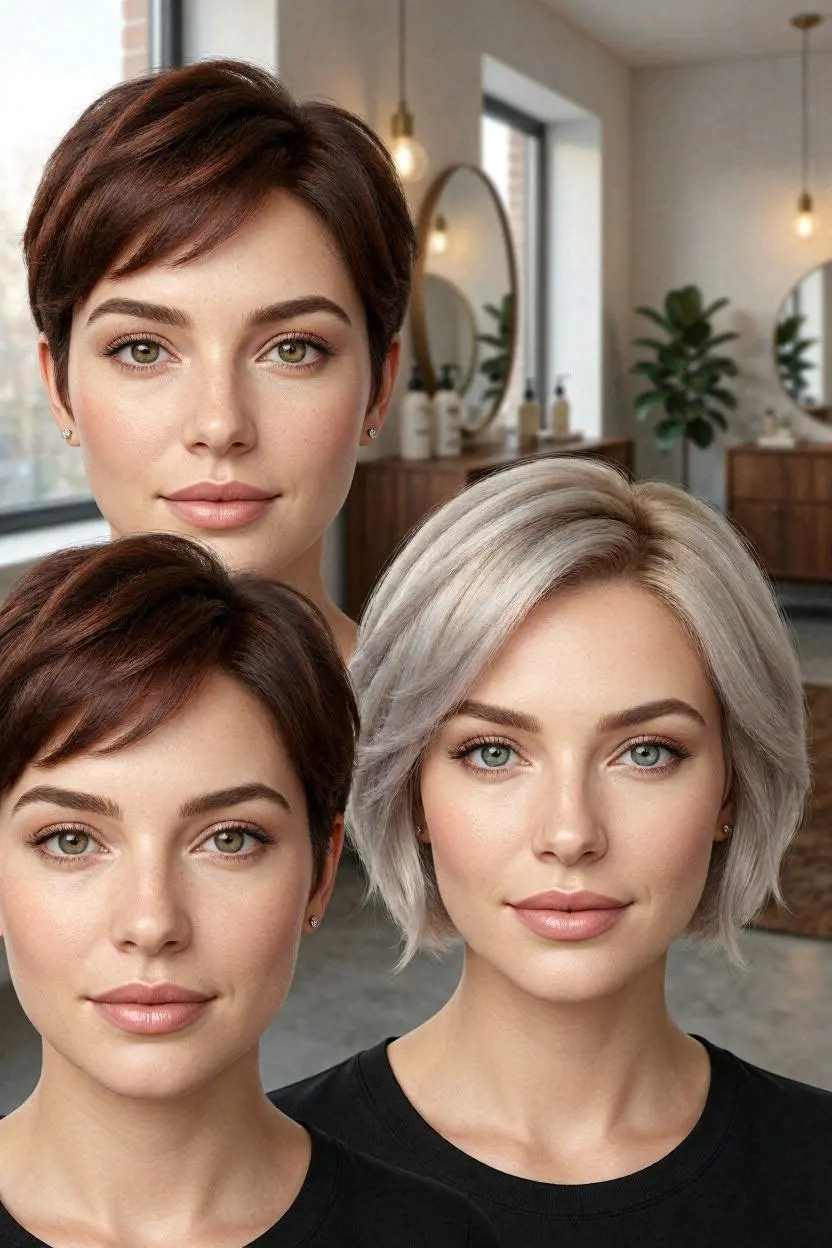
Short Hairstyles for Round Faces
The goal with round faces isn’t to hide the roundness — it’s to add length and angles so the eye travels vertically instead of stopping at the width of the cheeks. I’ve had clients ask for the “skinniest looking” haircut, and what actually delivers that isn’t shorter hair, it’s height and asymmetry.
Asymmetrical Lob with Side Part
Description: A longer bob with a deep side part and uneven lengths.
Best Face Shape: Round.
Best Hair Type: Straight to wavy.
Best Hair Length: Collarbone.
Best For: Clients wanting to visually elongate the face.
Maintenance Level: Medium.
Styling Time: 15 minutes.
Trend Status: Timeless.
Why It Works: The deep side part creates a diagonal line that breaks up horizontal width.
Styling Tip: Always dry hair with the part already in place, not after styling, so it sets correctly.
Color Pairing Suggestion: Vertical highlight placement to reinforce the lengthening effect.
Seasonal Suitability: Year-round.
High-Crown Pixie
Description: A pixie with deliberate height built into the crown.
Best Face Shape: Round.
Best Hair Type: Straight to wavy, medium thickness.
Best Hair Length: 2–3 inches at crown.
Best For: Clients wanting a flattering short cut without added length.
Maintenance Level: Medium.
Styling Time: 15 minutes.
Trend Status: Timeless.
Why It Works: Vertical height at the crown elongates the face shape more reliably than any horizontal styling adjustment.
Styling Tip: Use a round brush and blow-dry the roots upward and back before letting the rest fall naturally.
Color Pairing Suggestion: A slightly darker crown can also help recede visual width if paired with lighter ends.
Seasonal Suitability: Best in dry climates where the lift holds longer.
Short Hairstyles for Oval Faces
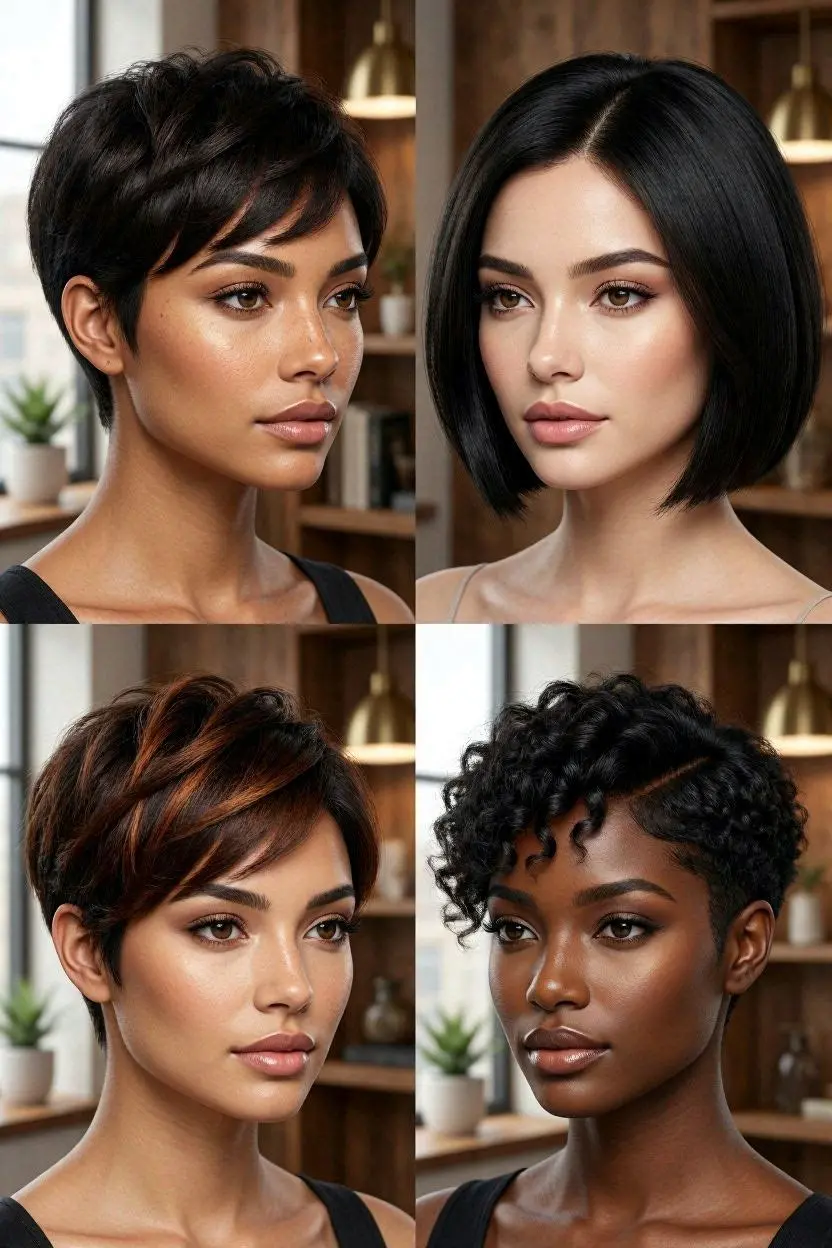
Oval is the face shape I genuinely tell clients can wear almost any short cut — but “almost any” still means some will look noticeably better than others depending on texture and density.
Classic Pixie, No Modifications Needed
Description: A traditional, symmetrical pixie cut.
Best Face Shape: Oval.
Best Hair Type: Any.
Best Hair Length: 1–3 inches.
Best For: Clients wanting the most “classic” version of this iconic cut.
Maintenance Level: Low.
Styling Time: 5–10 minutes.
Trend Status: Timeless.
Why It Works: Oval face proportions are balanced enough that the pixie doesn’t need extra height, length, or asymmetry to flatter.
Styling Tip: Focus styling effort on texture rather than shape correction.
Color Pairing Suggestion: Whatever color the client feels most confident in — oval faces rarely have color restrictions tied to shape.
Seasonal Suitability: Year-round.
Blunt Bob with Center Part
Description: A symmetrical, center-parted blunt bob.
Best Face Shape: Oval.
Best Hair Type: Straight.
Best Hair Length: Chin.
Best For: Clients wanting a sleek, balanced look.
Maintenance Level: Medium.
Styling Time: 15 minutes.
Trend Status: Timeless.
Why It Works: Oval faces can handle the symmetry of a center part without it emphasizing width or length disproportionately.
Styling Tip: Use a flat iron on the ends only for a crisp finish without overdrying the whole head.
Color Pairing Suggestion: Glossy, monochromatic color for maximum shine.
Seasonal Suitability: Year-round.
Short Hairstyles for Women: Cute, Modern, Bridal, and Medium-Short
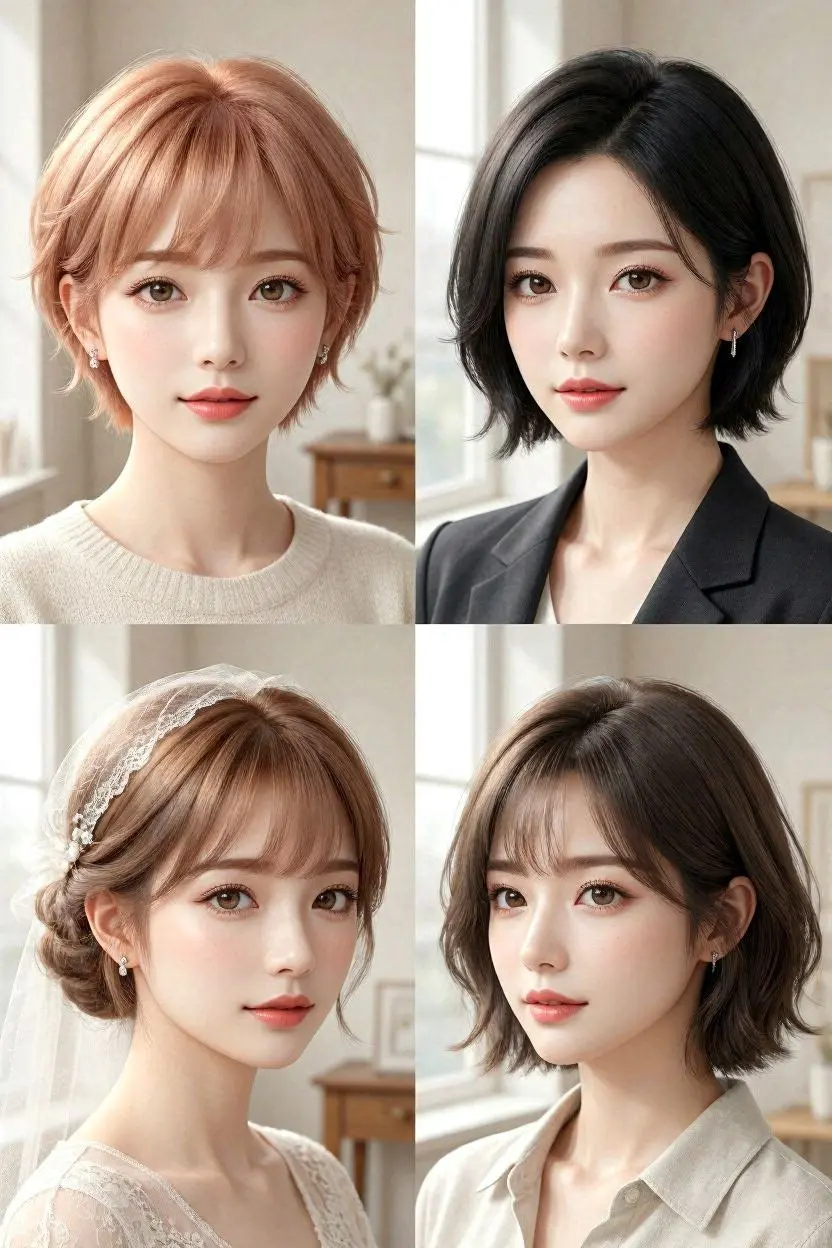
Cute Wavy Bixie
Description: A playful, slightly tousled bixie with soft waves throughout.
Best Face Shape: Oval, heart.
Best Hair Type: Wavy.
Best Hair Length: 3–5 inches.
Best For: Clients wanting a youthful, approachable look.
Maintenance Level: Low.
Styling Time: 10 minutes.
Trend Status: Viral.
Why It Works: The soft wave pattern keeps the cut feeling relaxed rather than severe.
Styling Tip: Twist small sections around your finger while damp, then air-dry for low-effort waves.
Color Pairing Suggestion: Warm caramel or honey balayage.
Seasonal Suitability: Best in spring and summer.
Modern Sculpted Crop
Description: A precision-cut short style with sharp, architectural lines and minimal texture.
Best Face Shape: Oval, square.
Best Hair Type: Straight.
Best Hair Length: 1–3 inches.
Best For: Clients with a minimalist, fashion-forward aesthetic.
Maintenance Level: Medium.
Styling Time: 15 minutes.
Trend Status: Growing — heavily featured in current runway and editorial work.
Why It Works: The sharp lines photograph beautifully and read as intentional rather than “just short.”
Styling Tip: Use a flat iron at low heat for crisp edges, finishing with a light-hold serum.
Color Pairing Suggestion: Solid, neutral tones like ash brown or soft black.
Seasonal Suitability: Best in cooler months for a polished, structured look.
Bridal Sleek Bob with Soft Waves
Description: A chin-length bob styled into soft, bridal-appropriate waves with a deep side part.
Best Face Shape: Most shapes.
Best Hair Type: Straight to wavy.
Best Hair Length: Chin to jaw.
Best For: Brides wanting an elegant short-hair option.
Maintenance Level: Medium (professional styling recommended for the day). Styling Time: 30–45 minutes for full bridal styling.
Trend Status: Growing — more brides are keeping short hair for weddings rather than growing it out.
Why It Works: Soft waves add the romantic movement traditionally associated with bridal hair, even at a short length.
Styling Tip: Set waves the night before with flexi-rods, then refresh lightly with a curling iron the morning of.
Color Pairing Suggestion: A subtle gloss treatment a few days before the wedding for extra shine.
Seasonal Suitability: Best for spring and fall weddings when humidity is lower.
Medium-Short Layered Bob
Description: A bob that sits just past the jaw with soft, face-framing layers, bridging “short” and “medium” length categories.
Best Face Shape: Most shapes.
Best Hair Type: Straight to wavy.
Best Hair Length: Jaw to collarbone.
Best For: Clients wanting a shorter look without committing to a dramatic chop.
Maintenance Level: Low-Medium.
Styling Time: 15 minutes.
Trend Status: Timeless.
Why It Works: It offers most of the visual lightness of a short cut while keeping enough length for ponytails and easy updos.
Styling Tip: A volumizing spray at the roots before blow-drying keeps this length from looking flat.
Color Pairing Suggestion: Soft balayage that grows out gracefully.
Seasonal Suitability: Year-round.
Age-Based Short Hairstyles: Over 50, 60, and 70
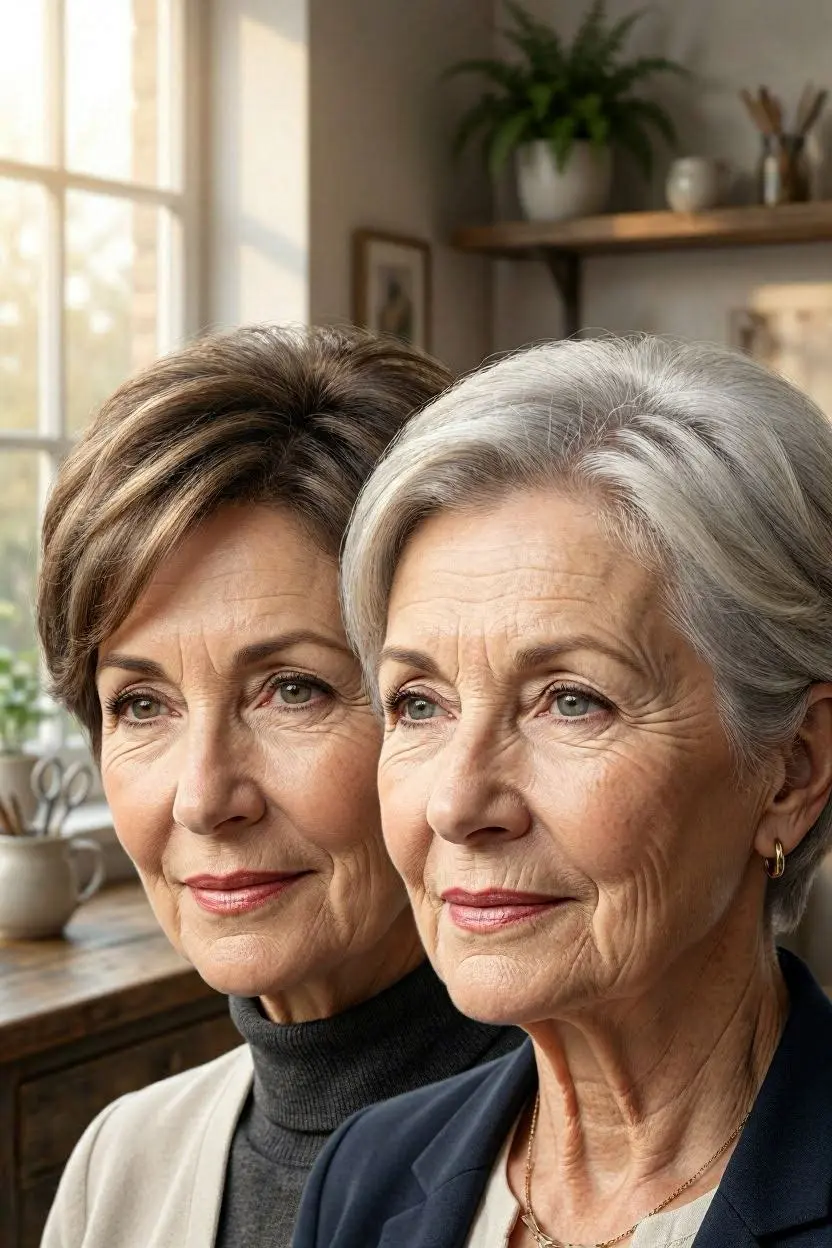
I want to address something directly: a huge amount of “hairstyles for women over 50/60/70″ content treats age like it’s the only variable that matters. It isn’t. Texture, density, and gray percentage matter just as much at every age — but there are real, practical considerations that come up more often in these consultations, and I’ll be honest about them.
Layered Bob for Women Over 50
Description: A soft, layered bob designed to add volume around the crown, where natural thinning is most common at this stage.
Best Face Shape: Most shapes.
Best Hair Type: Fine to medium, often with some textural change.
Best Hair Length: Chin to jaw.
Best For: Clients noticing reduced density at the crown.
Maintenance Level: Low-Medium.
Styling Time: 15 minutes.
Trend Status: Timeless.
Why It Works: Layering at the crown compensates for the natural volume loss that often accompanies hormonal changes.
Styling Tip: Switch to a volumizing, lightweight shampoo — heavier products marketed as “repairing” can actually weigh hair down further.
Color Pairing Suggestion: Warm-toned highlights blend gray more seamlessly than cool tones for most skin tones.
Seasonal Suitability: Year-round.
Soft Pixie for Women Over 60
Description: A gently textured pixie with rounded, soft edges rather than sharp, geometric lines.
Best Face Shape: Most shapes.
Best Hair Type: Fine, often with significant gray.
Best Hair Length: 1–3 inches.
Best For: Clients wanting an elegant, easy-care cut.
Maintenance Level: Low.
Styling Time: 5–10 minutes.
Trend Status: Timeless.
Why It Works: Soft, rounded lines tend to be more universally flattering as facial contours naturally soften over time.
Styling Tip: A lightweight mousse rather than gel keeps fine, gray hair from feeling stiff or “set.”
Color Pairing Suggestion: Many clients in this stage choose to embrace natural gray entirely — a gloss treatment can add shine and reduce yellowing in white or silver hair.
Seasonal Suitability: Year-round.
Wash-and-Wear Crop for Women Over 70
Description: A very short, simple crop prioritizing ease of care above all else.
Best Face Shape: Most shapes.
Best Hair Type: Fine, often thinner overall.
Best Hair Length: Under 2 inches.
Best For: Clients prioritizing minimal daily styling time.
Maintenance Level: Low.
Styling Time: Under 5 minutes.
Trend Status: Timeless.
Why It Works: The short length requires no blow-drying tools or daily styling routine, which matters more practically at this stage for many clients.
Styling Tip: A leave-in conditioning spray can substitute for a full styling routine on busy days.
Color Pairing Suggestion: Most clients at this stage skip color entirely; a clear gloss can add shine without commitment.
Seasonal Suitability: Year-round.
Color-Based Short Hairstyles: Blonde and Gray
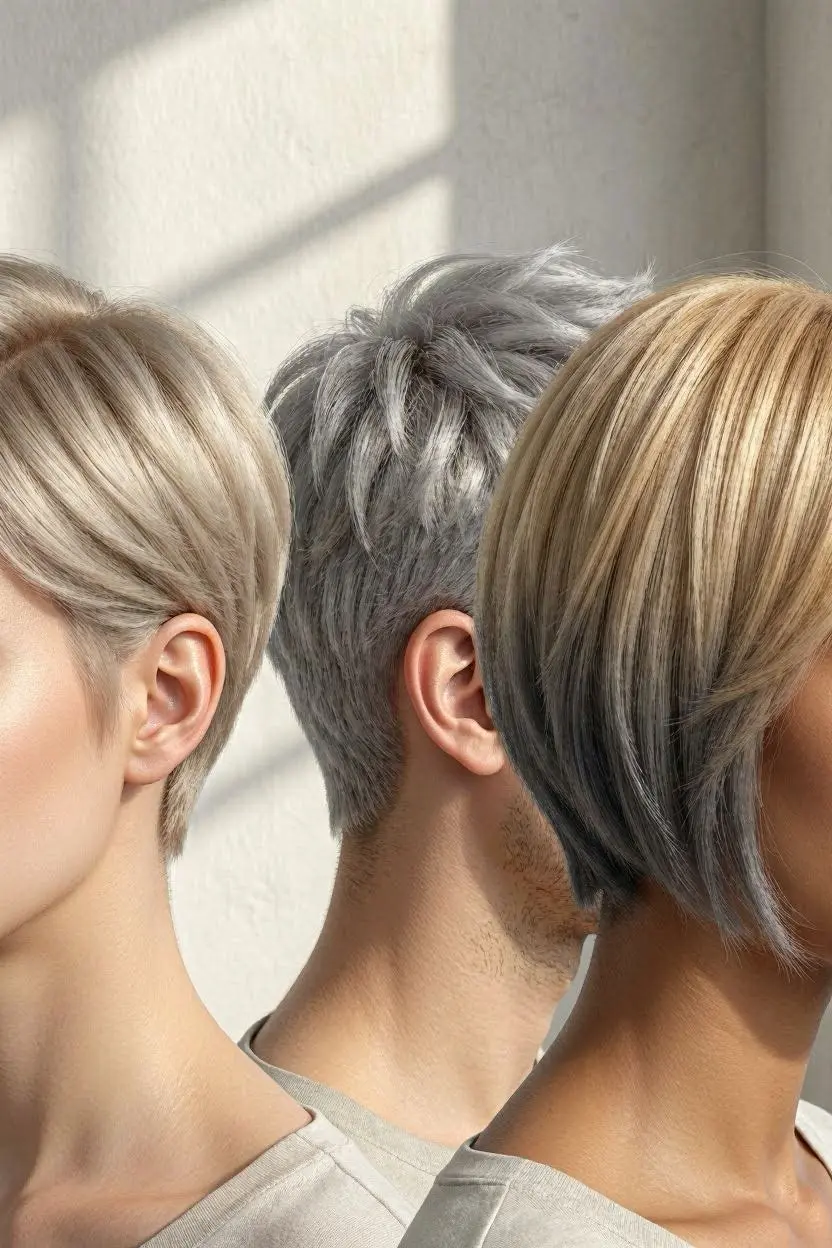
Short Blonde Textured Crop
Description: A cropped cut in all-over warm or icy blonde with textured, piece-y styling.
Visual Effect: Blonde reflects light more than darker shades, making short, textured cuts look fuller and more dimensional in photos.
Personality Match: Tends to read as bright, approachable, and bold given the maintenance commitment.
Fashion Pairings: Pairs especially well with warm neutrals and gold-toned jewelry.
Seasonal Appeal: Strongest in summer when warm-toned blondes feel sun-kissed.
Trend Popularity: Consistently strong; icy and butter-blonde tones are both trending in 2026.
Styling Flexibility: Texturizing products show up more visibly against light hair, making styling changes more noticeable day to day.
Why It Works: Light reflects off the angles of short layers more dramatically than it does on dark hair, amplifying any textural cut.
Short Gray Pixie-Bob
Description: A grown-in or color-stripped gray short cut, styled with soft layers.
Visual Effect: Gray and silver tones photograph as sleek and intentional rather than “undone” when paired with a structured short cut.
Personality Match: Often signals confidence and a deliberate embrace of natural aging, which I’ve seen resonate strongly with clients who are tired of root maintenance.
Fashion Pairings: Pairs beautifully with both stark monochrome outfits and rich jewel tones, which contrast nicely against silver hair.
Seasonal Appeal: Year-round, with a particular boost in winter when silver tones complement cool-weather wardrobes.
Trend Popularity: Growing steadily as more clients choose to transition rather than continually cover gray.
Styling Flexibility: A purple-toned shampoo is essential to prevent yellowing, especially in previously colored hair transitioning to gray.
Why It Works: Short length keeps the often-different textures of new gray growth and older, chemically treated hair from creating an obvious, patchy transition line.
Short Hairstyles for Black Women
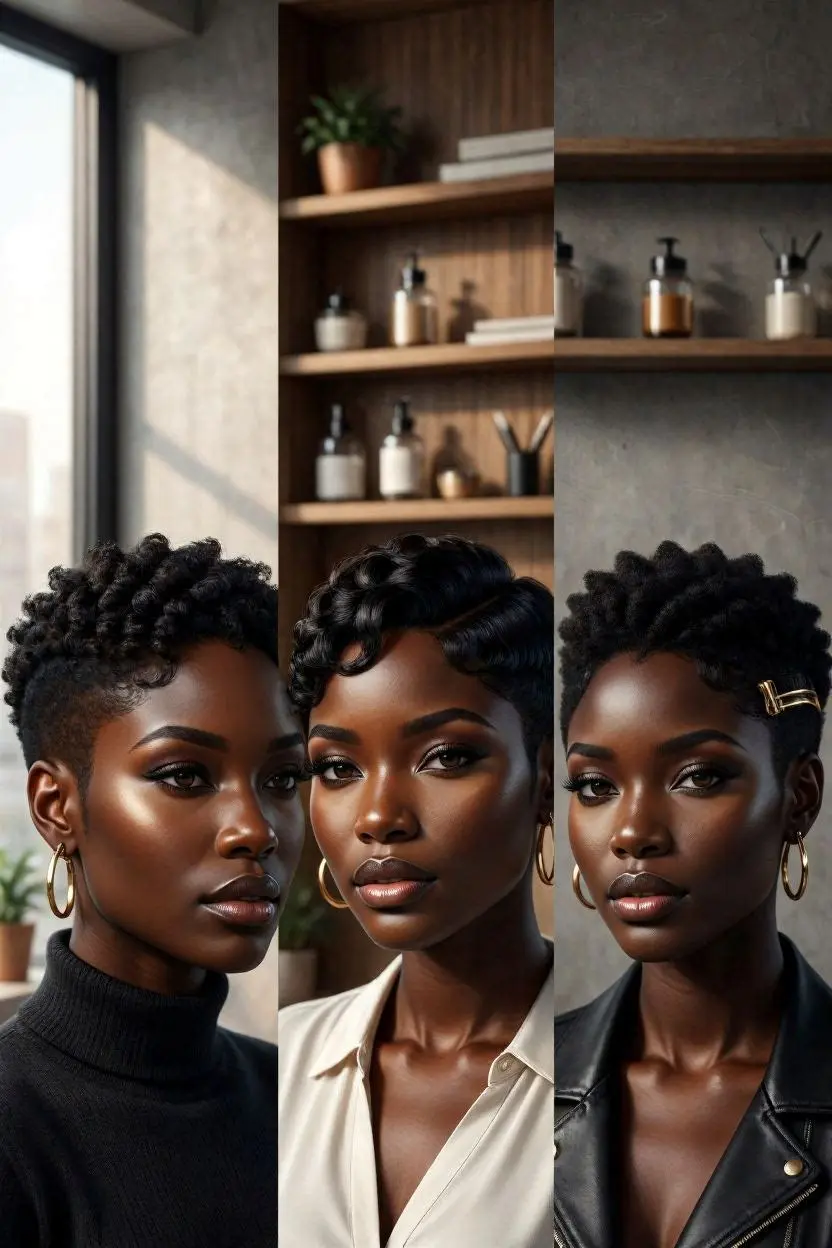
Short Natural Curly Crop
Description: A short cut that follows and enhances the natural curl or coil pattern without chemical straightening.
Best Face Shape: Most shapes.
Best Hair Type: Coily, curly (3B–4C).
Best Hair Length: 1–3 inches.
Best For: Clients embracing their natural texture in a low-manipulation style.
Maintenance Level: Low–Medium, depending on curl pattern density.
Styling Time: 10–15 minutes.
Trend Status: Timeless, with growing popularity as natural hair acceptance continues to expand in professional settings.
Why It Works: Cutting curl-by-curl (rather than cutting dry hair straight across) respects shrinkage patterns and avoids the uneven look that comes from cutting natural hair the same way as straight hair.
Styling Tip: Apply leave-in conditioner and curl cream on soaking wet hair, then let air-dry or diffuse on low heat.
Color Pairing Suggestion: Rich, deep tones like espresso or warm copper tend to enhance shine without compromising curl integrity.
Seasonal Suitability: Best in humid months, when natural curl pattern is most defined.
Twist-Out Short Style
Description: A short cut styled using a twist-out technique for defined, separated curls.
Best Face Shape: Most shapes.
Best Hair Type: Coily, curly.
Best Hair Length: 2–4 inches.
Best For: Clients wanting more definition and stretch than a wash-and-go provides.
Maintenance Level: Medium.
Styling Time: 20–30 minutes for the twist-out process, then minimal daily upkeep.
Trend Status: Timeless.
Why It Works: Twisting adds elongation and separation that air-drying alone often can’t achieve on tightly coiled patterns.
Styling Tip: Twist on damp, not soaking wet hair, for a faster dry time and more defined separation once unraveled.
Color Pairing Suggestion: Subtle highlights placed at the ends can accentuate the twist pattern as it moves.
Seasonal Suitability: Year-round; particularly good for transitional weather.
Short Bantu Knot-Out Style
Description: A short style created by setting hair in Bantu knots and unraveling for tight, spiral curl definition.
Best Face Shape: Most shapes.
Best Hair Type: Coily.
Best Hair Length: 2–4 inches.
Best For: Special occasions or adding texture variety to a regular natural hair routine.
Maintenance Level: Medium.
Styling Time: 30 minutes to set, then quick daily upkeep.
Trend Status: Timeless, with cyclical popularity spikes tied to natural hair movements online.
Why It Works: The tight winding of each knot creates a uniform spiral pattern that air-drying or twisting alone won’t replicate.
Styling Tip: Set on slightly damp hair with a curl-defining cream for the cleanest spiral once unraveled.
Color Pairing Suggestion: A glossy, single-process natural shade tends to highlight the knot-out’s defined curl shape best.
Seasonal Suitability: Year-round.
Short Natural Hairstyles for Black Women
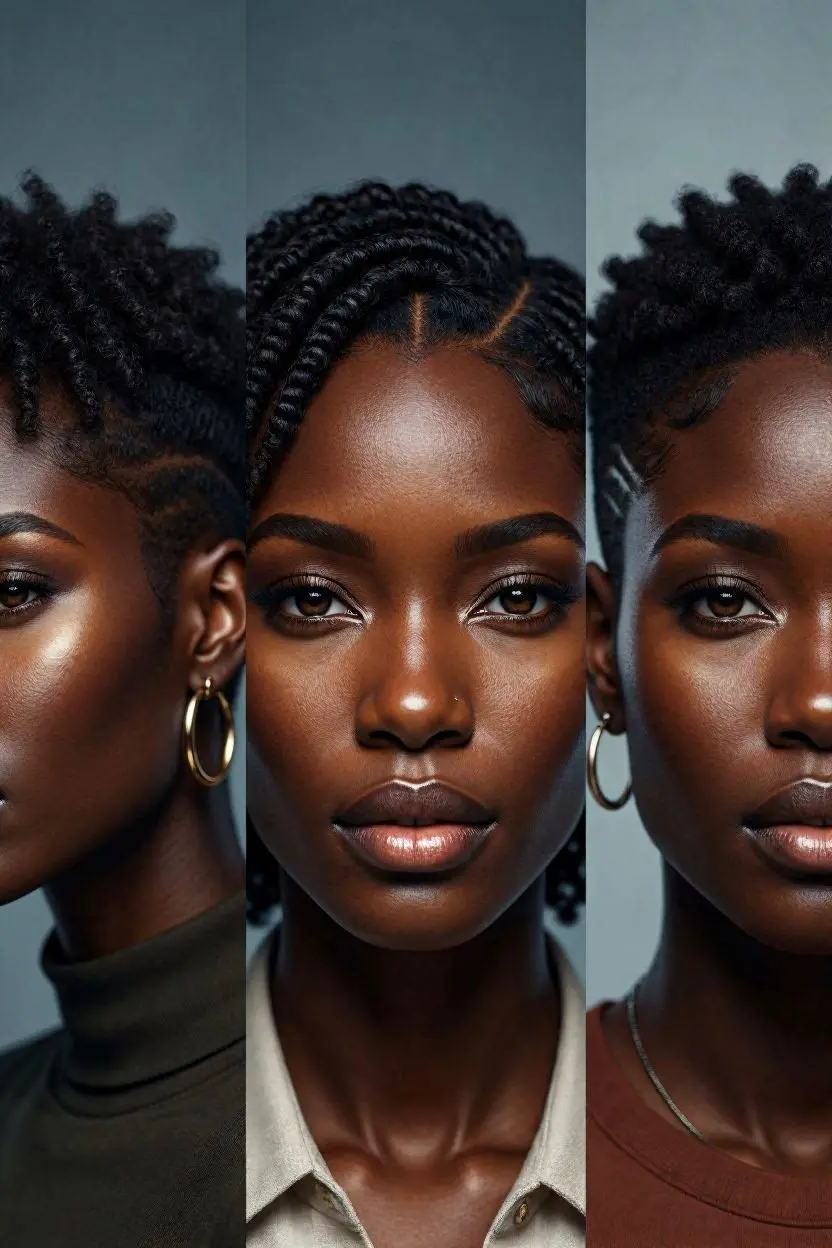
Tapered Natural Crop
Description: A short natural style with hair cut progressively shorter toward the nape and sides, longer on top.
Best Face Shape: Oval, round.
Best Hair Type: Coily.
Best Hair Length: Varies, shortest at nape.
Best For: Clients wanting shape and structure within a fully natural style.
Maintenance Level: Medium (regular tapering needed to maintain the shape as hair grows).
Styling Time: 10–15 minutes.
Trend Status: Timeless.
Why It Works: The graduated taper gives natural curl patterns a deliberate, sculpted shape rather than letting density build evenly and look unstructured.
Styling Tip: A curl-defining gel on top paired with light edge control at the taper line keeps the contrast crisp.
Color Pairing Suggestion: Deep, rich natural tones complement the sculptural shape without distracting from it.
Seasonal Suitability: Year-round.
Short Curly Hairstyles for Men
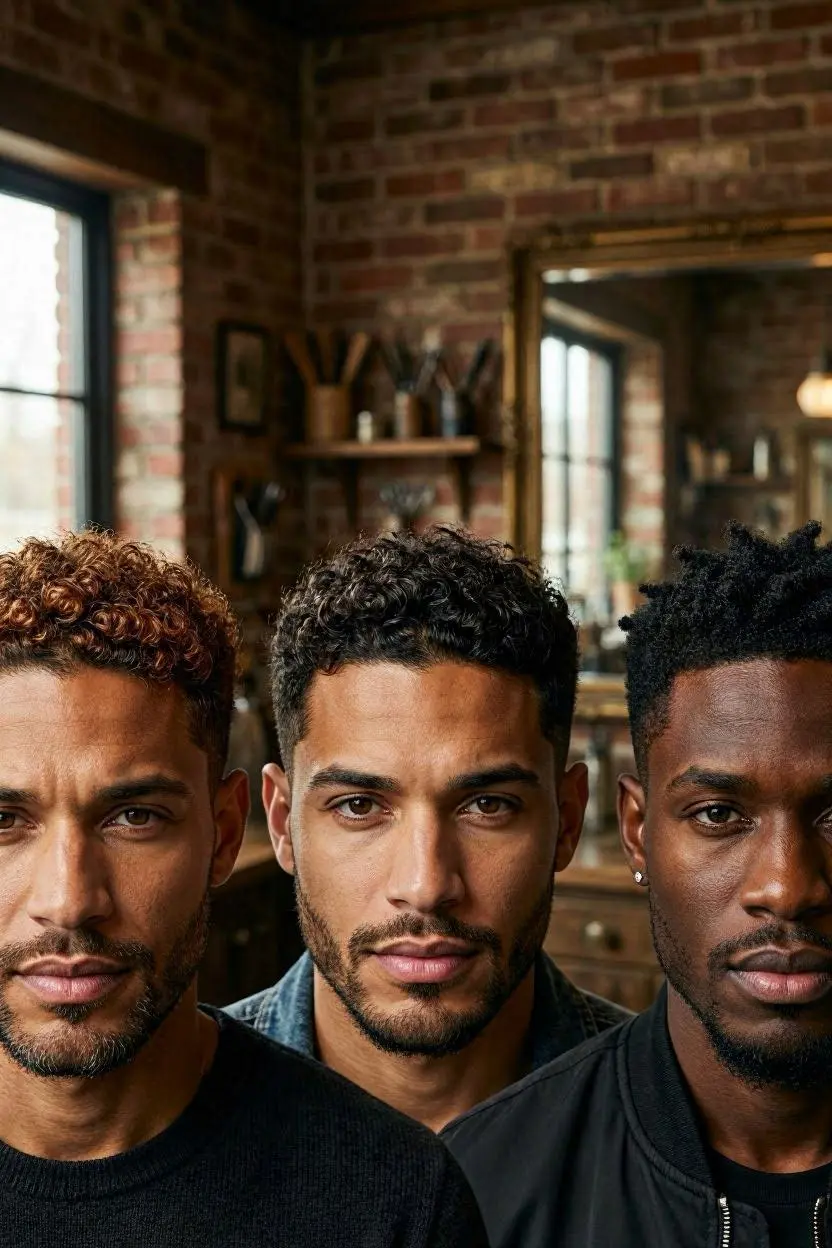
Curly Crop with Tapered Sides
Description: Natural curls left longer on top with tapered, shorter sides.
Best Face Shape: Oval, square.
Best Hair Type: Curly.
Best Hair Length: 2–3 inches on top.
Best For: Clients wanting to embrace curl texture without excessive length.
Maintenance Level: Low–Medium.
Styling Time: 5–10 minutes.
Trend Status: Timeless.
Why It Works: The tapered sides keep the look neat and professional while the top retains enough length to show genuine curl pattern.
Styling Tip: Apply curl cream to damp hair and let it air-dry or diffuse rather than towel-drying aggressively, which causes frizz.
Color Pairing Suggestion: Most men keep natural color; subtle texturizing is more common than color change.
Seasonal Suitability: Best in humid climates, where curl pattern is naturally more defined.
Short Wavy Hairstyles for Men
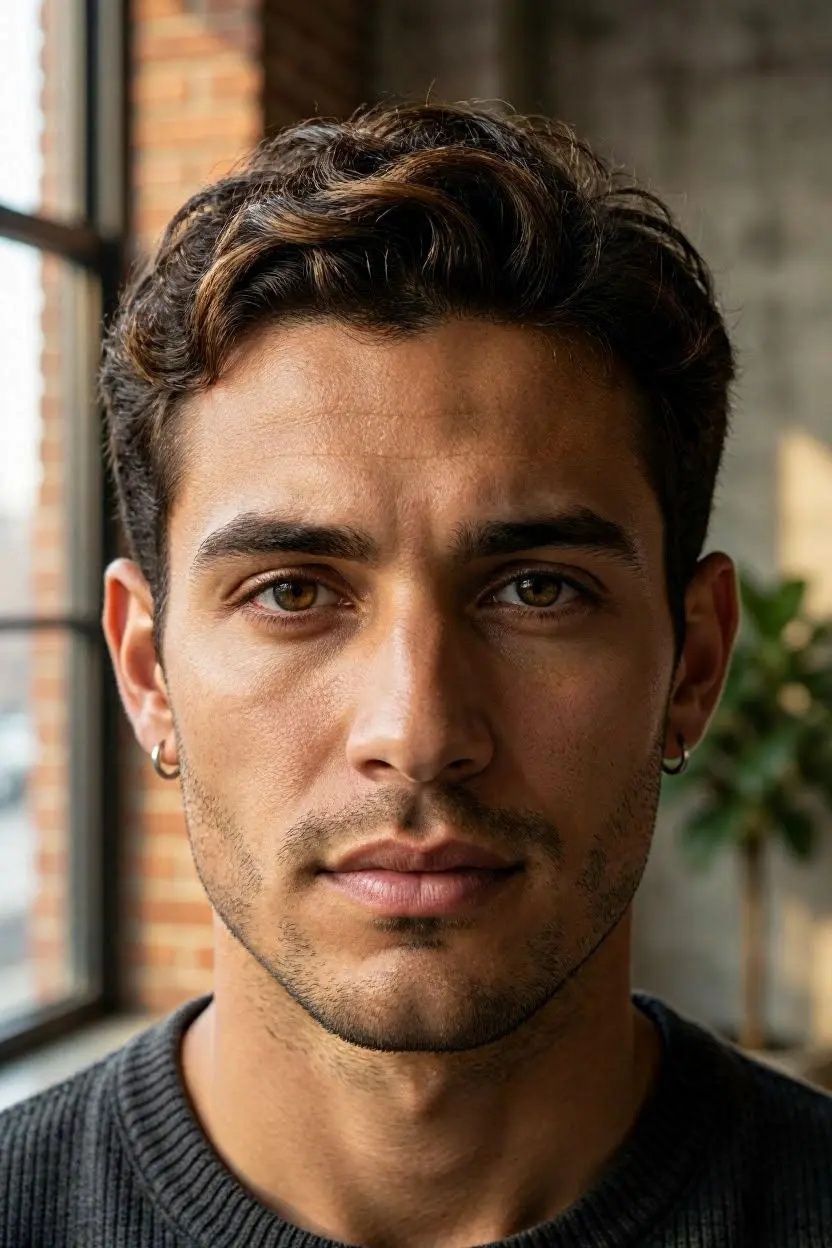
Textured Wavy Crop
Description: A short cut with natural waves enhanced through textured, point-cut layering on top.
Best Face Shape: Oval, round.
Best Hair Type: Wavy.
Best Hair Length: 2 inches.
Best For: Clients wanting low-effort texture.
Maintenance Level: Low.
Styling Time: 5 minutes.
Trend Status: Timeless.
Why It Works: Texturizing the ends encourages wave pattern to show rather than getting weighed down into a flat shape.
Styling Tip: A matte clay applied to damp hair, then air-dried, brings out natural wave without excessive shine.
Color Pairing Suggestion: Natural tones are most common for this category.
Seasonal Suitability: Year-round.
Short Hairstyles Long on Top, Short on Sides
Classic Crop with Disconnected Undercut
Description: Short, faded sides paired with notably longer, textured length on top.
Best Face Shape: Oval, square.
Best Hair Type: Straight to wavy.
Best Hair Length: Buzzed sides, 3–4 inches on top.
Best For: Clients wanting a versatile, modern professional look.
Maintenance Level: Medium (fade upkeep every 2–3 weeks).
Styling Time: 10 minutes.
Trend Status: Timeless.
Why It Works: The strong contrast between short sides and longer top makes the cut look intentional and current without requiring complex daily styling.
Styling Tip: A matte paste worked through damp hair, then styled with fingers (not a comb) for natural-looking texture on top.
Color Pairing Suggestion: Natural tones dominate; some clients add subtle gray blending if desired.
Seasonal Suitability: Year-round.
Short Hairstyles for Asian Men
Textured Crop with Side Fringe —
Description: A short crop with a longer, textured fringe swept to one side.
Best Face Shape: Oval, square.
Best Hair Type: Straight, often dense.
Best Hair Length: 2–3 inches.
Best For: Clients with thick, straight hair wanting movement without excessive bulk.
Maintenance Level: Medium.
Styling Time: 10 minutes.
Trend Status: Growing.
Why It Works: Point-cutting and texturizing remove bulk that thick, straight hair often carries, allowing the fringe to move rather than sit stiffly.
Styling Tip: A light wax rather than heavy pomade prevents the dense, straight hair from looking weighed down.
Color Pairing Suggestion: Subtle warm highlights through the fringe for dimension.
Seasonal Suitability: Year-round.
Short Hairstyles for Men with Straight Hair
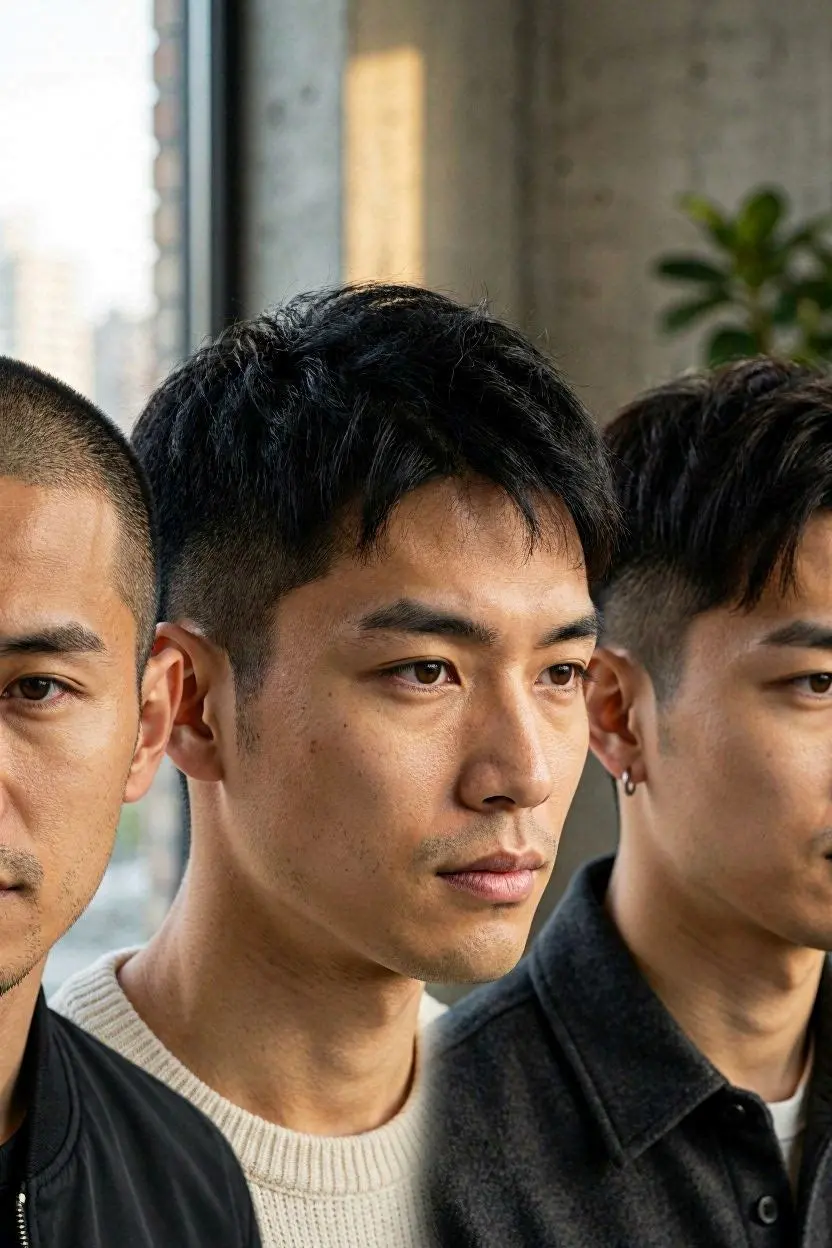
Classic Side Part Crop
Description: A traditional, neatly parted short cut with a defined side part.
Best Face Shape: Oval, square.
Best Hair Type: Straight.
Best Hair Length: 2–3 inches.
Best For: Clients wanting a polished, classic professional look.
Maintenance Level: Medium.
Styling Time: 10 minutes.
Trend Status: Timeless.
Why It Works: Straight hair holds the precision of a side part crisply without flyaways disrupting the line.
Styling Tip: Comb the part in while hair is damp, using a light pomade to set it before it dries.
Color Pairing Suggestion: Most clients keep this style in natural color.
Seasonal Suitability: Year-round.
Trending in 2026: What’s Actually Happening in Salons Right Now
Based on what I’m seeing requested most often this year — and what’s backed by stylist trend reporting across the industry — here’s where short hair is genuinely heading, not just what’s photographing well:
- The bixie has overtaken the classic pixie as the most requested grow-out cut. Clients want the drama of going short without the commitment of maintaining a true pixie’s growth schedule.
- Soft, “undone” bobs (like the cowboy bob) are replacing severe, blunt bobs. The shift is away from precision-at-all-costs toward lived-in texture that doesn’t need a flat iron every single morning.
- Curl-specific cutting is finally mainstream, not a niche service. More salons are training specifically in curl-by-curl cutting rather than applying one-size-fits-all techniques across textures.
- Micro fringes are the detail of the year. They’re showing up as an add-on to bobs, pixies, and crops rather than as a standalone style, which makes them an easy way to refresh an existing short cut.
- Modern, softened mullets and wolf cuts are sticking around, but the silhouette has matured from its early viral, exaggerated form into something more wearable for daily life and workplaces.
- Halo cuts for curl types 3 and 4 are emerging as an alternative to the traditional curly bob, with rounded layers designed specifically to create lift and face-framing curls.
My honest prediction heading further into 2026: the cuts that survive past this year won’t be the most extreme versions of any trend — they’ll be the softened, more wearable adaptations, the same pattern I’ve watched repeat with every major short-hair trend over the last two decades.
Expert Styling Insights
Face shape matching: Don’t just match a photo to your face shape — match the cut’s structural logic to your face shape. Height corrects round faces; softness corrects square or angular faces; length corrects long faces. Most face-shape mismatches I see in consultations come from clients choosing a cut based on a celebrity’s face shape rather than their own.
Hair density advice: If you have fine hair, ask your stylist for “internal layering at the crown” specifically — generic layering can sometimes thin hair out further rather than adding the illusion of volume.
Outfit and makeup pairing: Short hair, especially pixies and crops, puts more visual focus on the face. I generally suggest clients with very short cuts experiment with slightly bolder brow or lip definition, since there’s simply more visible skin and bone structure to balance.
Beginner tips: If you’re nervous about going short for the first time, ask your stylist about a “transitional bob” first rather than jumping straight to a pixie. It’s a far less intimidating way to test how you feel about shorter hair.
Salon communication tips: Bring reference photos, but also tell your stylist your hair’s actual behavior — “this curls when humid” or “this goes flat by 2pm” — because a photo alone can’t communicate how your specific hair will respond to a cut.
Seasonal and Occasion Guide
- Spring: Transitional cuts like the bixie and cowboy bob shine here — light enough for warming weather, structured enough to still feel “new.”
- Summer: Curl-embracing and ultra-short crops perform best; less hair means less heat retention and faster wash-day routines.
- Fall: Warmer color pairings (caramel, copper, auburn) and textured shags feel especially seasonally appropriate.
- Winter: Glossy, structured bobs and sleek pixies photograph and perform well against heavier winter wardrobes and hats.
- Weddings: Soft waves on a bob or lob remain the most requested bridal short-hair look; I always recommend a trial run at least two weeks before the event.
- Office: Classic bobs, tapered crops, and side-part pixies tend to read as the most universally “polished” in traditional workplace settings, though this has loosened considerably in recent years.
- Vacation: Wash-and-go curly crops and ultra-short clipper cuts are the lowest-maintenance options for travel.
- Parties and date nights: Textured crops and pixies with a bit of extra product for shine and definition photograph well under evening lighting.
- Everyday wear: Low-maintenance pixies, one-length bobs, and natural curl-pattern cuts consistently hold up best to daily real life.
Common Mistakes to Avoid With Short Hairstyles
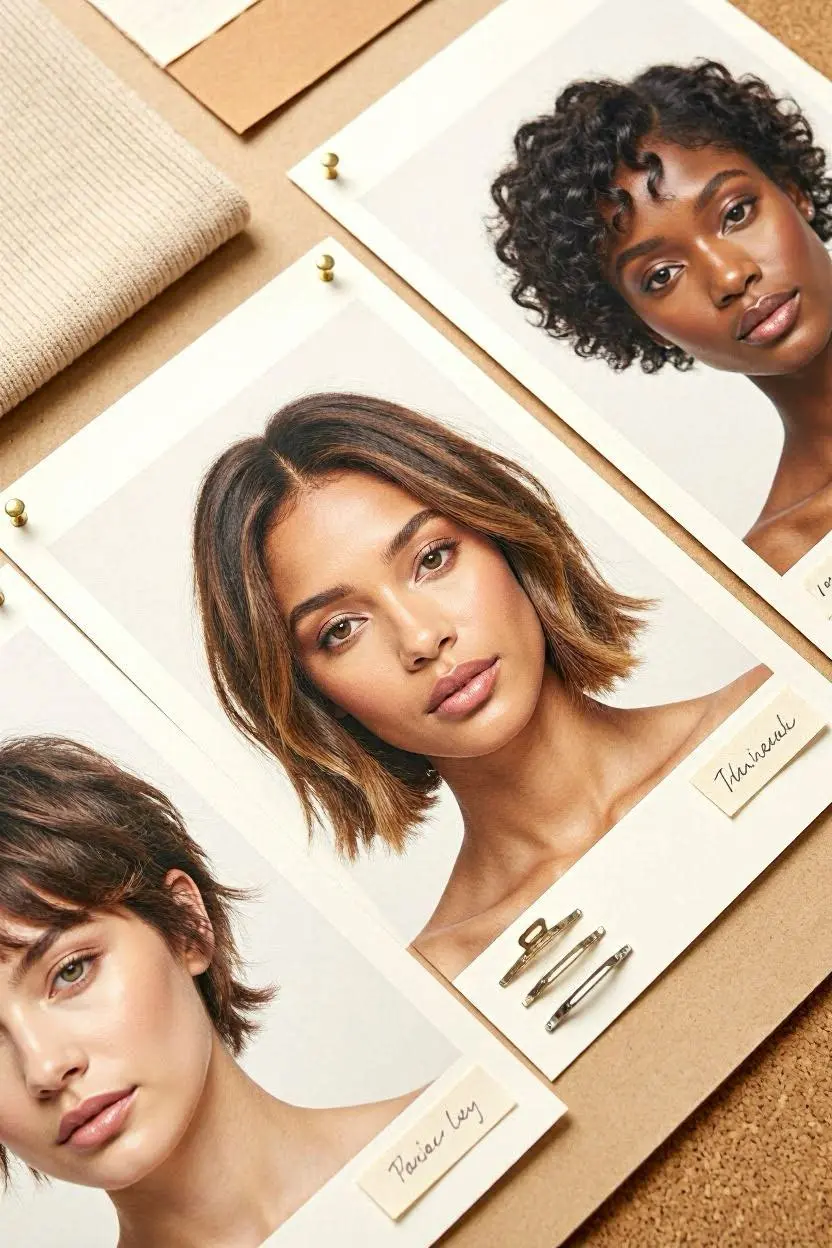
- Choosing a cut based on a photo alone, without accounting for your texture. A style that looks effortless on straight hair may behave completely differently on wavy or curly hair.
- Over-layering thick hair. Excessive thinning shears on already-thick hair can create unwanted frizz and a “puffy” silhouette rather than the intended lightness.
- Skipping the trim schedule. Short hair grows out of shape faster than long hair — most short cuts need a trim every 4–6 weeks to maintain their intended silhouette.
- Chasing a trend that doesn’t suit your face shape or texture. I’d rather talk a client out of a viral cut that won’t suit them than watch them be unhappy with the result in three weeks.
- Poor salon communication. Vague requests like “just make it look good” leave too much open to interpretation — bring specifics about length, maintenance tolerance, and styling habits.
- Product misuse. Using heavy, moisturizing products meant for long hair on fine, short hair is one of the most common reasons clients say their new cut “doesn’t look like the salon style” at home.
- Maintenance neglect, especially with color. Gray blending and color-treated short hair show root growth more visibly than longer hair simply because there’s less length to dilute the contrast.
Conclusion
After nearly two decades of these conversations, the clients who end up happiest with a short cut are rarely the ones who walked in with the most extreme trend photo — they’re the ones who were honest about their texture, their density, their face shape, and, most importantly, their actual willingness to style their hair on a regular Tuesday morning.
If you take one thing from this guide, let it be this: match the cut to your real life, not just to the photo that caught your eye on Pinterest. A curly baby bob is a wonderful cut — for someone with the curl pattern and air-drying habits to support it. A sculpted, sharp crop is striking — for someone willing to maintain it with regular trims and a few minutes of styling time. There’s a short hairstyle in this guide that fits your hair, your face, your season, and your lifestyle. The work now is simply matching yourself to the right one — and walking into your next salon appointment ready to have that specific, honest conversation.
Frequently Asked Questions
What are the best short hairstyles? There isn’t a single “best” short hairstyle — the most successful ones are matched specifically to your hair texture, density, and face shape. For most clients, a well-cut bob, a textured pixie, or a layered crop tend to be the most consistently flattering starting points.
Which short hairstyle suits my face shape? Round faces generally benefit from added height and asymmetry, like a high-crown pixie or an asymmetrical lob. Oval faces have the most flexibility and can wear nearly any short cut, including classic pixies and blunt bobs.
Are short hairstyles easy to maintain? Some are, but not all. Ultra-short crops and pixies tend to need more frequent trims (every 3–4 weeks) to maintain shape, even though daily styling time is low. Bobs and longer crops can stretch trims to 6–8 weeks but often need more daily styling effort.
What short hairstyles make you look younger? Cuts with soft, face-framing layers and movement — like a textured bob or a soft pixie — tend to read as more youthful than blunt, severe lines, which can sometimes harden facial features.
What are the trending short hairstyles in 2026? The bixie, the cowboy bob, curl-specific cuts like the curly baby bob and halo cut, micro fringes, and softened modern mullets are the most-requested styles this year.
Which short hairstyle is best for thin hair? A graduated bob or a textured pixie with crown layering tends to work best, since both add the illusion of density exactly where thin hair often needs it most.
How often should I get a short haircut trimmed? Most short cuts need a trim every 4–6 weeks to maintain their shape, though ultra-short pixies and crops may need trims closer to every 3 weeks.
Can I go short if I have very thick or very fine hair? Yes to both — the key is in the cutting technique. Thick hair needs internal layering to remove bulk; fine hair needs strategic, shorter layering at the crown to build the appearance of volume.
Will short hair work with curly or coily hair? Yes, and curl-specific cutting (cutting curl-by-curl rather than cutting hair straight) is the single biggest factor in whether a curly short cut looks intentional or uneven.
What’s the easiest short hairstyle for beginners going short for the first time? A transitional bob or lob is generally the least intimidating way to test shorter hair before committing to a pixie or crop.
Do short hairstyles work for special occasions like weddings? Yes — soft waves on a bob or lob are increasingly common for brides, and many short-haired clients now skip extensions entirely in favor of styled natural short hair.
How do I keep gray short hair from looking yellow or dull? A purple-toned shampoo used once or twice a week, along with periodic glossing treatments, keeps gray and silver short hair looking bright rather than yellowed.
